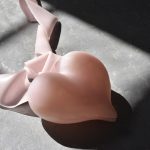
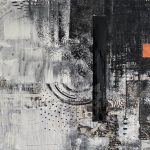
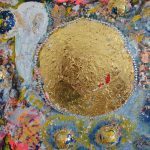
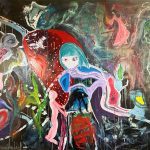
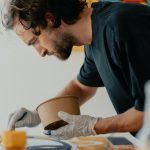
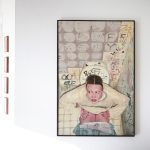
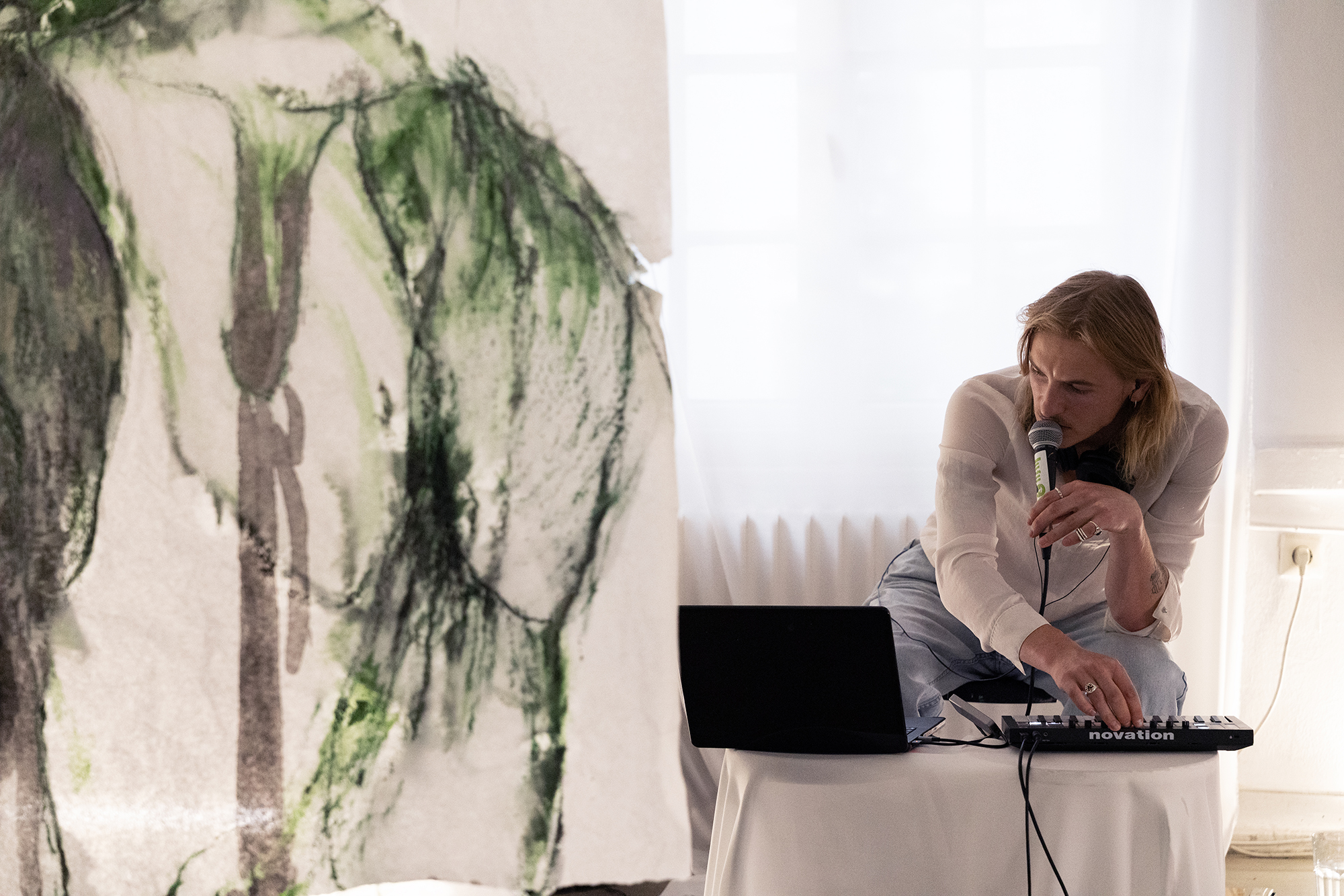
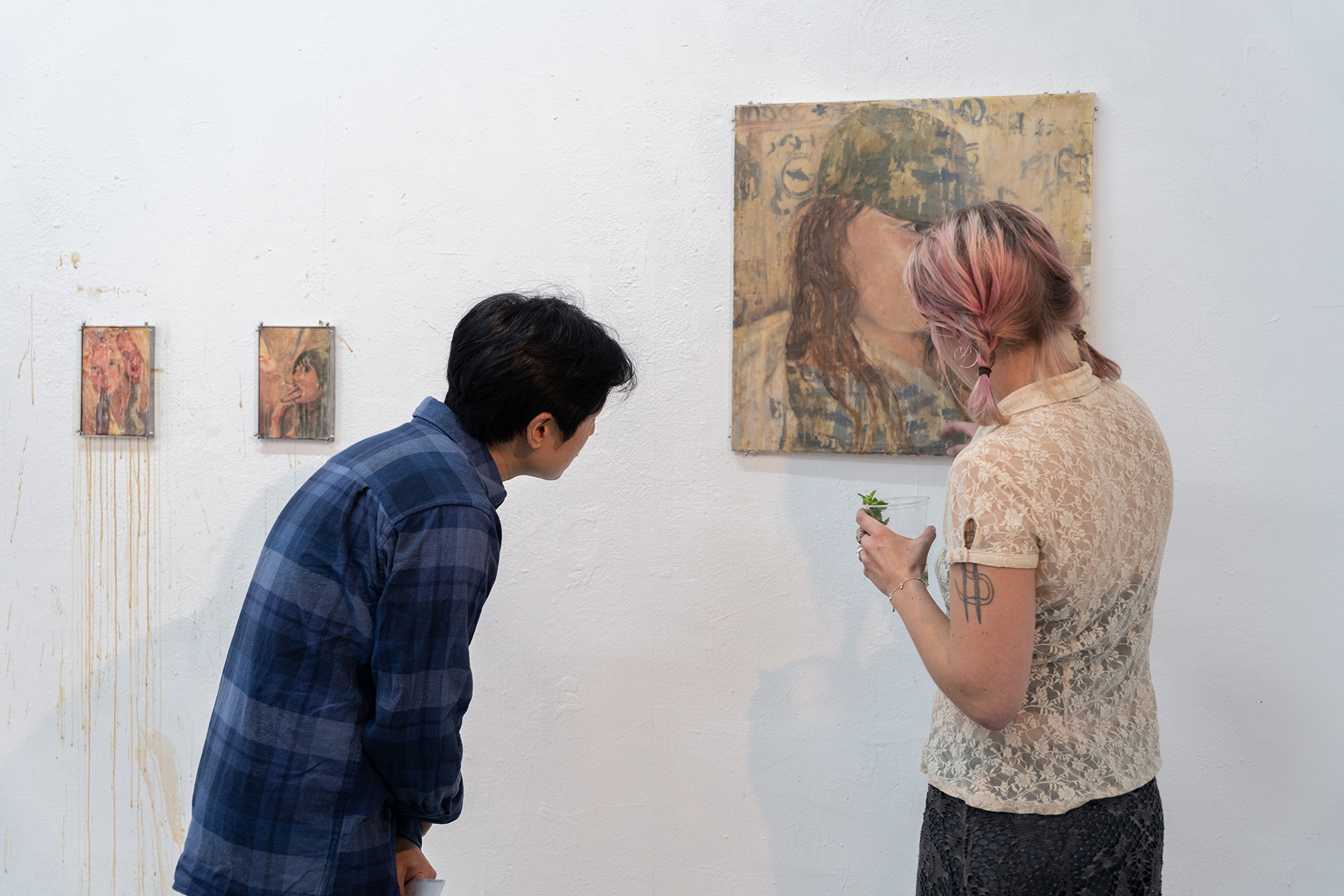
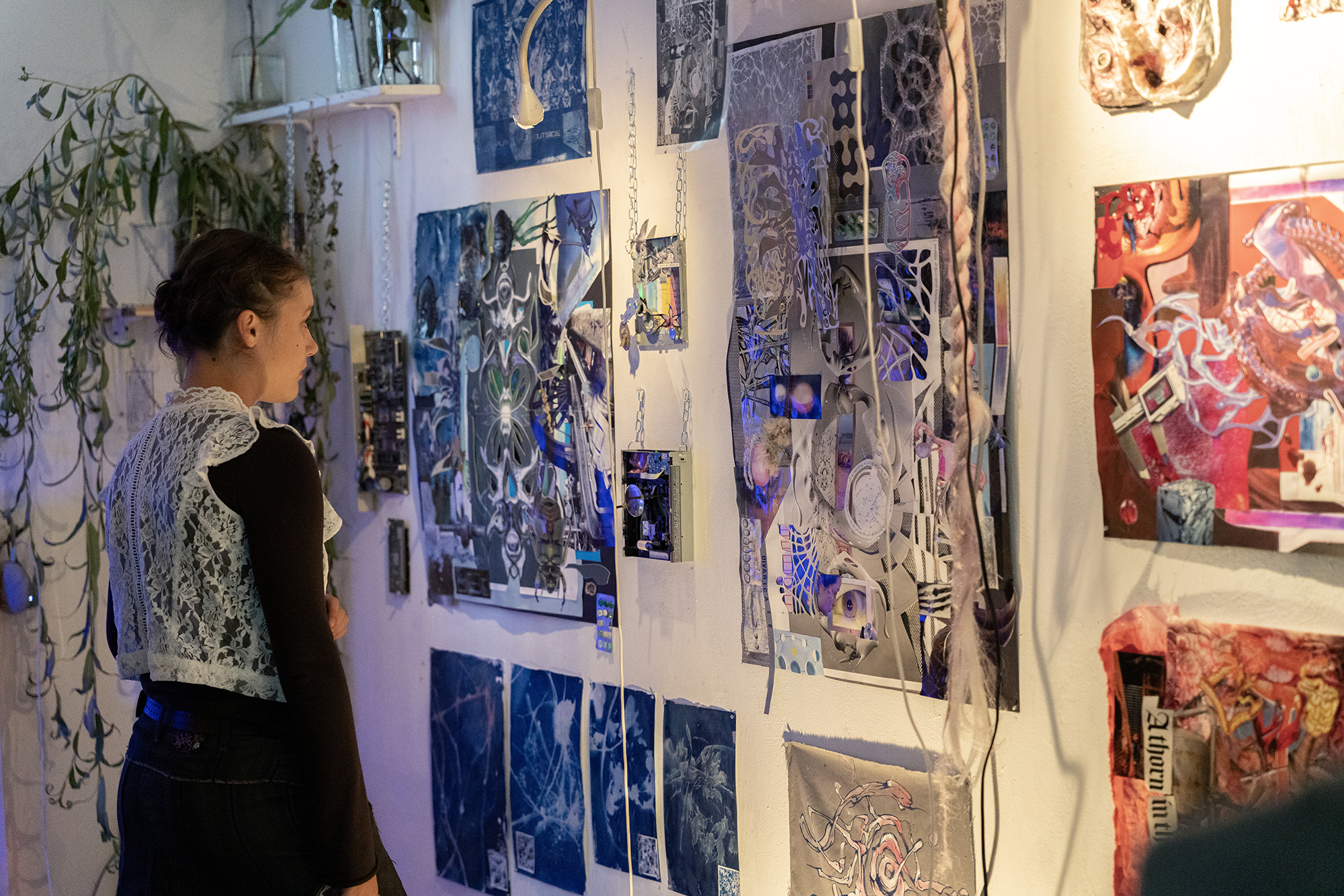
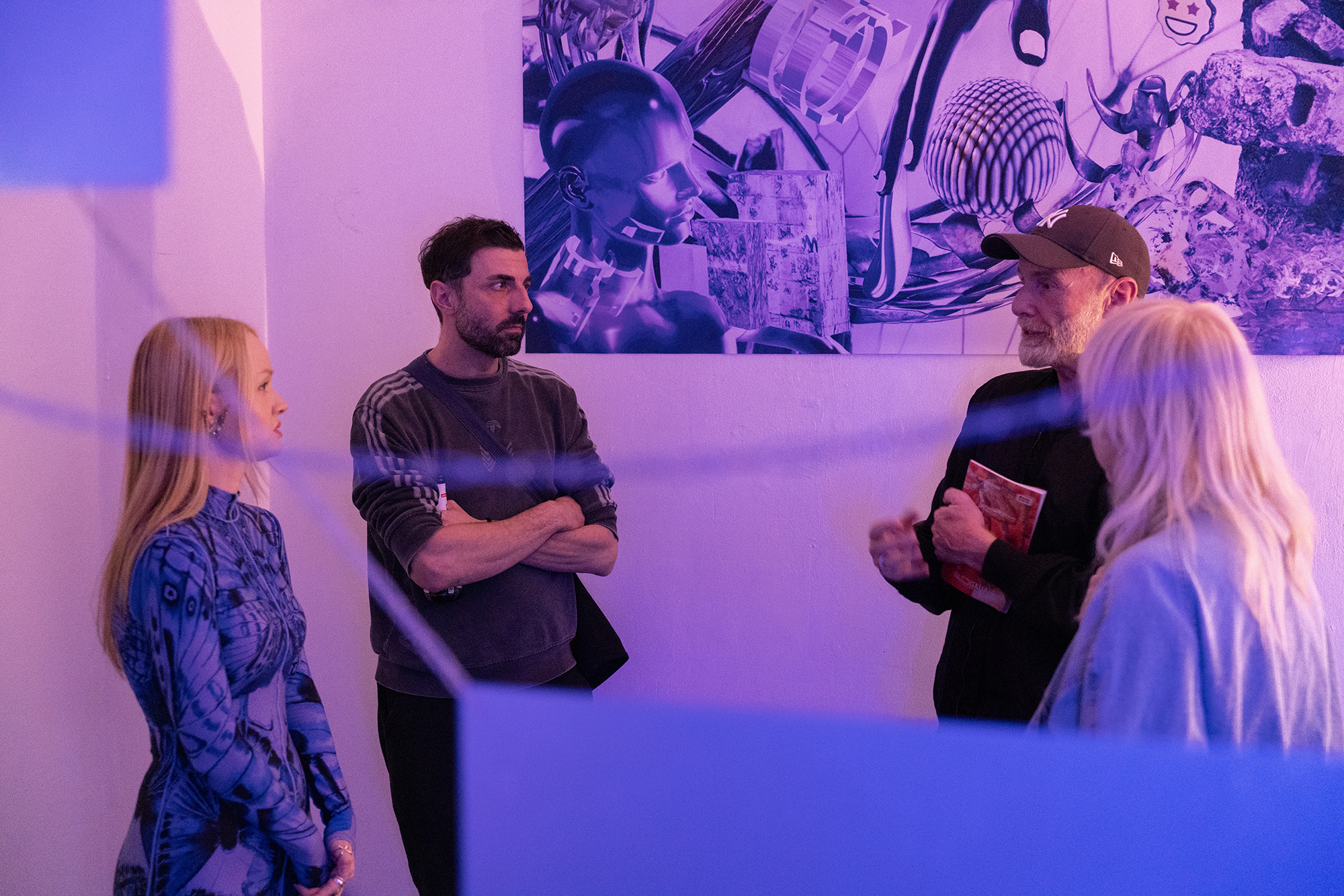
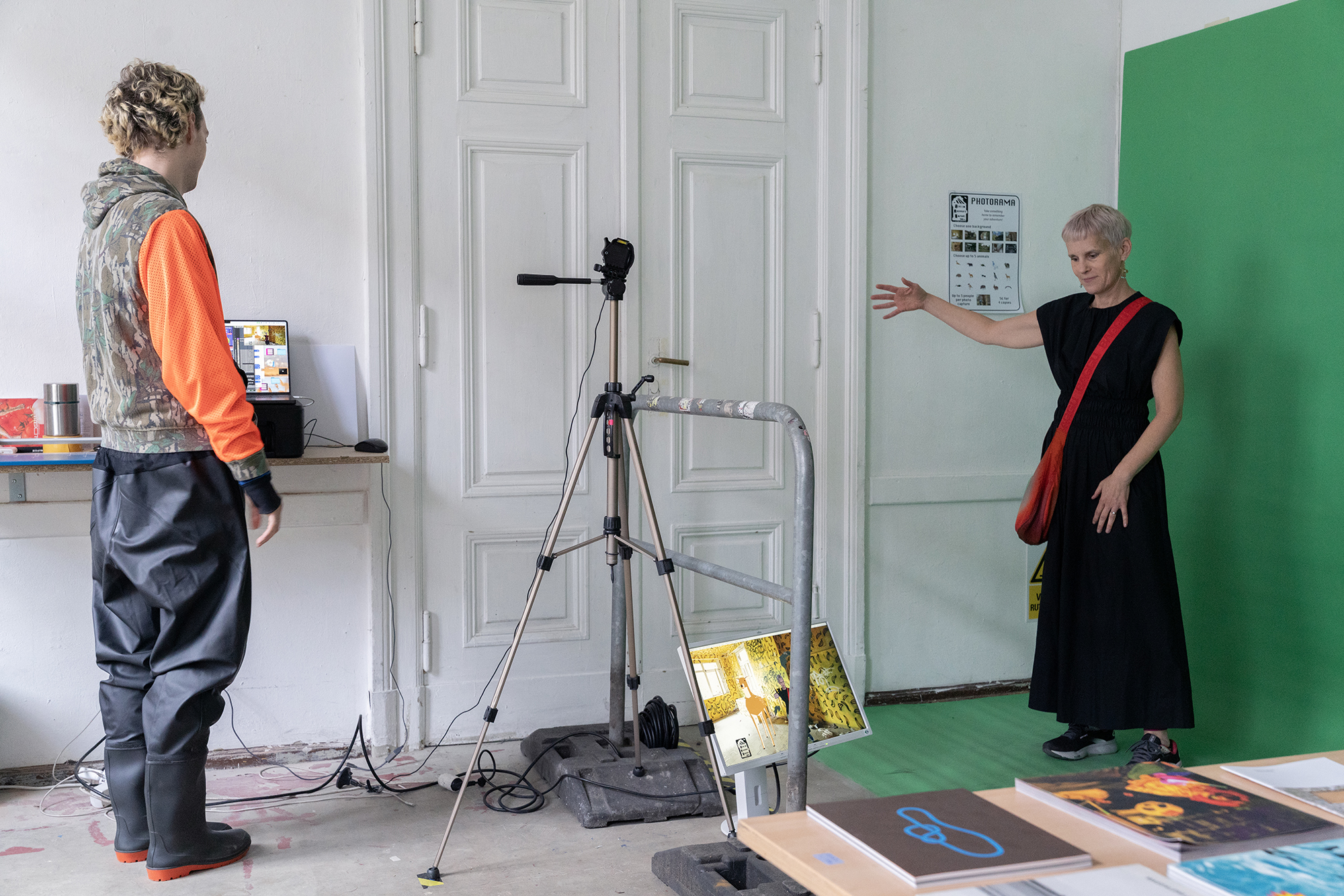
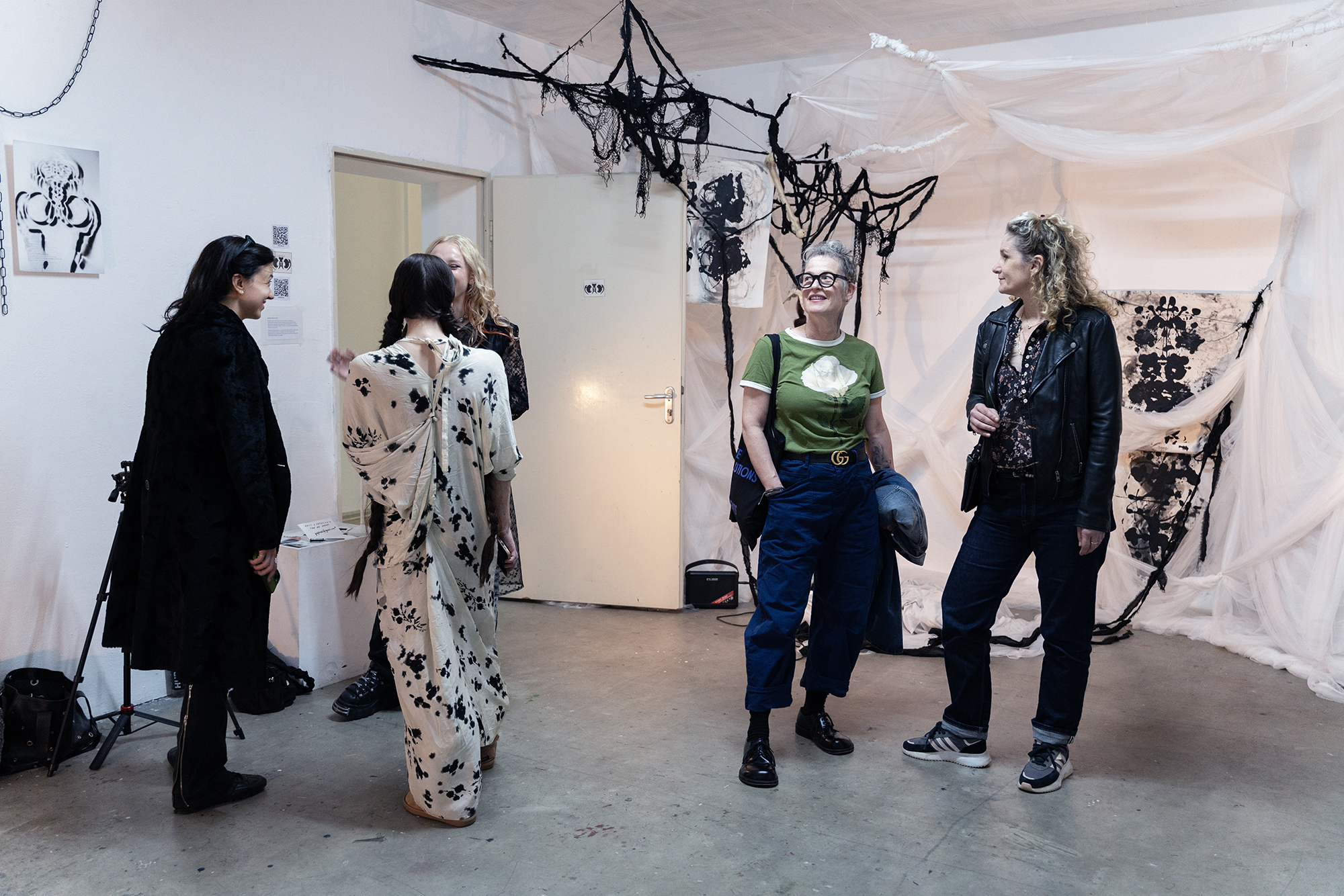
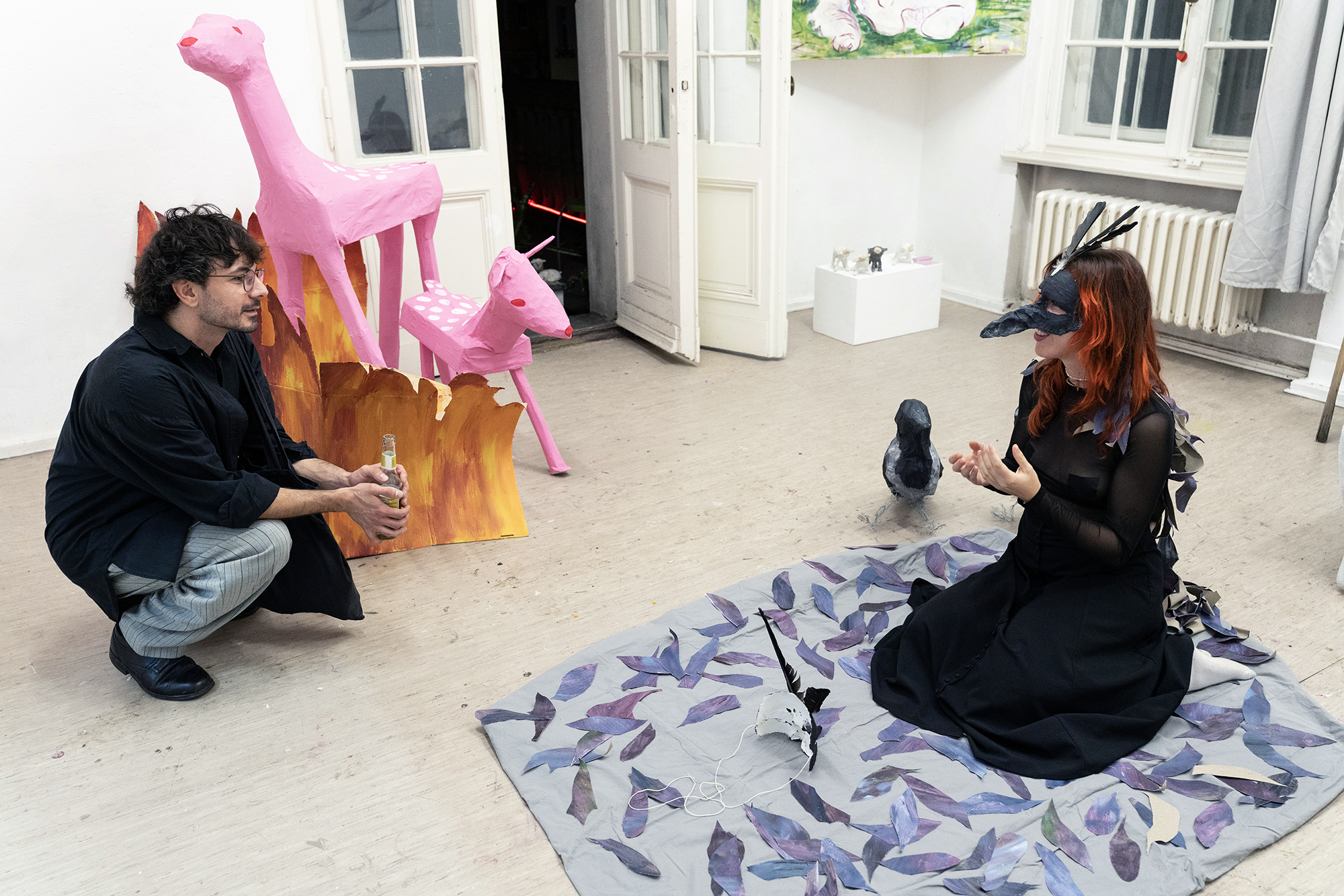
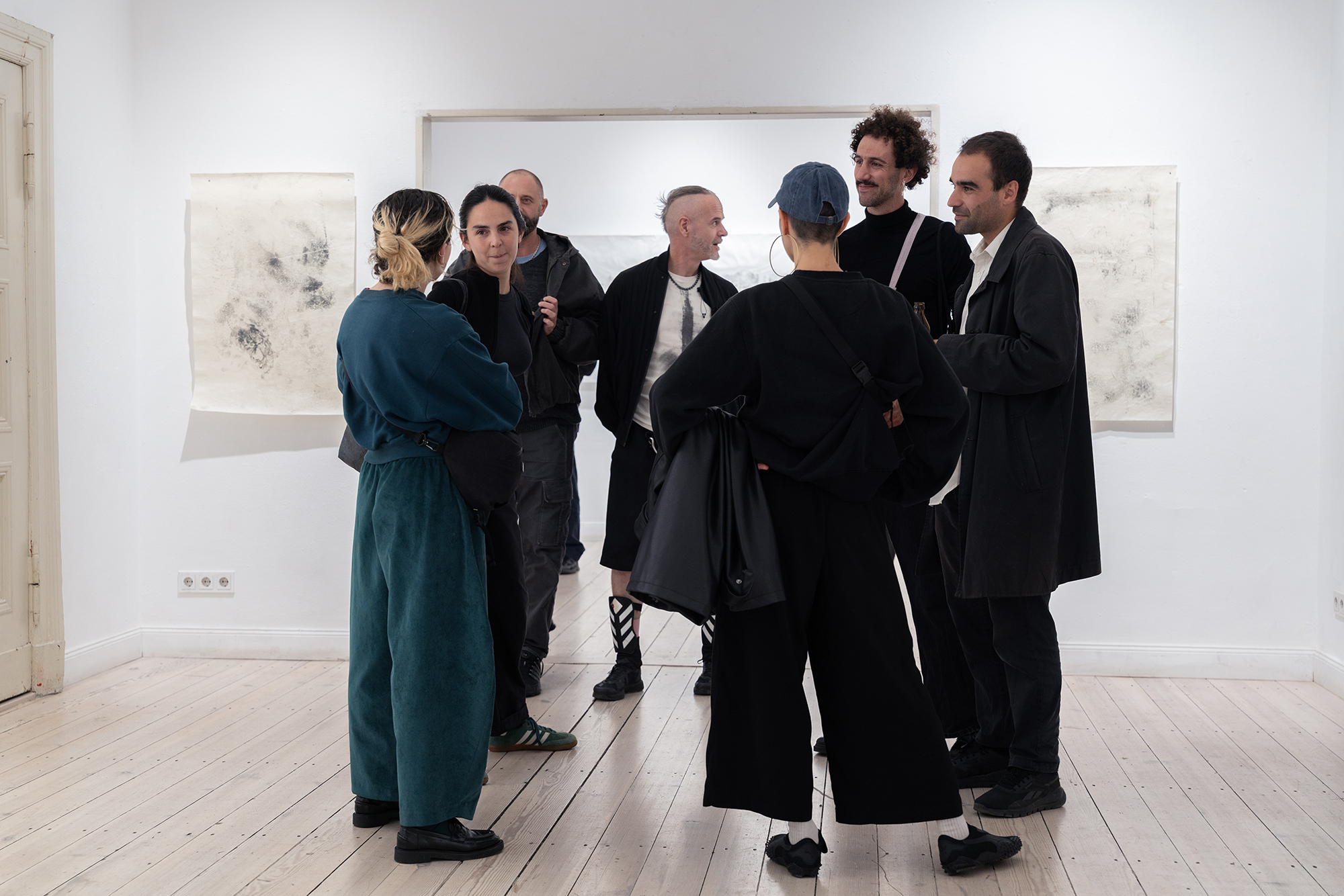
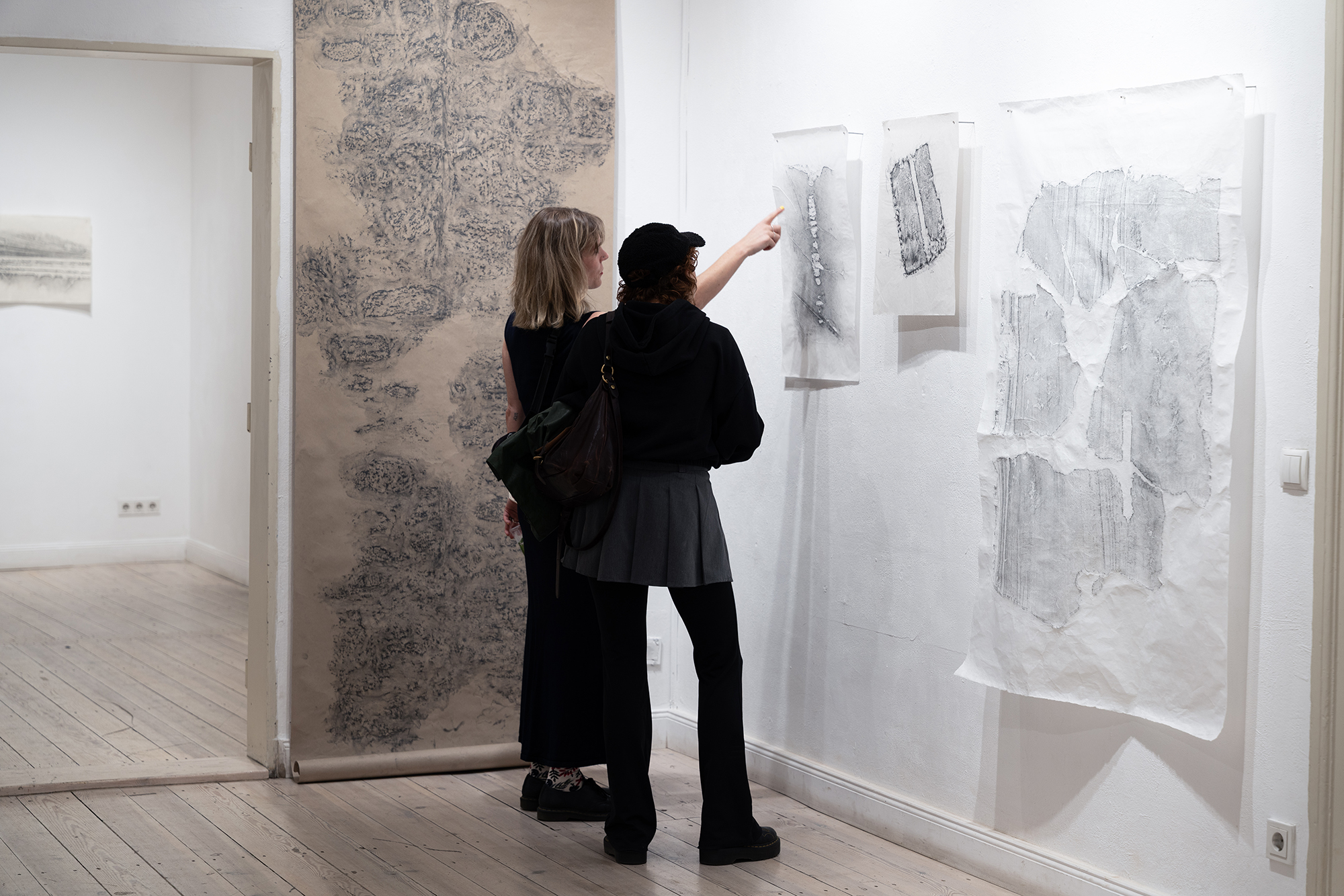
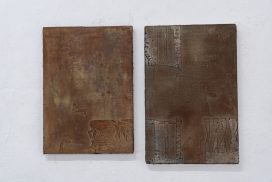
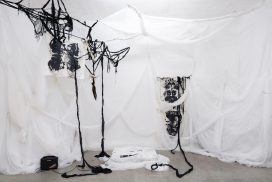
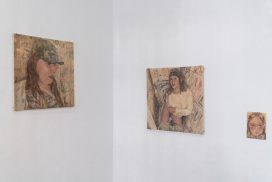
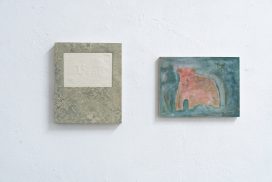
The artists’ works span a wide array of themes and mediums. Adrien Iz Nettere is an artist and designer who works with light and images. Using ceramic and illuminated panels, Nettere’s constructions indulge fiction and projection. Akihito Noro’s paintings are places where viewers encounter their own perception. He stops his brush just before explanation is complete, an unfinished line can become the place where perception starts to move. Amy Rondahl’s work is rooted in an interest in how the body is regulated through cultural and social boundaries. Focusing on spaces that function as heterotopias, where these distinctions are temporarily blurred, she investigates the conditions that make such spaces possible. Ashleigh Hobbs, known by her artist name Arnika, is a multidisciplinary artist and musician working primarily through sound and performance, expanded through self-portraiture and installation. Her practice explores femininity, bodily autonomy, and the ways internalised ideals shape the female body and psyche. Belén Benavent’s artistic practice is rooted in direct observation and immersion in places that often remain outside our everyday view. Through painting, she explores how people live, work, and shape their daily lives in places marked by inequality, but also by the richness of everyday life. Berk Akkaya’s work examines systems of power and the forms of oppression that shape everyday life.The artist is drawn to structures that feel imposed, unequal, or so deeply normalized that they often remain unquestioned. Chiemi Haraguchi is a Japanese-Indonesian multi-disciplinary artist and doodler based in Berlin. She sees herself as a vessel in her work, trusting instinct over plan, letting things come through rather than forcing them into shape. Dari is a self taught painter whose work explores restraint, compression, and the unstable space between abstraction and recognition. Influenced by observation and distance, his paintings reflect what it means to witness and observe, rather than fully participate. Esteban Huacuja is a Mexican artist and architect whose practice operates between sculpture, architecture, and installation. Grounded in the technical investigation of spatiality, his work examines the relationships between matter, light, geometry, and perception. Eva Maria Butscher is a psychologist, shamanic practitioner and visual artist, working under the artist name Herzensfluss. Working intuitively with mixed media and gold leaf on canvas, Butscher explores how inner experiences — emotions, sensations and subtle perceptions — can become visible.
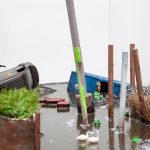
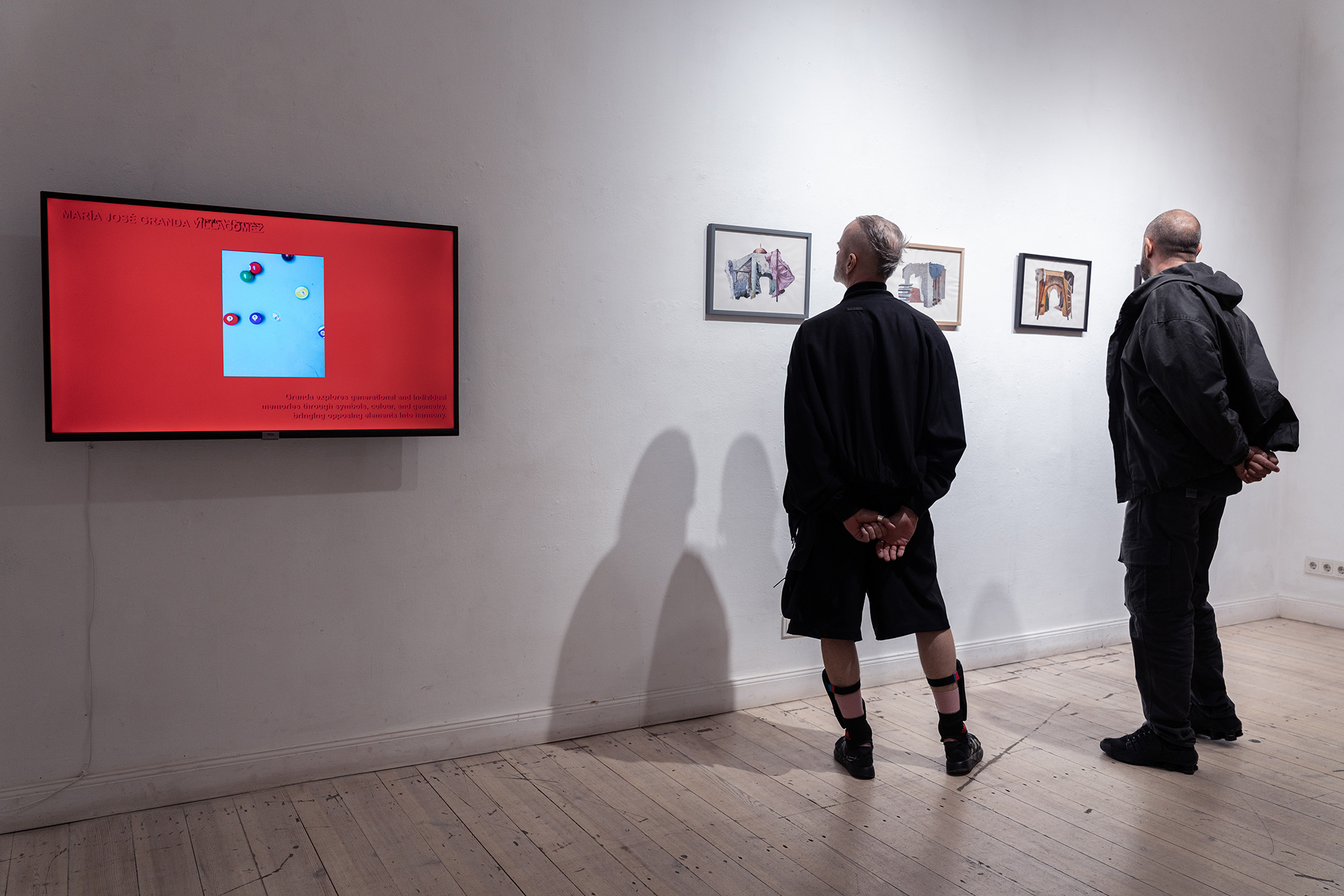
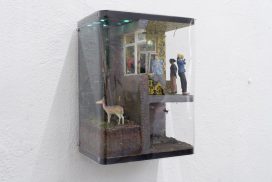
Hera Wing is a multi-modal artist who blends various creative practices, mediums and disciplines—using sensorial stimuli, found objects and new media to distill surreal imagery into immersive worlds that bend notions of utopia and dystopia. Jaye Jiyoung Yoon sees herself as a person on the threshold, always a stranger, she is interested in the body as a site of encounter—The Passing You, The Watching Me—across time and space. Krista Gay is an artist working across photography, video, text, and installation. Their practice investigates the relationship between Blackness and its viewer, examining how images are produced, circulated and consumed. Working with appropriated imagery including family archives, and digital debris, Gay explores the tension between presence and erasure, recognition and representation, visibility and opacity. Lauren May’s practice spans painting and sculpture, working with materials that possess an innate bodily quality and poetic resonance: mold making, ceramics, resin, silicon, and polymer clay, and intricate oil painting. She extracts strange symbolic forms and dreamlike logic of fairy tale narratives, encrusted with imagery, motifs, and symbols dragged up from a human collective unconscious. Lorel Hill creates immersive dioramas of real places, reimagined to serve different narratives of interspecies encounters. Hill fills the gaps left by institutional neglect with his own desires, sometimes selfish or comedic. María José Granda Villagómez is a visual artist and poet who expresses herself through symbols, colours, and geometry. Her practice reflects the intersection of craftsmanship and fine arts, characteristics attributed to her mestiza identity. Melissa Schwarz is an interdisciplinary artist, designer, and researcher exploring the intersections of ecology, technology, embodiment and extraction. Through her interdisciplinary and research-based practice, she investigates how landscapes, bodies, and infrastructures are shaped by environmental, political, and economic forces. The artistic practice of Melissa Van Havere revolves around animals. With her work she wants to question the current relationship and dynamics between human animals and non-human animals. Onlysattva’s practice begins with a daily discipline of meditation and drawing. He approaches the studio as a space of listening — to the body, to memory, to place, and to the moment when a line, colour, or motif asks to emerge. Rox Vazquez’s practice brings together material research, speculative fiction and sculptural installation. Drawing on methodologies of world-building and natural history display, she constructs fictional organisms and systems of evidence that blur the boundaries between observation and invention. Seehyun Kim’s practice examines how perception shapes reality. Working across painting, installation, immersive theatre, moving image, and virtual environments, she creates works that move between different scales, perspectives, and temporalities. Tiphaine Scott de Martinville practice explores forms that keep trajectories open through detours, material encounters and spatial arrangements. She works with painting, drawing, scrolls, invented signs, objects, sound and installations. She calls these works Theatres of Thought: environments where language is projected, rolled, sealed, handled or set in motion. Xuecong Wang’s art begins with a premise: a small, often unlikely proposition she takes seriously for the duration of a work. It could be an imagined scenario, an intrusive thought, or an unrealistic hope. Her art is not about offering resolutions; it is about stating the unresolved, and creating a place for viewers to feel the emotional weight of a world that will not stop changing.