Meet the On-line Artist // Chiemi Haraguchi
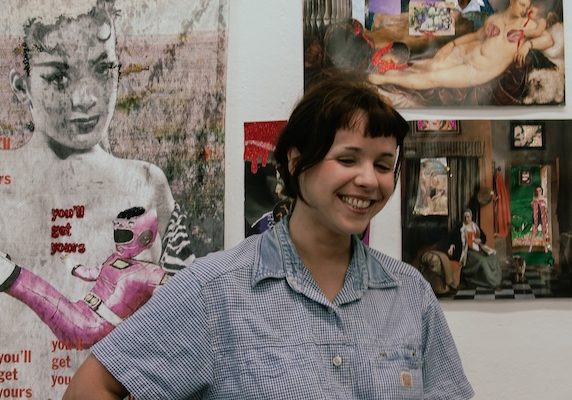
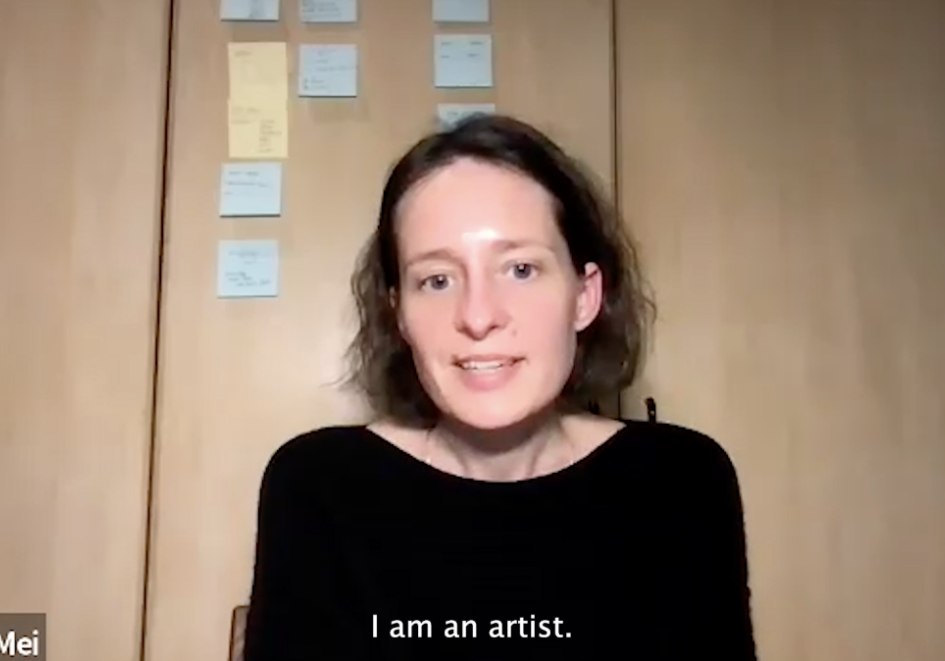
Chiemi is a Japanese-Indonesian multi-discipline artist and doodler based in Berlin. Her work is rooted in the many places she has called home, Japan, Indonesia, Australia, Portugal and now Berlin, Germany.
For Chiemi, art is emotional journaling. When words fall short, she picks up her pen, brush, or whatever medium finds her, and lets lines and dots do the work, a rhythmic, intuitive language built across cities and continents for over fifteen years.
Can you tell us a little bit about yourself? Specifically, we would love to know about your background.
I’m Chiemi, a Japanese-Indonesian mixed media artist, born in Indonesia. I’ve lived in Japan, Australia, Portugal, and Germany, and I draw inspiration from the places I’ve lived and visited.
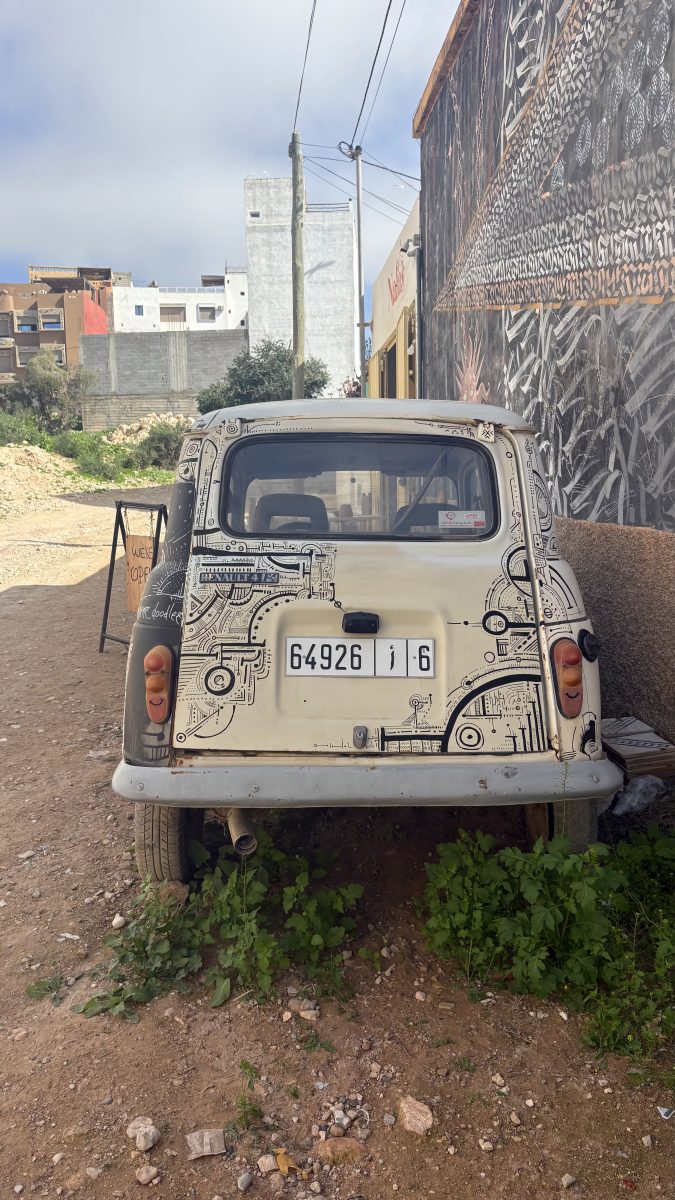
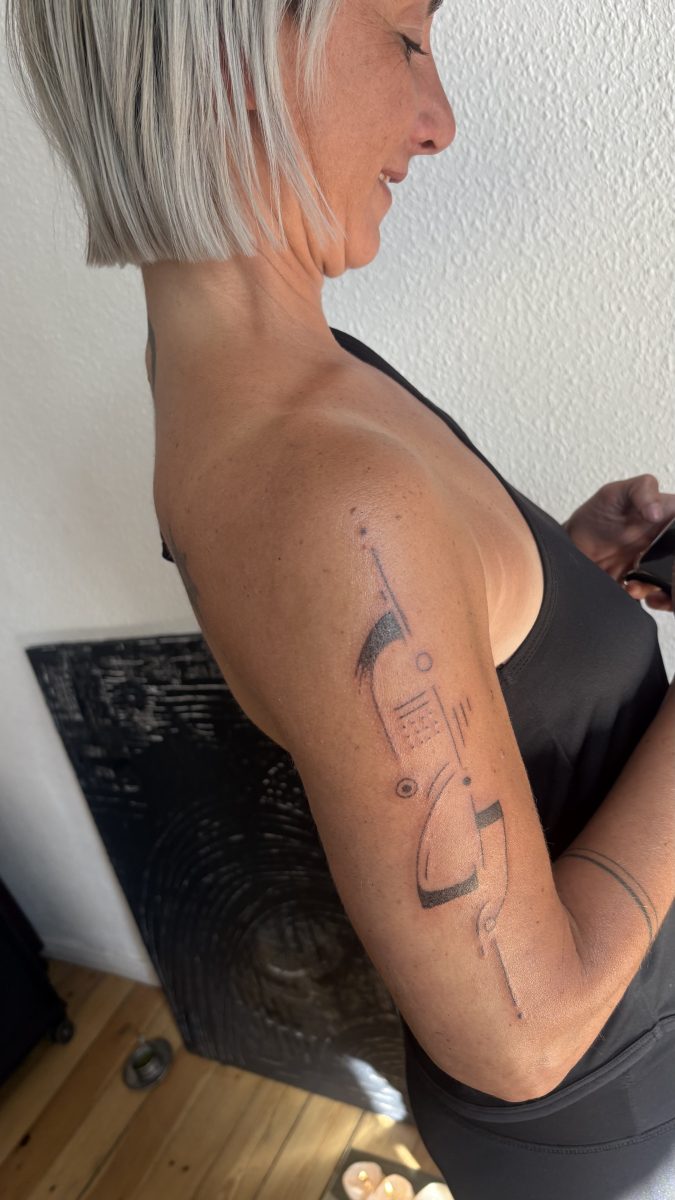
I travel with my sketchbook, but when canvas or material finds me, I don’t hesitate to connect with it and pour my love of art into the object. Anything can be my canvas: paper, a car, a piece of wall from a construction site, or human skin, where I hand-poke tattoo.
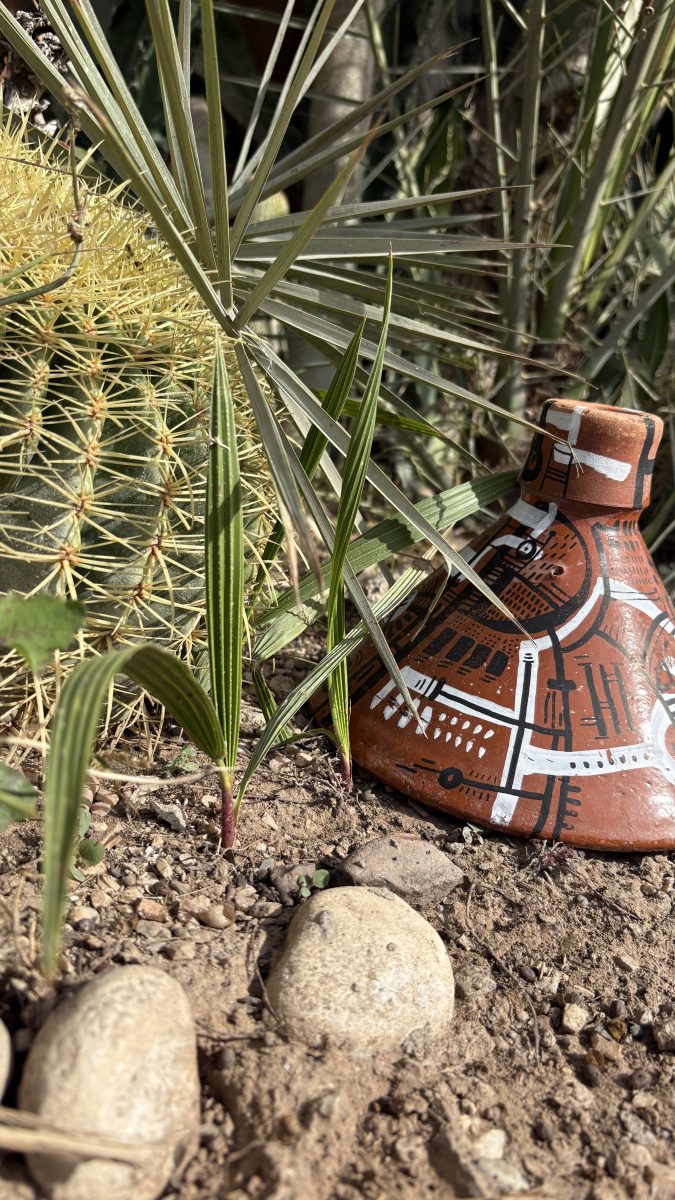
When I was in Morocco, I found broken tagine pots on the street. They were calling out to me, so I took them home and painted them. When I find interesting driftwood, I draw on it and leave a little mark of me wherever I go. I think that’s who I am, someone who leaves a small trace of herself in every place she passes through.
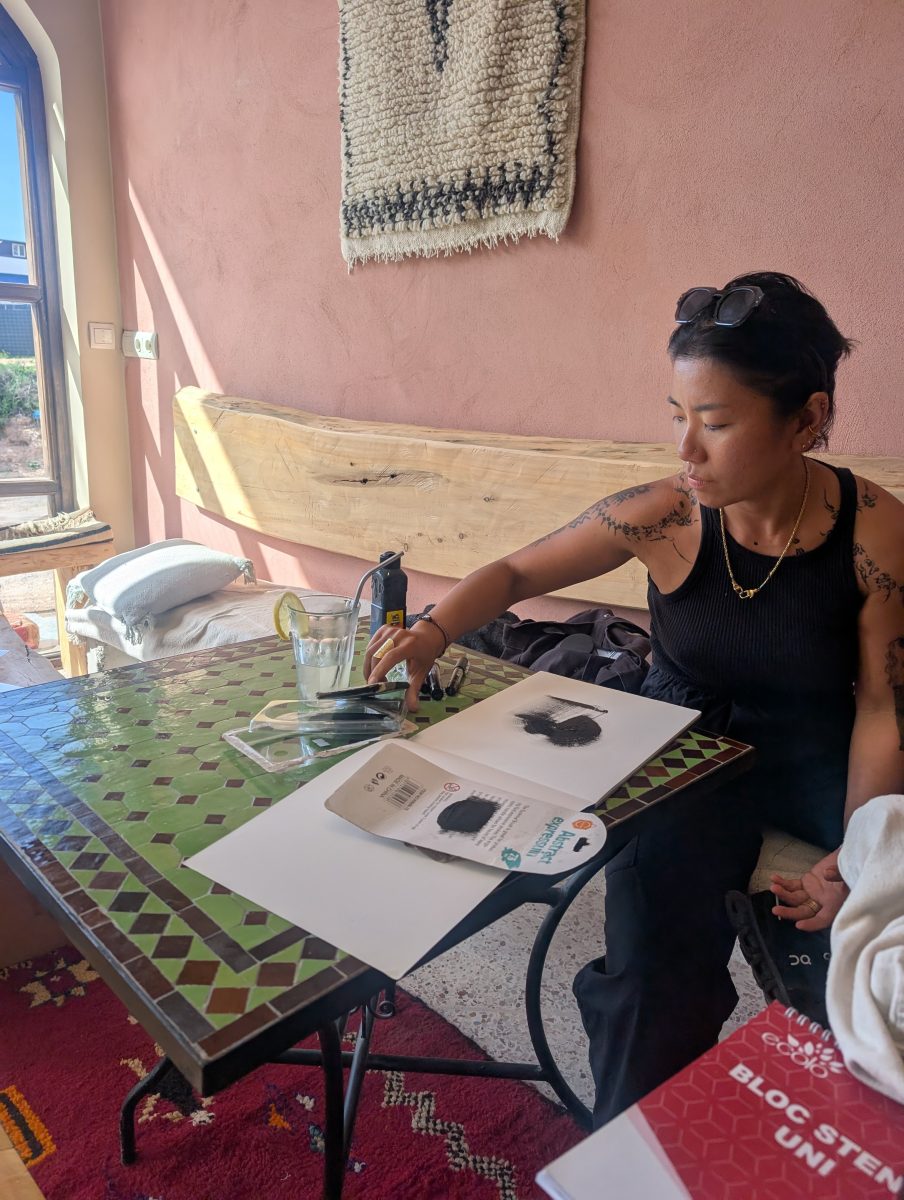
How would you describe your artistic practice?
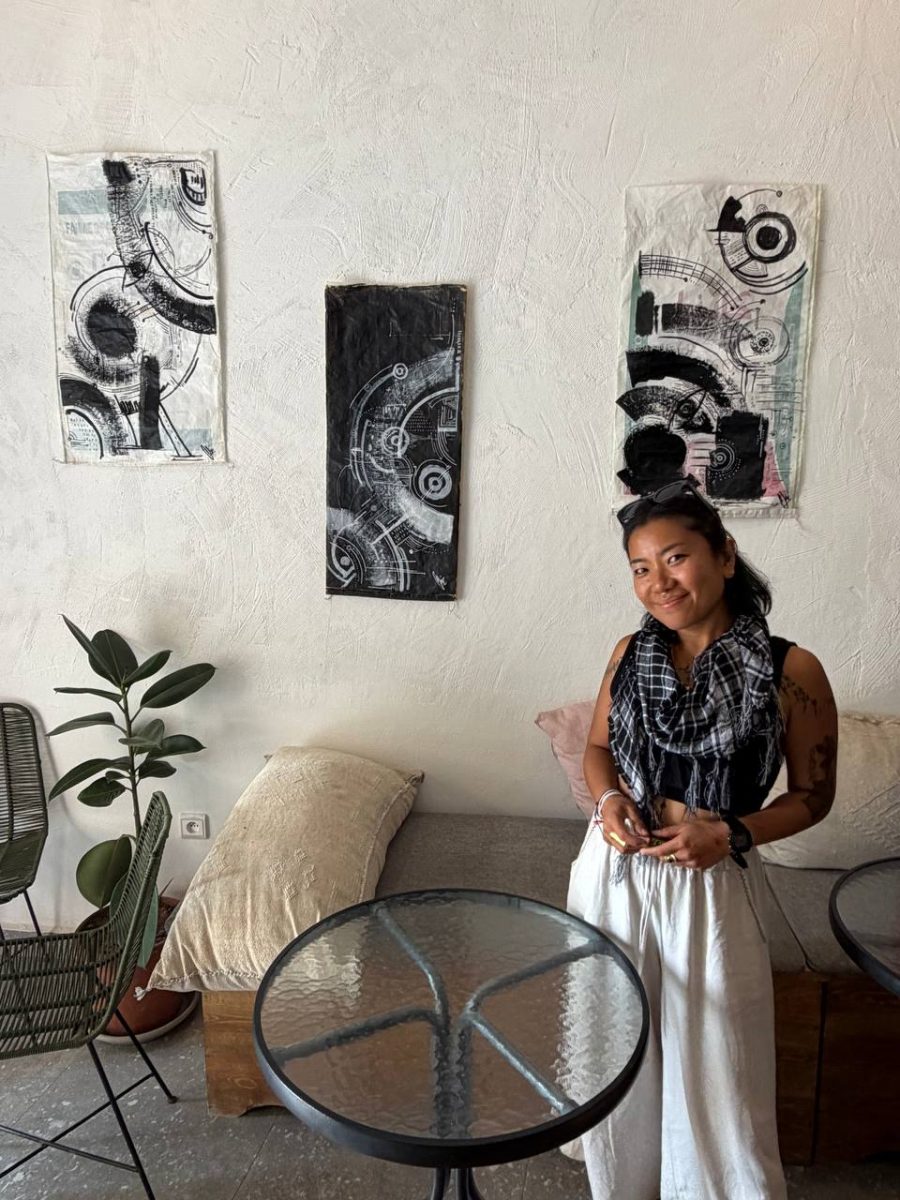
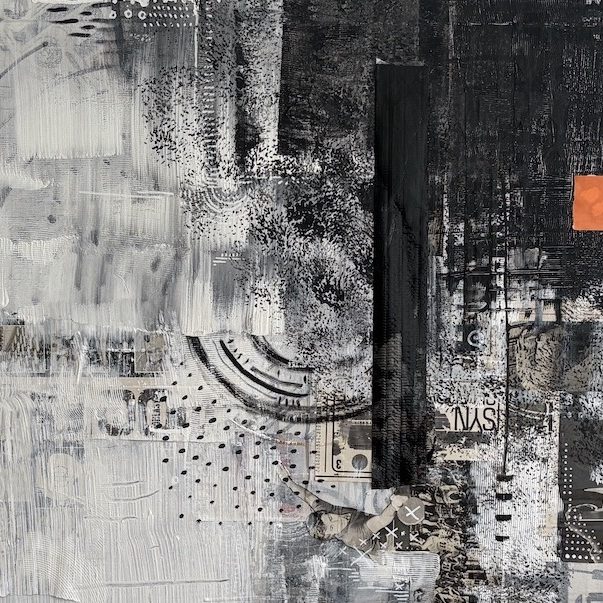
Intuitive. I don’t attach to the outcome, I enjoy the process. My pieces are built layer over layer, mostly in acrylic, working in black and white, and letting the collage material carry all the colour. There’s a sense of empowerment in painting over something you spent hours creating, letting go of what’s there and staying curious about what’s coming. That’s the philosophy of my life too: impermanence, and detachment from the past and future. I stay present in front of my art. It has seen it all, the ups and downs. I’m honest and authentic with it. I don’t hide my emotions, I let my body transfer what’s inside onto the canvas in front of me.
People often ask me, “When do you know if an artwork is done?” My answer is always the same: the art will tell me when it’s done, and I let go.
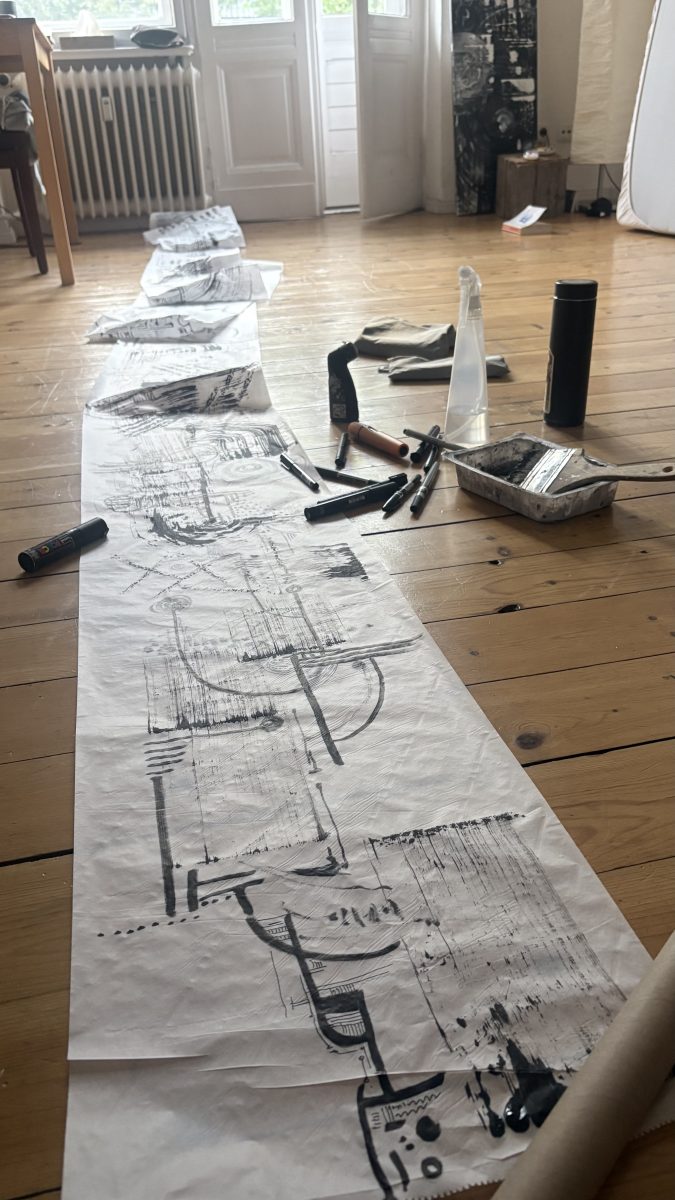
What is your methodology or process for creating a new project?
I meditate before I face a new piece. It’s a new journey, and I like to set an intention before I start, sometimes just a word or a feeling. The rest, I trust my intuition and let my body flow onto the canvas.
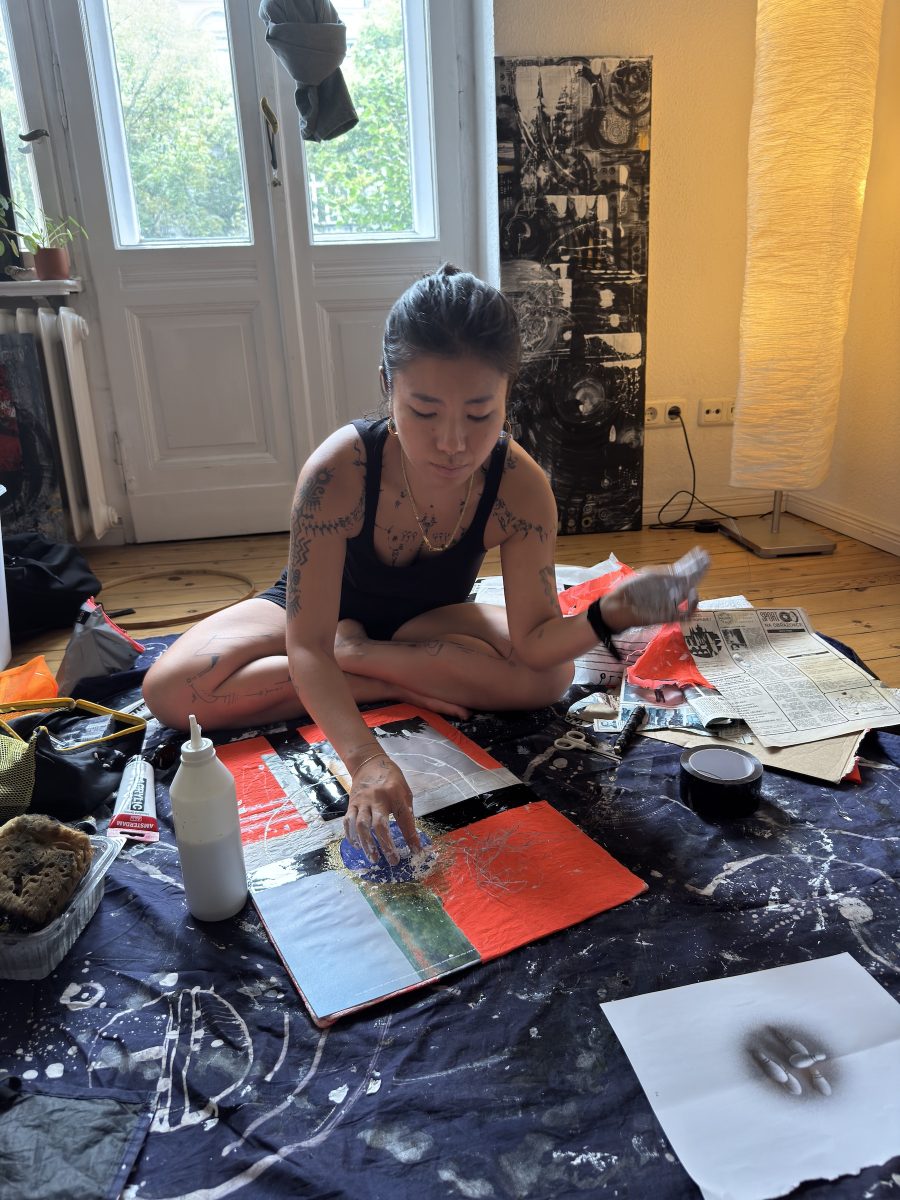
Tell us about the project you’re working on during your online residency at GlogauAIR.
I’ve been working on a series called Palimpsest. A palimpsest is a surface that’s been written over and reused, but still holds ghost traces of everything that came before.
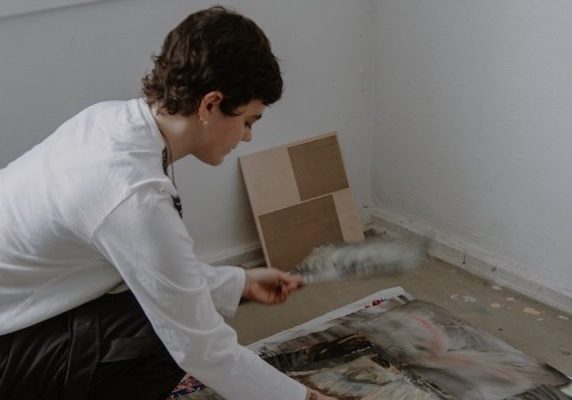
These pieces are built from collage and paint, layered again and again until nothing sits on a single surface anymore. Each layer holds a different emotion, and none of them are labeled good or bad, they’re simply what was true at the time. Before I paint over a layer, it exists as its own complete piece. Covering it is its own kind of act, a strange courage in choosing to move on instead of holding on. Nothing disappears completely though. It sinks underneath and shows through as texture and shadow, giving the next layer something to sit on.
So far I’ve worked on six pieces in the series, and several are still going, I move between them simultaneously rather than finishing one before starting the next. That’s really what the piece is about: letting go on purpose, trusting that something new can still come from what was just buried. The work is ongoing, still being layered and reworked, which feels right. It’s a piece about impermanence, so it makes sense that it hasn’t settled yet either.
Looking ahead, I’d like to take this way of working into bigger pieces, murals, or work that connects to urban life and architecture, spaces that already carry their own layers of history before I even touch them.