Meet the Artist // Melissa Van Havere
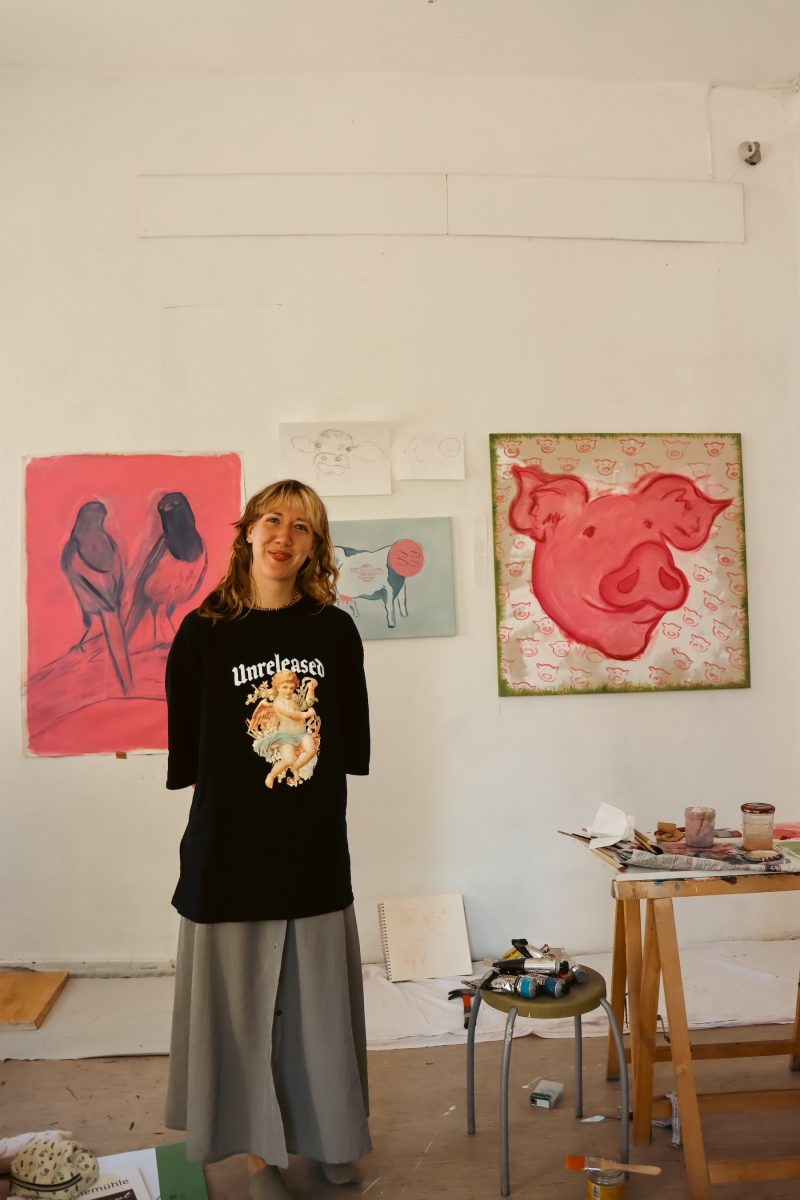
Melissa Van Havere’s practice centers on animals, questioning the relationship between human and non-human life. the artist critiques systems such as industrial farming and exploitation, highlighting how animals are treated as objects rather than sentient beings. Through a light and accessible approach, the work invites reflection, empathy, and more conscious ways of coexisting.
Do you want to start by telling me a bit about yourself and what you’re doing while you’re at GlogauAIR?
I’m Melissa Van Havere, an artist based in Belgium focusing on animals and animal rights.
I feel like I’m at the start of my artistic practice, so I want to experiment a lot during my time here at GlogauAIR.
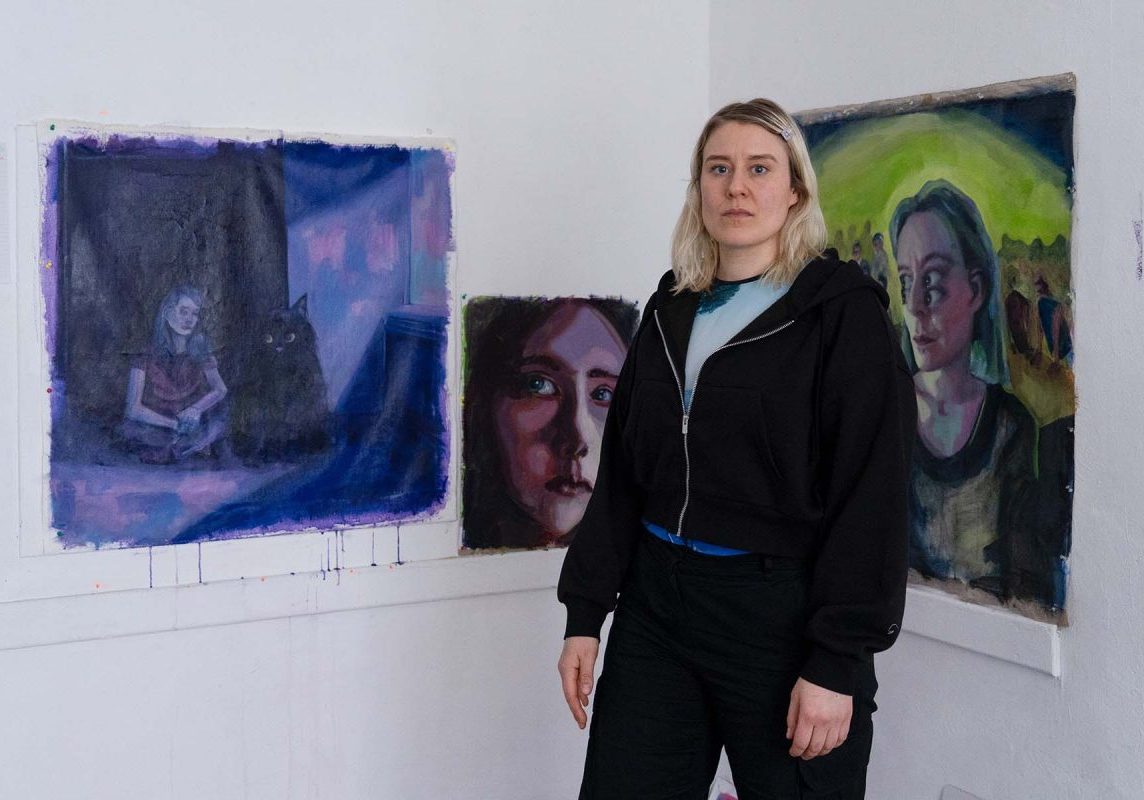
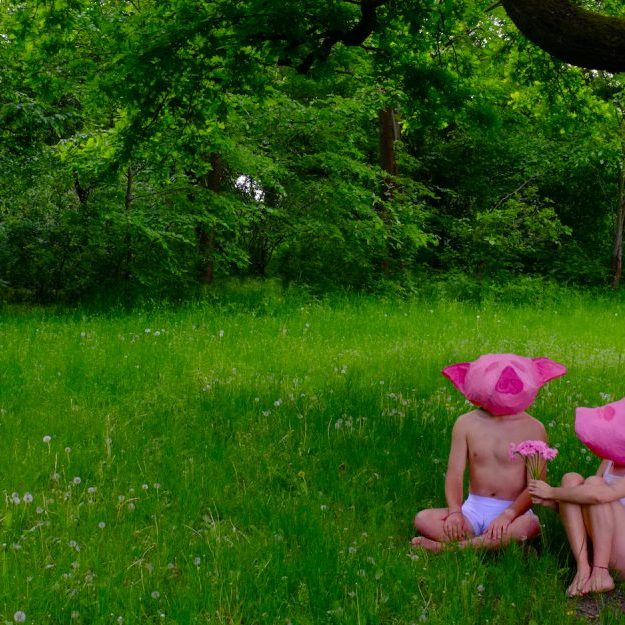
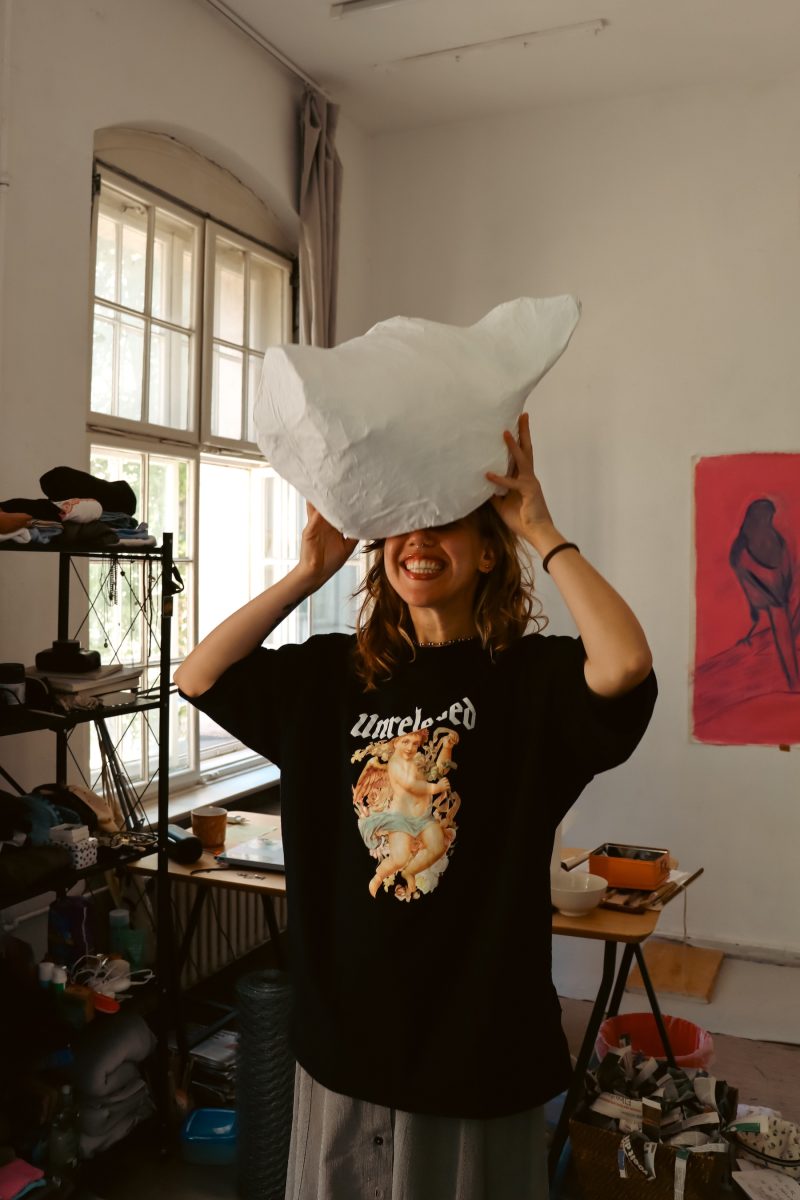
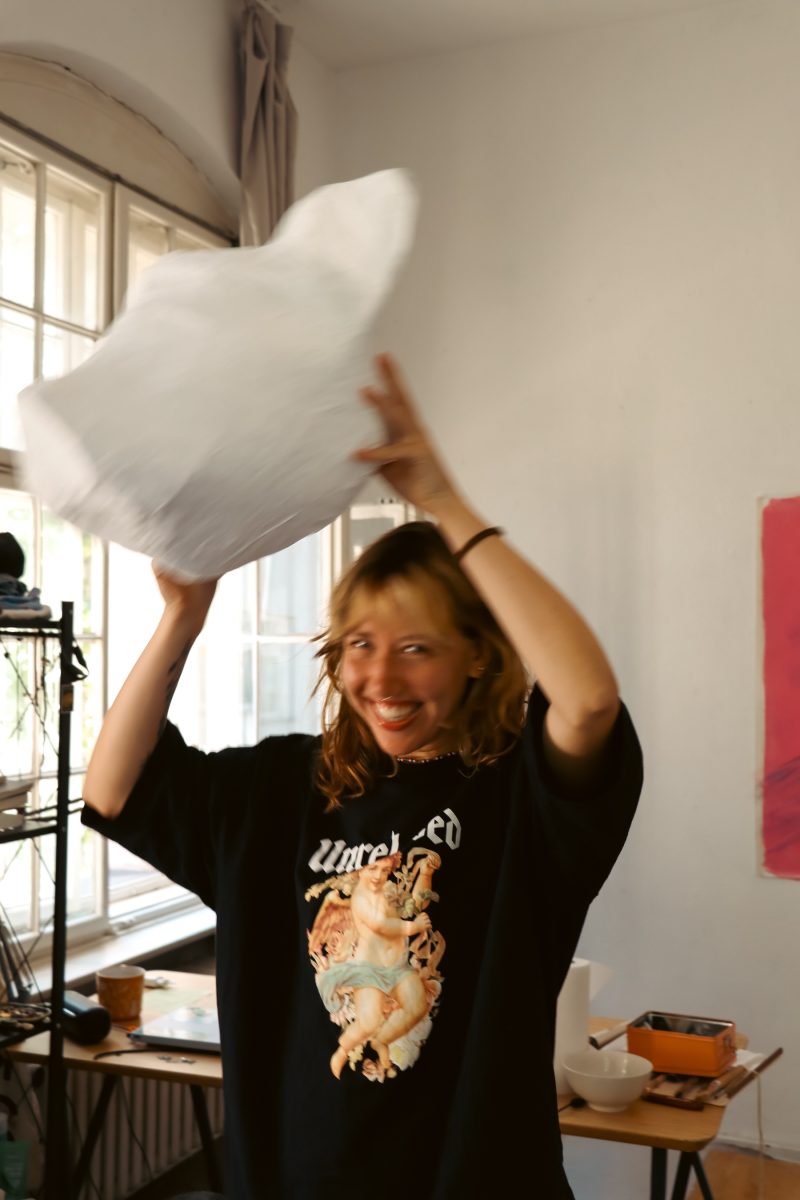
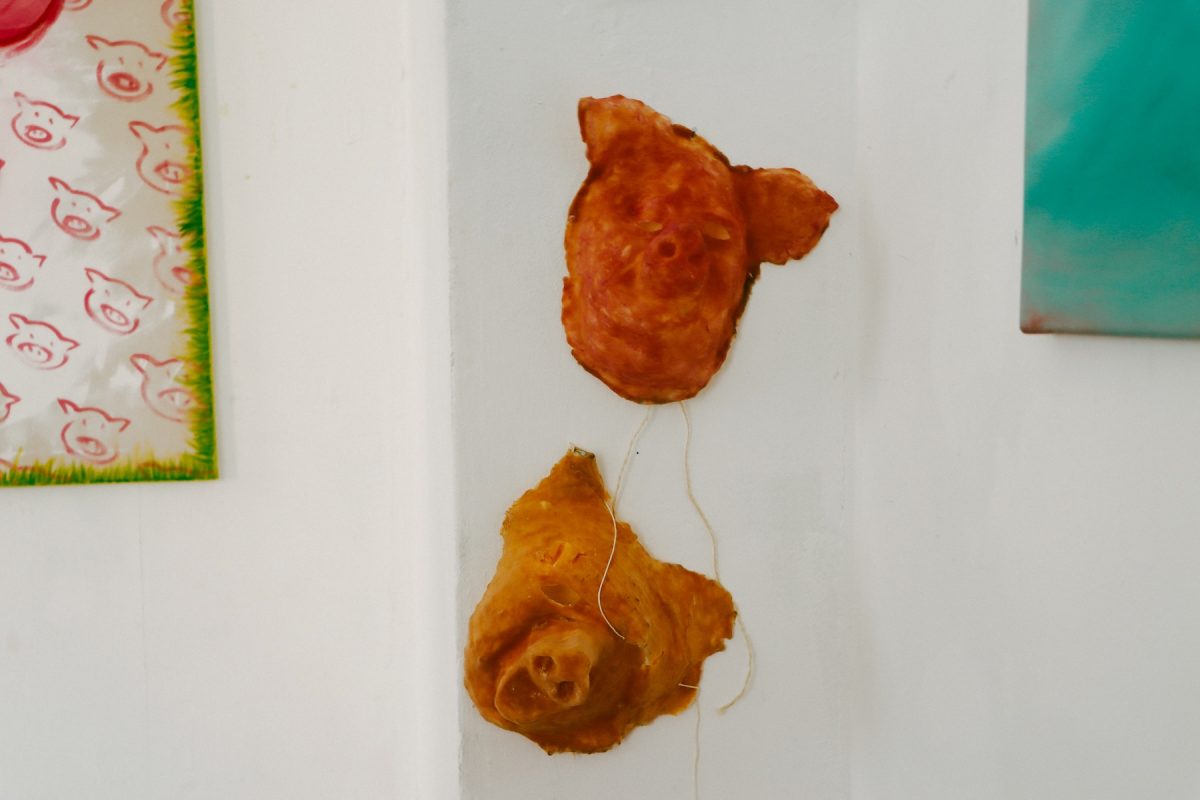
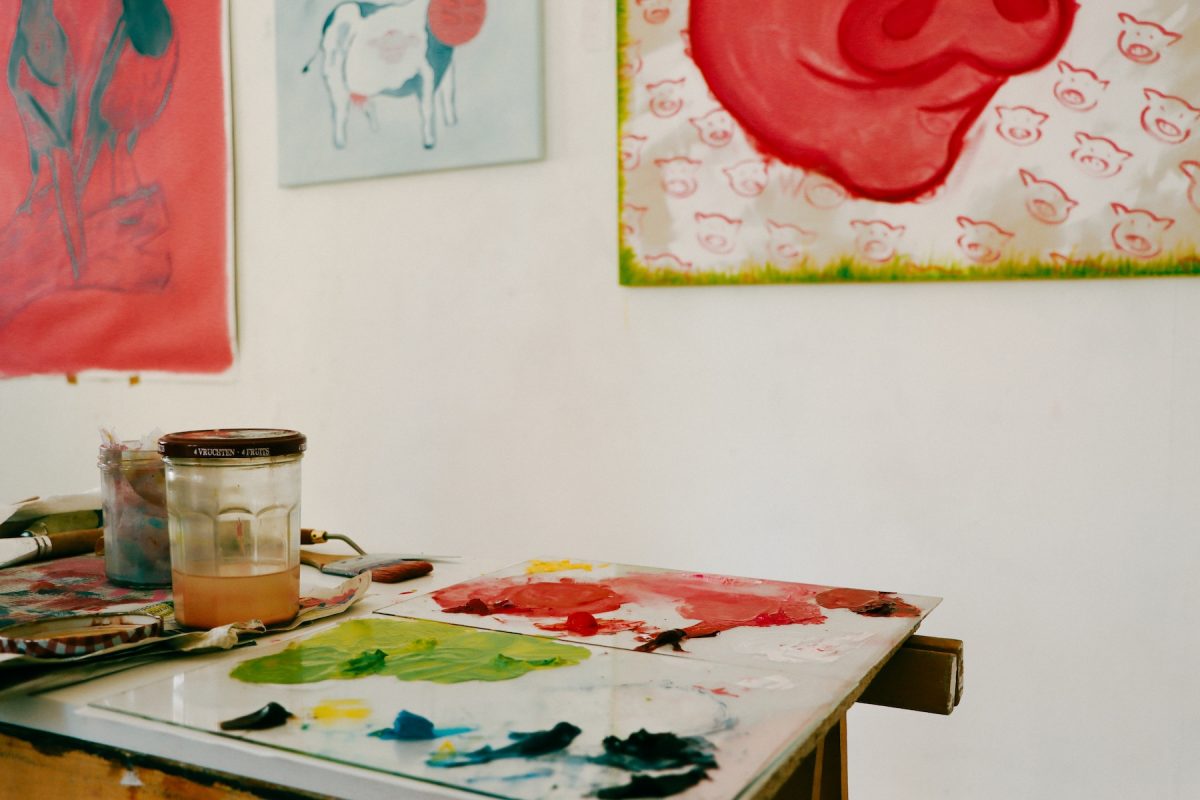
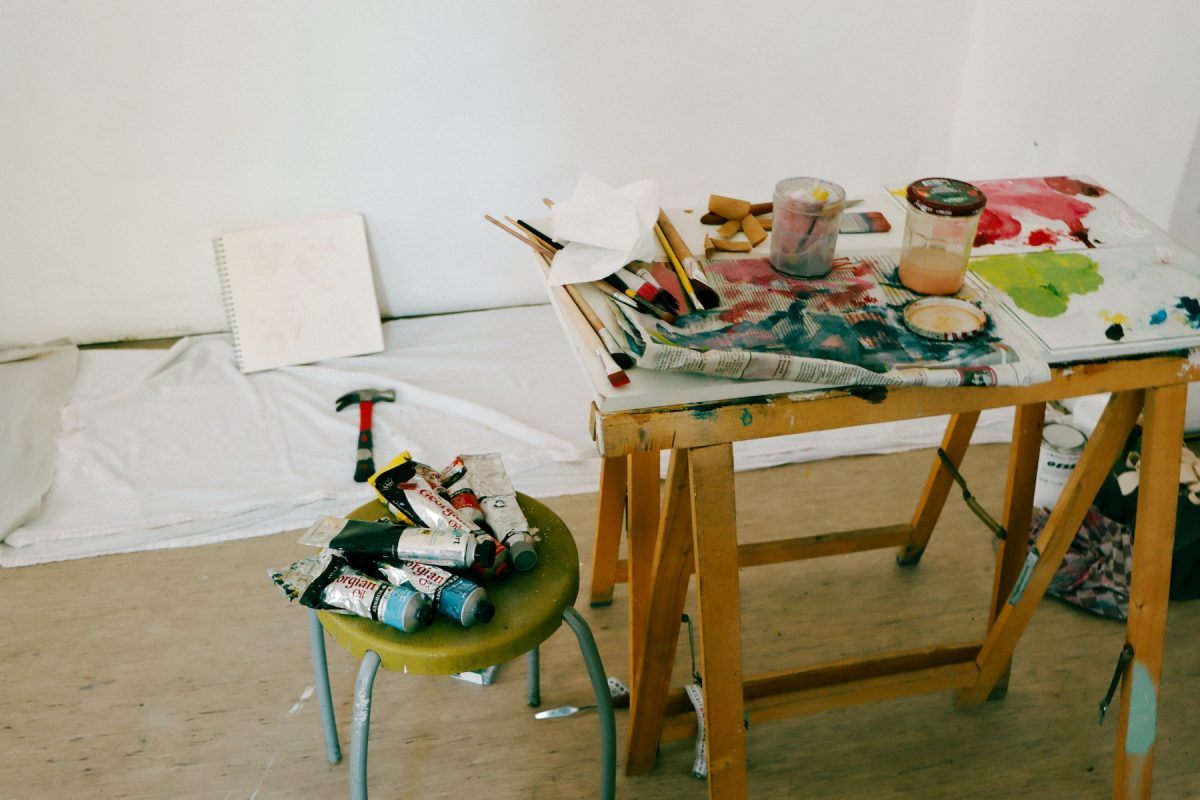
Prior to this residency, I was mostly working with painting and ceramics and some sculptural works sometimes; such as installations with papier-mâché. During my residency I’m also exploring performance. I’ve been working on these masks at the moment. Like these pig heads. To take pictures and create a performance with them. I also want to work a lot on my paintings. I want to create a lot and mostly learn from experience. It’s also important for me to ask people what they feel when they see my art. Because It’s important to get my message across.
And your primary message is about animal rights, yeah? Where does your drive to make art about animal rights come from?
I think ever since I was a child I had a strong feeling of justice. And it’s never left.
A lot of children have this feeling of justice. Like why isn’t there peace in the world? Why is there war? When you’re a kid, you’re very naive. And I don’t want to lose that. I want to create something that has an impact on the world. I want to have a message.
Usually, while advocating for animal rights, like with the protests, people show the brutality of the meat industry. But I think that makes people look away. I want to talk about animal rights in a light-hearted, naive way so people listen.
I want to plant seeds of empathy. I think if I can plant these seeds, it will stay in people’s subconscious and inspire change from within.
Because, for me, if I see brutal imagery, I want to look away. It hurts. I think a lot of people know what’s going on. They know animals are suffering, but they don’t want to think about it. They just want to keep eating meat without feeling guilty about it. So I want to spread awareness in a different way. To show that animals also have feelings, emotions. They’re similar to us in a lot of ways. They also have relationships and friendships. They also enjoy the sun shining on their face. If I can make people be more aware of that as well, and spark some empathy, I think the change will gradually come. Or that’s what I believe.
Because animal rights are connected to everything. Misogyny, sexism, colonialism. It’s also about human rights. Environmental impact. It’s so much more than just animal rights.
Tell me more about that. How do animal rights and community connect for you?
I think that animal rights and human rights are interconnected. Workers in animal industries are working in horrible conditions. They’re prone to getting attacked by the animals; they receive low wages; have nightmares; they disassociate a lot. A lot of the Amazon rainforest gets cut down for cattle farming and to grow crops to feed them, which threatens vulnerable communities. It’s all connected. It all goes back around. I think if we can make the world better for animals, it will also become better for humans.
The vegan diet is a non violent diet. It’s a guilt-free diet. It’s about love and empathy.
I want to try hosting some vegan dinners during the residency. I feel like there’s a lot of resistance towards a vegan diet. I want to cook vegan meals and hold discussions about our eating habits in this relaxed environment. I’ve been thinking a lot recently about how the fear of slaughtered animals must be ingrained in the flesh that people eat. I believe you consume their fear, their anxiety and depression. I don’t think the fear leaves when they die. I think it’s embodied in the flesh that people consume.
When people look at your art, it’s clear what you want them to leave believing, but how do you want them to feel when they leave?
I don’t want them to feel despair. I want to leave a hopeful message, a message of empathy. I believe strongly in the saying, “be the change you want to see in the world.”
I want people to believe that they can make a change. Because if everyone does something, it can make such a big change. But when people believe that they’re alone, nothing will change. I think we have a lot of influence on everyone around us.
I want to show animals as beings like us, creatures with identity and agency. So people don’t just see them as objects anymore, like something you consume, but as beings who also just want to live and enjoy their lives.
Interview Jo Birdsell (jobirdsell.com)
Photos Raviva Nsiama (@raviva.ziama)