Meet the Artist // Dari
Dari is an artist from the United States, currently living and working in Brooklyn, New York. His practice moves between highly controlled, flat compositions and a newer body of work shaped by observation and lived interaction. Using hand built supports, repeated masking, sanding, and flat matte paint, Dari constructs works that exist between architecture, memory and encounter.
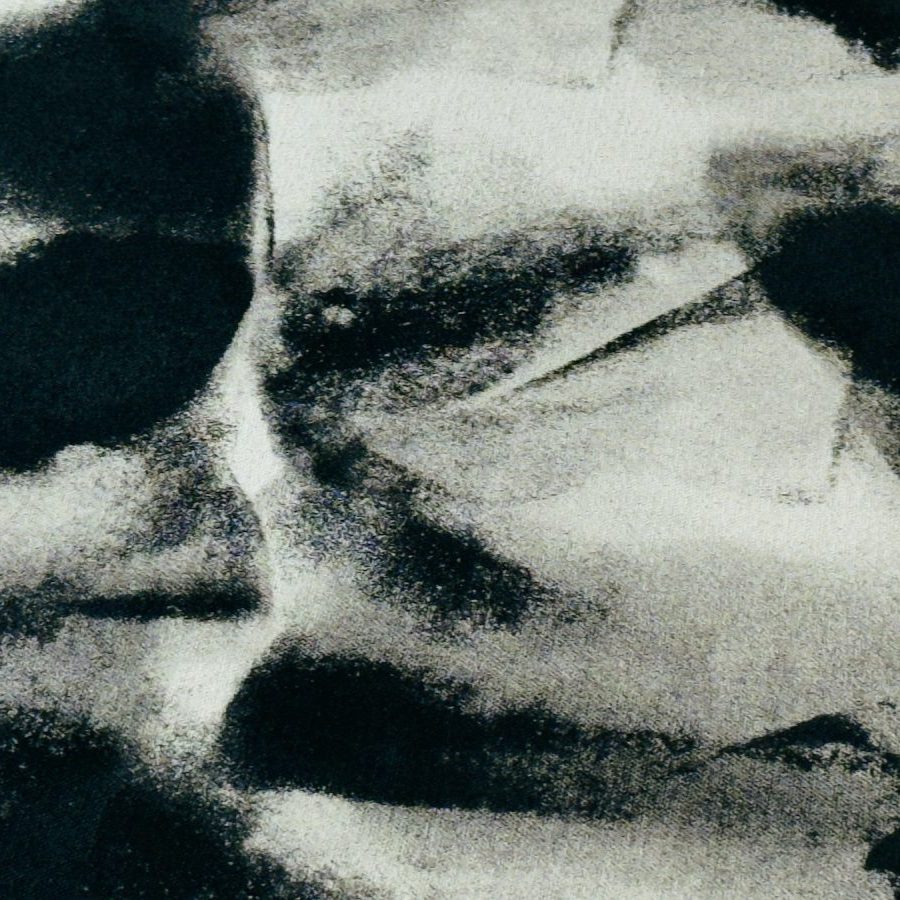
Can you tell me a bit about your background and what you’re working on for your residency?
So I grew up in Detroit. My grandfather was insanely talented with his hands; he could draw, build, fix anything.
Watching him showed me that making something from nothing is powerful. It’s not just about the object, it’s about the discipline behind it. I’m a self-taught artist, so I’m still kind of new to having these formal conversations about my practice.
I didn’t go through critique rooms and theory classes. I just had to figure it out as I went. I think that’s why I build everything from scratch: cutting the wood, stretching the canvas, and even sanding the gesso over and over. I’ve always had to figure it out on my own, so it’s important to me that the work starts there. I don’t want to take any shortcuts.
For this residency specifically, I’m developing paintings that hold tension without being resolved too quickly. I’m interested in presence and absence, and what’s withheld versus what’s revealed. Being in Berlin, outside of my normal environment, has made me more aware of distance and perspective.
But being here, the work feels, of course, quieter, but more charged and engaged.
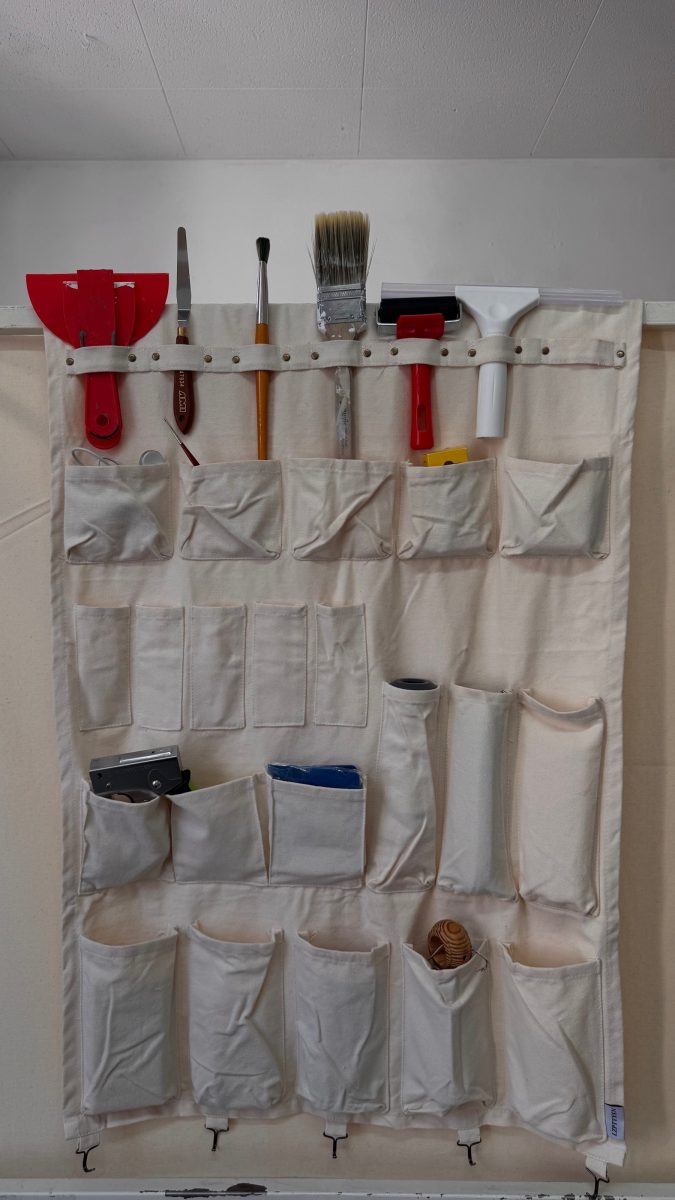
Your work moves between very controlled compositions and pieces shaped more by observation and lived experience. What pushed you to open up that shift in your process?
For a long time, control felt like safety. I learned that early on. When parts of your life feel unstable, you find ways to create order.
So for me, clean edges, flat surfaces, that sort of exact masking, and precision gave me something solid to stand on. But over time, I realized my life was never actually clean or flat. It was layered.
It’s complicated. It’s emotional. There were periods of distance and then closeness, hurt and then understanding. I think that kind of duality doesn’t fit inside of a perfect rectangle. So I started letting that into my work a little bit, slightly unstable forms, edges that look a little sprayed or loose, transitions that aren’t fully controlled, surfaces that show hesitation. It was not just about abandoning structure altogether.
It was about letting my lived experiences somewhat interrupt that. Now it’s nice because I can move between both the hard line and this kind of loose abstraction.
I think the controlled composition holds containment, and those looser works hold residue. I think together they feel closer to how I actually experience the world. And it’s weird to think about it now, but I can see where it comes from.
My grandfather gave me this discipline of making. My dad gave me steadiness. And early experiences with distance and absence gave me sensitivity.
I feel like this shift in my process feels like all of those three forces negotiating with each other.
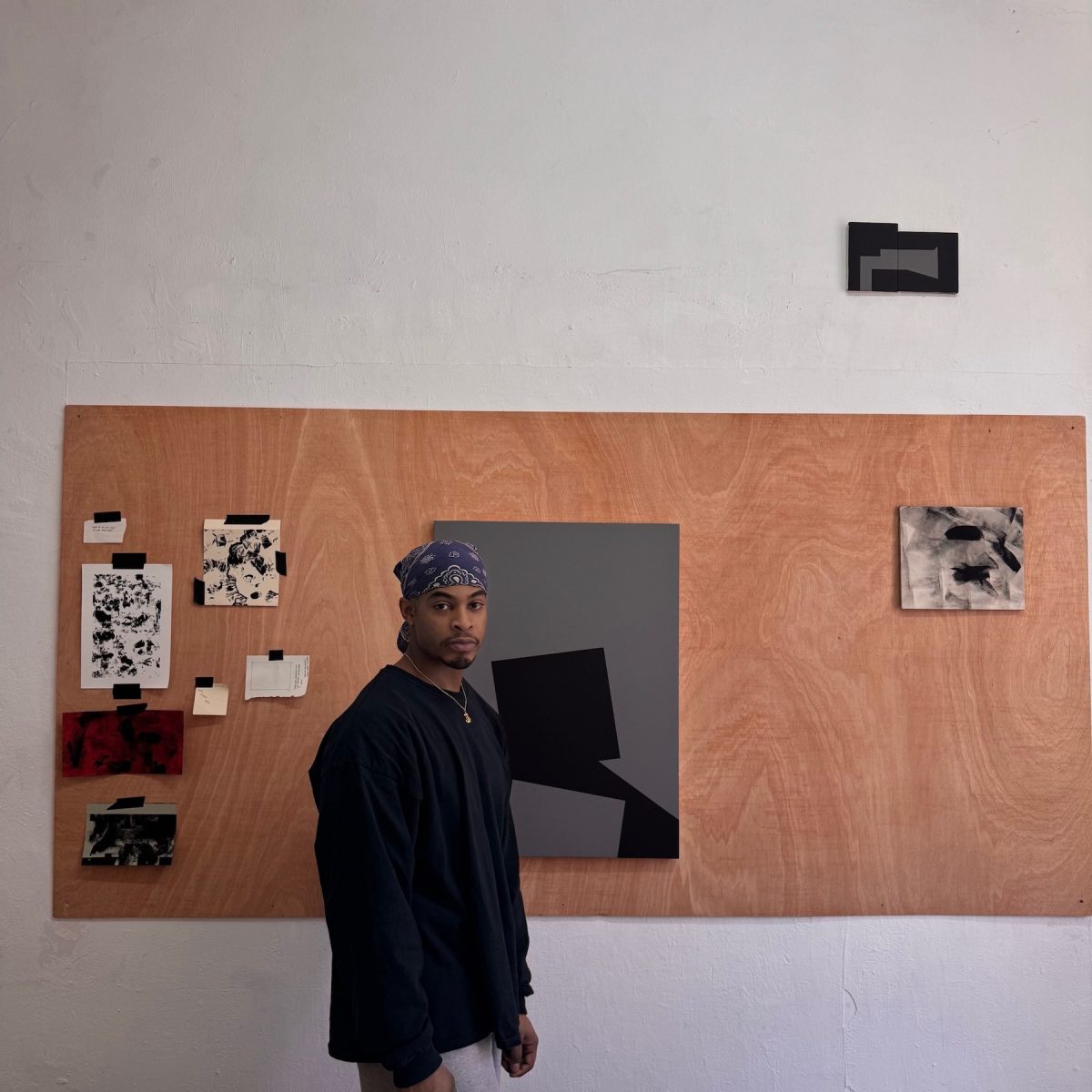
You think of your surfaces as both structure and record. What kinds of moments or experiences stick with you in your work?
I feel like the moments that stay with me aren’t loud like people usually intend them to be. It’s the feeling of being watched or watching someone else. The space between two people who care about each other but don’t necessarily know how to express it.
I grew up very close to my dad, and that closeness taught me how powerful quiet support can be. Not everything meaningful is spoken. But at the same time, growing up made me very attuned to subtle emotional shifts, tone changes, body language, pauses.
You start reading what’s underneath and sometimes to a fault. When I sand a surface repeatedly, I’m thinking about erosion and patience. When I leave an irregularity visible, I’m thinking about a memory.
The surface becomes a record of pressure. It holds the physical labor, but it also holds the emotional undercurrent. The final piece doesn’t illustrate a story of my life, It carries the residue of it. That’s fine and I’m okay with that.
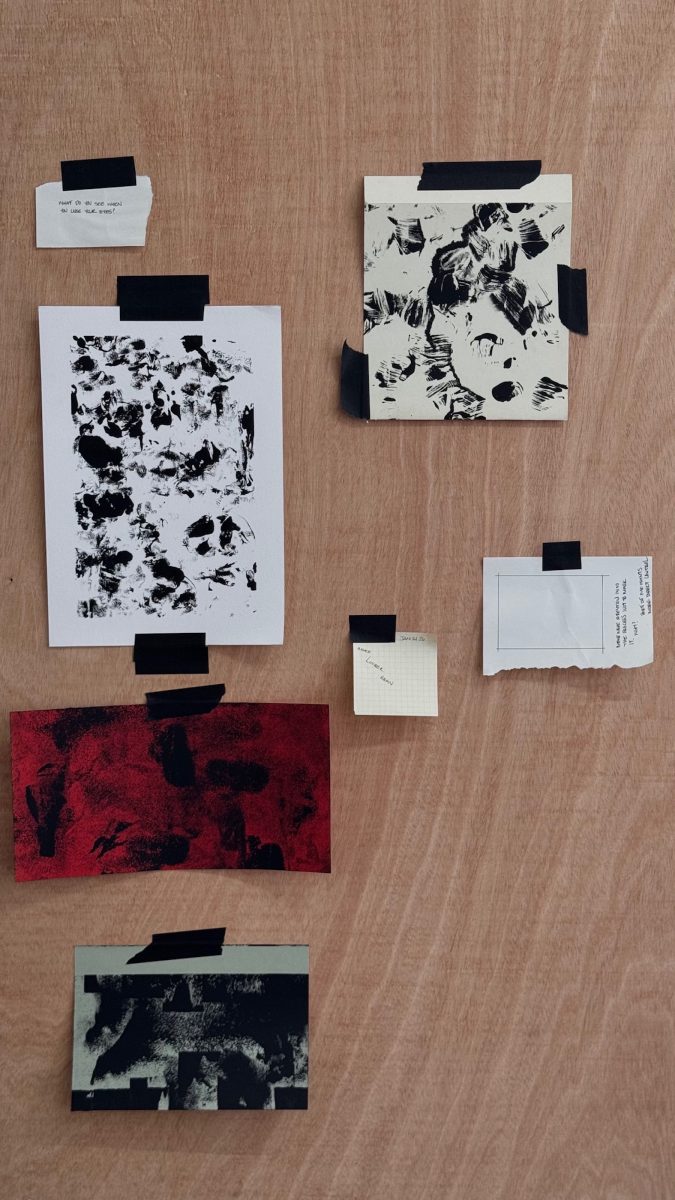
During your residency, you’re intentionally moving away from perfection and allowing irregularities to remain visible. What does it feel like to let go of control in that way?
It feels very vulnerable, but at the same time, it feels honest and natural. For a long time, perfection was a form of protection for me. If the surface was flawless, nothing penetrated, it was strong, it was contained.
But I’m at the point in my life where I’m less interested in armor. My relationship with my mom healed over time because we allowed complexity to exist. It was not about being right. It was about being honest, leaving those irregularities. And the painting feels similar. It’s acknowledging that control is not the only form of strength. Sometimes, restraint is strength. Sometimes, softness is strength. Being here in Berlin, away from my everyday norm, makes me more aware of what shaped me.
I feel my grandfather in the surface prep. I feel my dad in the structure. I feel my mom in the emotional undercurrent of that. Letting go of perfection feels like allowing all of those to coexist on the surface.
Interview Reese Saddler (@reeseesaddler)
Photos Ksenia Proskuryakova (@ksenyapro)