Meet the Artist // Andie James
As an interdisciplinary artist, Andie explores moments of connection within public spaces, particularly the physical and emotional traces left behind as we share space with strangers. Her process is both archival and expressive, documenting socio-material exchanges that evoke humour, joy, and discomfort.
Can you tell me a bit about yourself and what you’re working on for your residency?
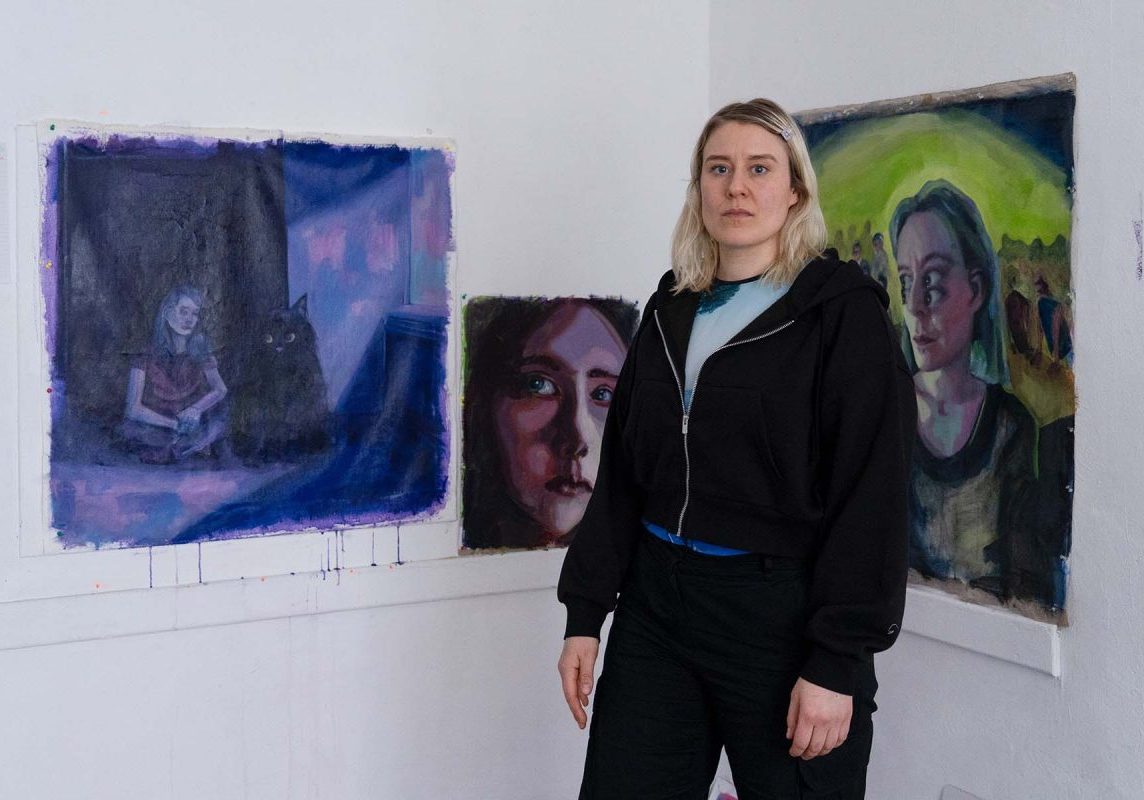
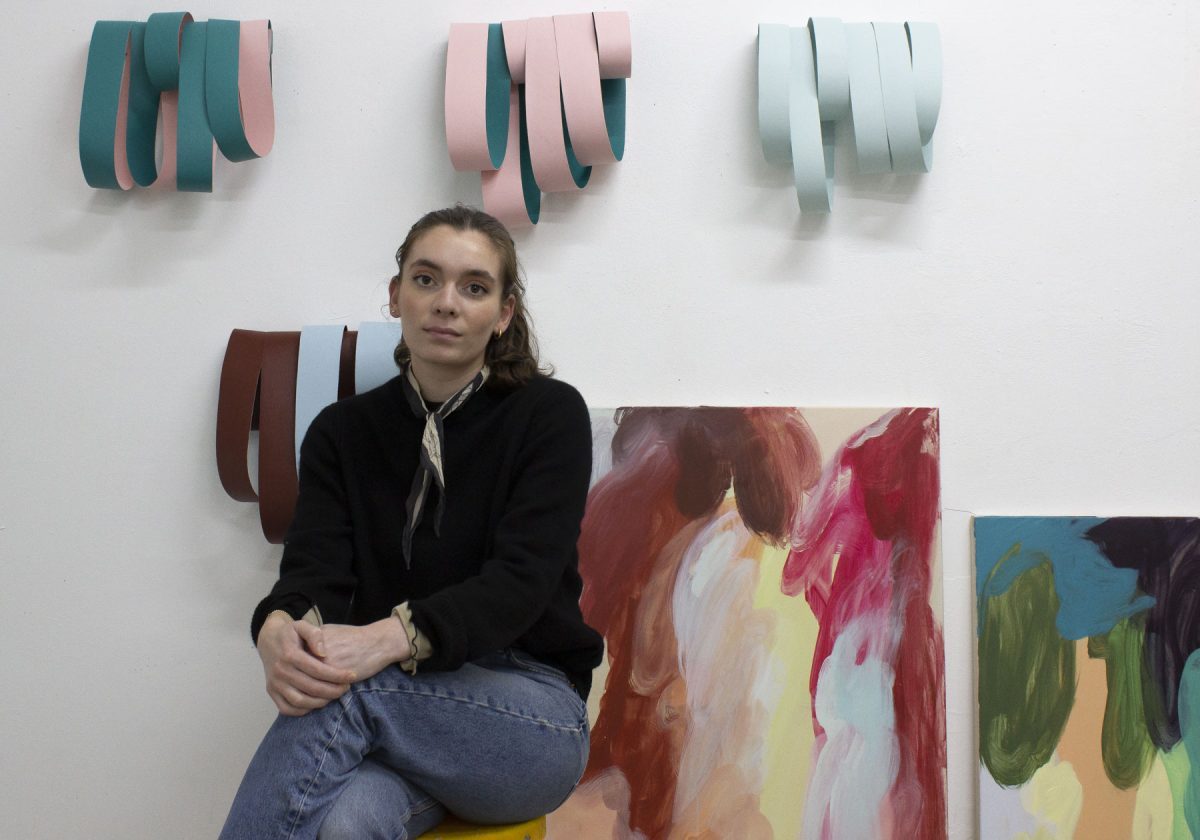
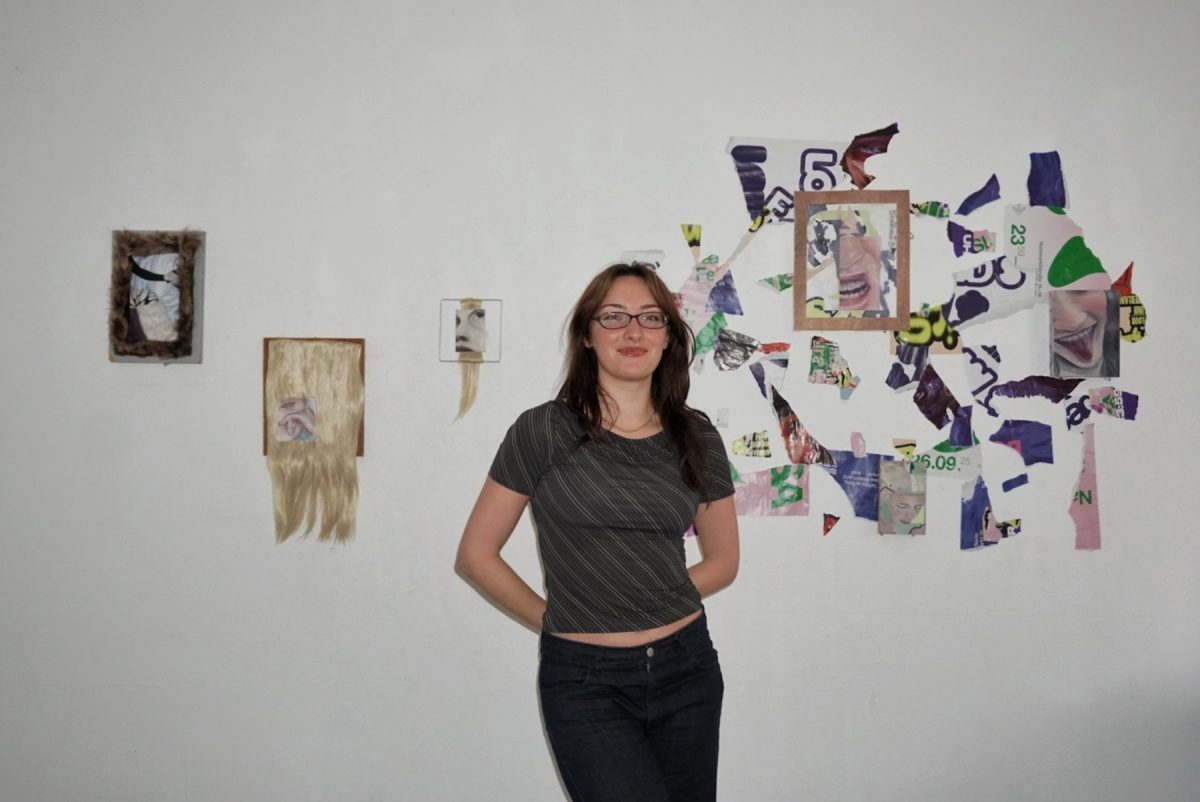
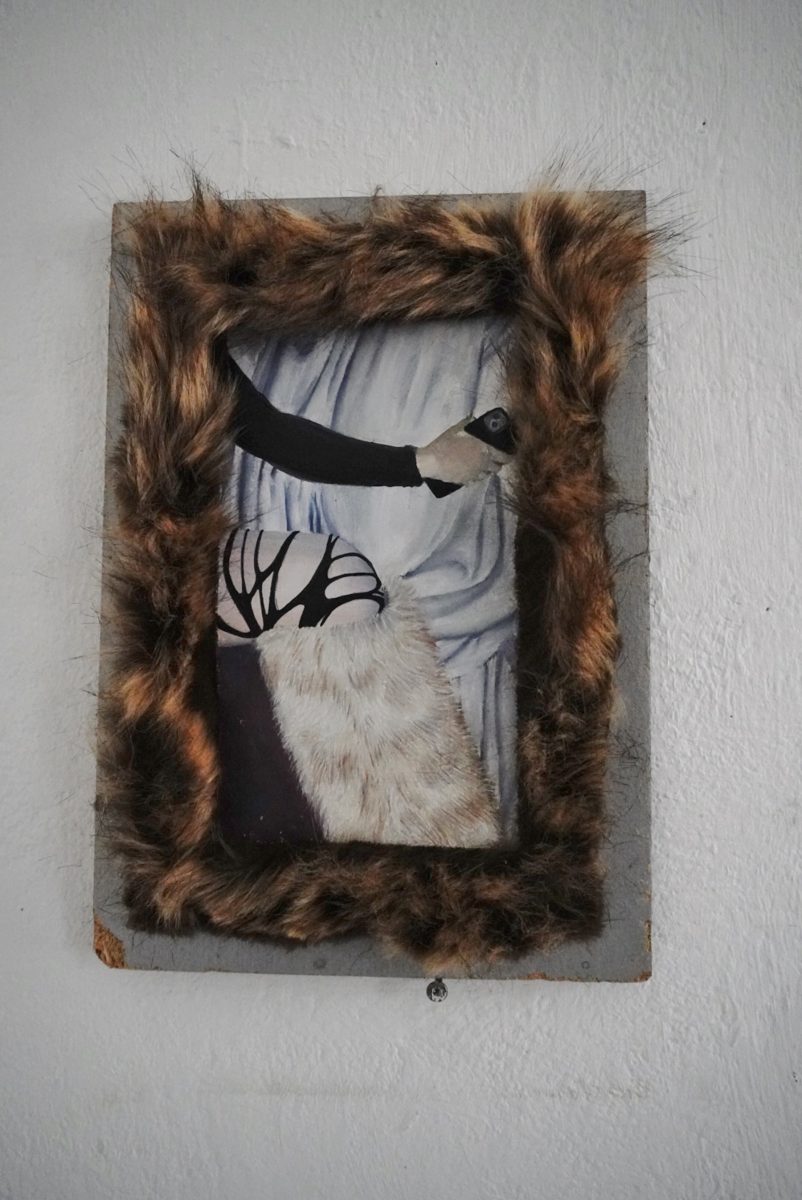
I’m an Australian interdisciplinary artist who primarily works in painting, based in London. Recently, I’ve expanded my practice to include digital as well as printed and analog mediums.
I’m interested in the relationships we have with people in public spaces, and what remains when we’ve departed the scene. In other words, the residue that we leave, whether emotional or tangible. I see it as a need to express and locate ourselves within a broader social fabric.
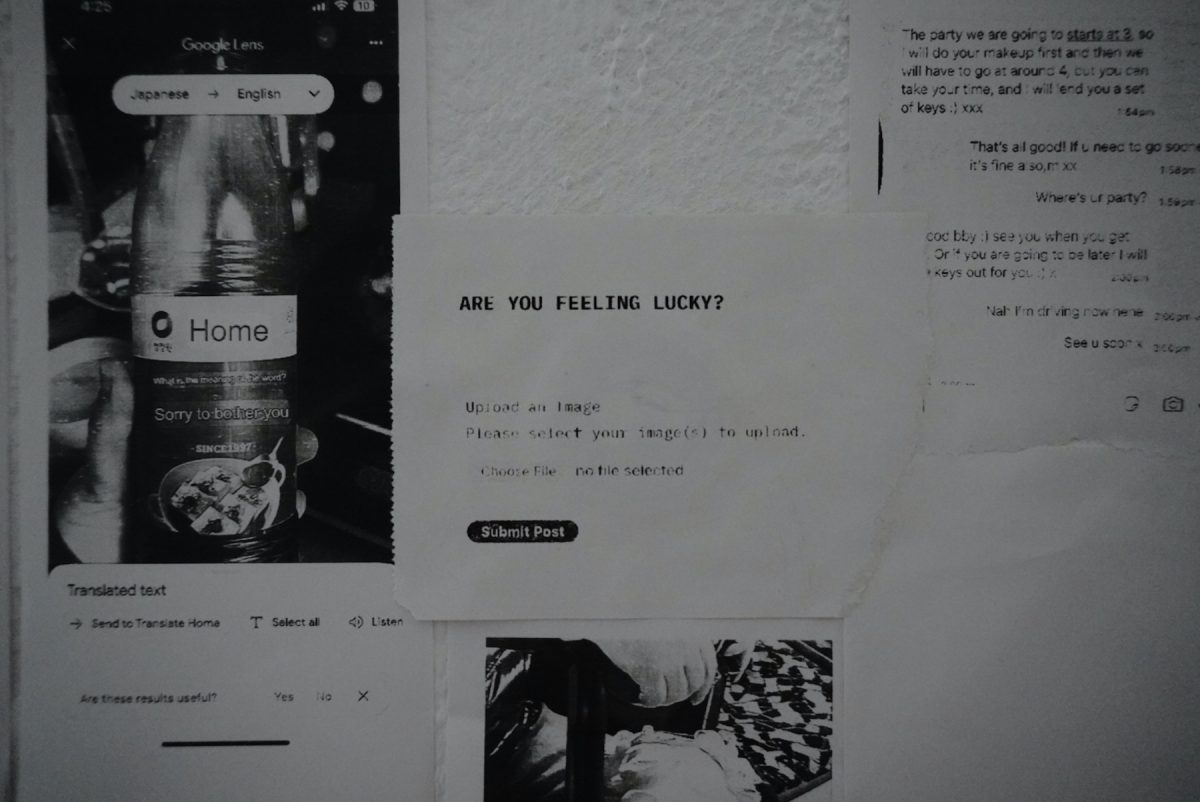
Part of what I’m interested in doing is archival, collecting and presenting things together, but it’s also a bit interpretive; I’m putting my own spin on it. At the residency, I’m collecting analog fragments including discarded objects and street posters, but I’m also collecting digital leftovers, like old text messages and screenshots. I want to build up these textured, layered surfaces, whether physical (through painting) or digital (through creating websites or interactive spaces). I was saying to one of the residents that I had decided to call myself the digital garbage collector.
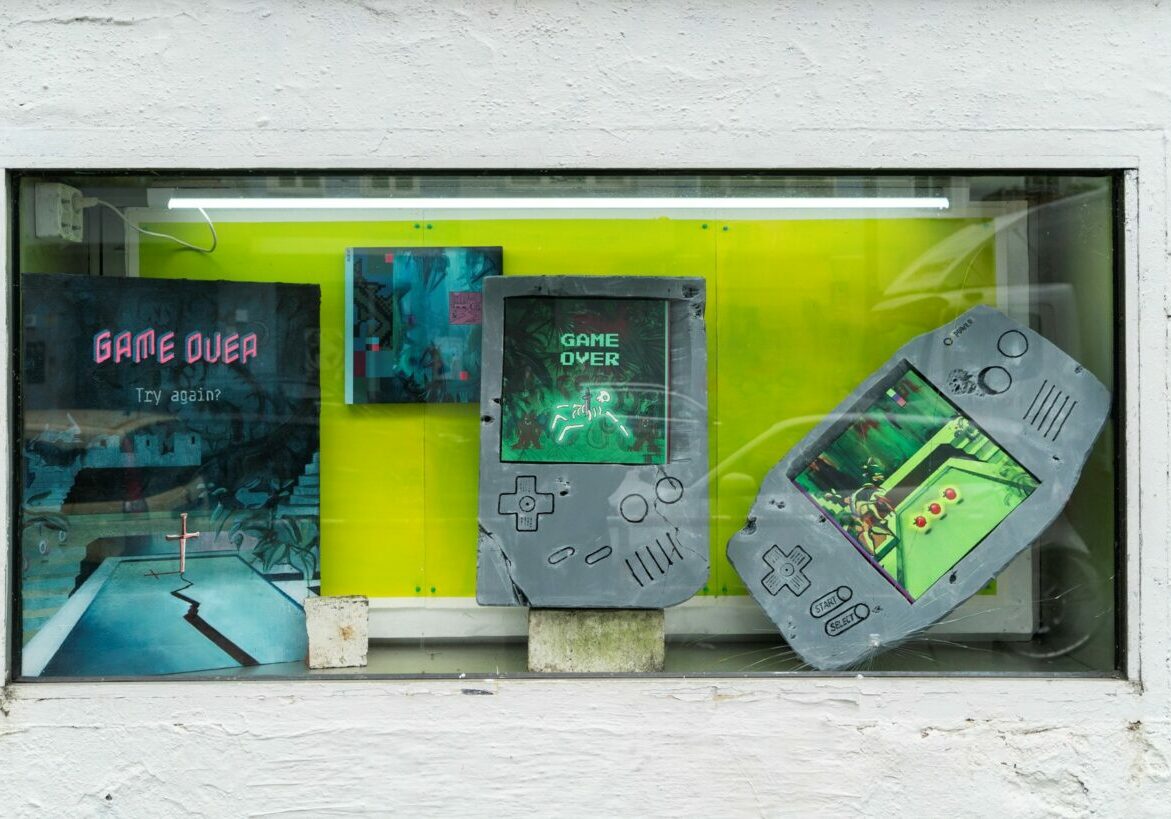
The other thing I wanted to do here was try to find ways to initiate co-authorship of these exchanges, not only to observe them and present them, but also to find ways for people to participate. Hopefully through the Showcase Window and in Open Studios, I can work on that last bit of making it participatory, of getting people involved. It’s been easier for me to create these canvases that are all physical residue, but I need to start finding ways to express it digitally and communally.
 When you’re on the streets looking for residue, what grabs your attention?
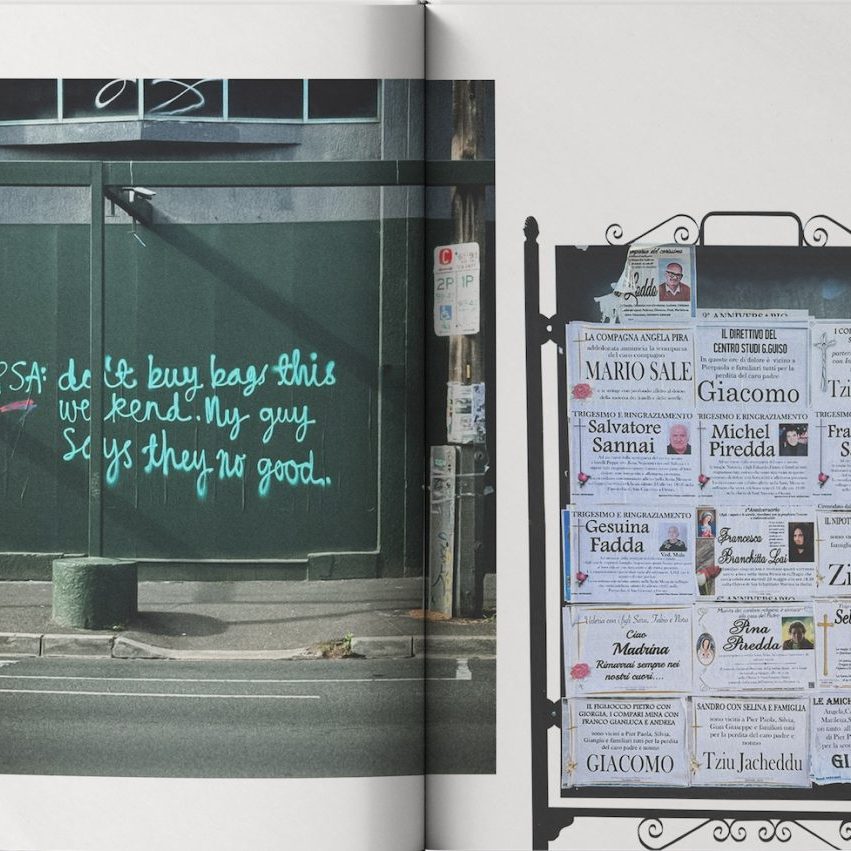
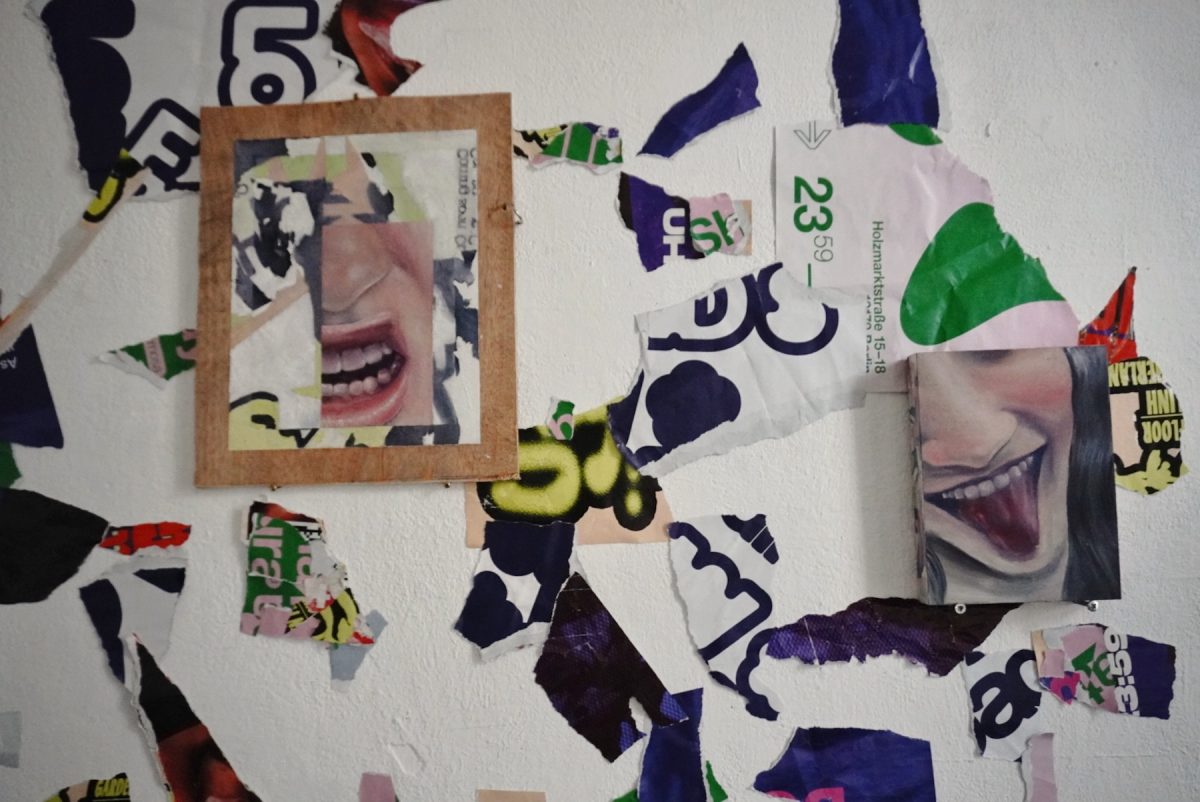
The first thing I look for is new meanings or new interpretations created through accidental compositions; For example, when ten posters are layered on top of each other and each is decaying through weather or being ripped apart. Sometimes words get arranged that create something new, or sometimes you see a face from one person interacting with the subject matter of another. It creates a new composition, a new meaning from things that were otherwise completely unrelated. I like those unique arrangements, which tends to happen a lot in Berlin.
I also look for compositions that reflect my own interests. With a background in figurative painting, I’m attracted to narratives, compositions where there is some tension or relational component. For example, a scowling face from one street poster overlaying a happy phrase from the poster below, the decay and ripping has united them in one composition with new meaning.
I also look for what’s unique about every city, for example Berlin has a lot of graphic posters. Bologna, on the other hand, has literary quotes and poems drawn in sharpie on all of the city walls. I noticed when I was visiting that people tend to preserve these phrases well, like there was a reverence for that type of expression. I’ve become obsessed with the visual signature of people and places; If Berlin communicated with graphics, Bologna communities through literature.
Is there something aesthetically in the color and texture that makes you notice something or stare at it for longer?
I have always found colour quite difficult in painting, and sometimes observing accidental colour arrangements in spaces is really inspiring for me. I have always liked the texture of ripped paper. I’ve also found that painting on poster paper, or having it half-ripped off, absorbs paint in a way I really like. It gives this fuzzy effect, which makes it easier for me to create paintings that feel slightly more diffused.
Going back to the website you made and having smartphones serve as a digital matrix for human interaction–what are your expectations and realities for this project?
Once I start thinking about this, I realise how many things are out of your control when you open something up to the public. I am trying to balance authentic exchanges with people, while also having some restrictions so that it’s appropriate enough. I don’t need it to be super family-friendly, but I do want some control over how people interact with it.
My core issue is regulation. I want there to be anonymity, so people can feel liberated to participate authentically, but this opens up opportunities for misuse or offence. In the digital world, people often behave differently than they would in a public context.
I’m trying to make my screenshot exchange project carefree and fun, while still leaving room for participants to express a bit of vulnerability through their anonymity. I’m also considering how to moderate if I immediately approve and publish things online. There is a lot of joy from the immediate gratification of seeing one person’s clutter interact with another’s. But immediacy leaves no time for moderation. It’s a balancing act between joy and oversight.
Interview Shay Rutkowski (@sruutrut)
Photos Yasemin Erguvan (@yaseminerguvan)