Meet the Artist // Czeslawa Wojtkjowski
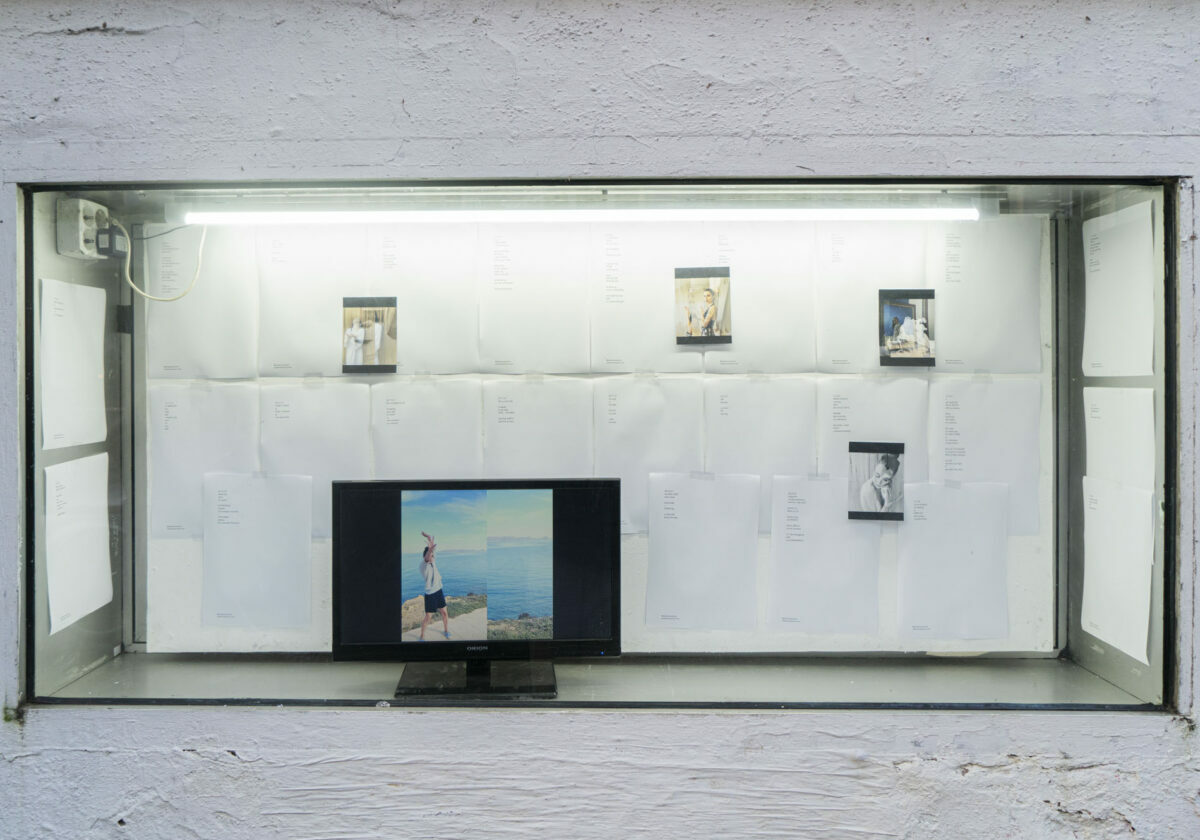
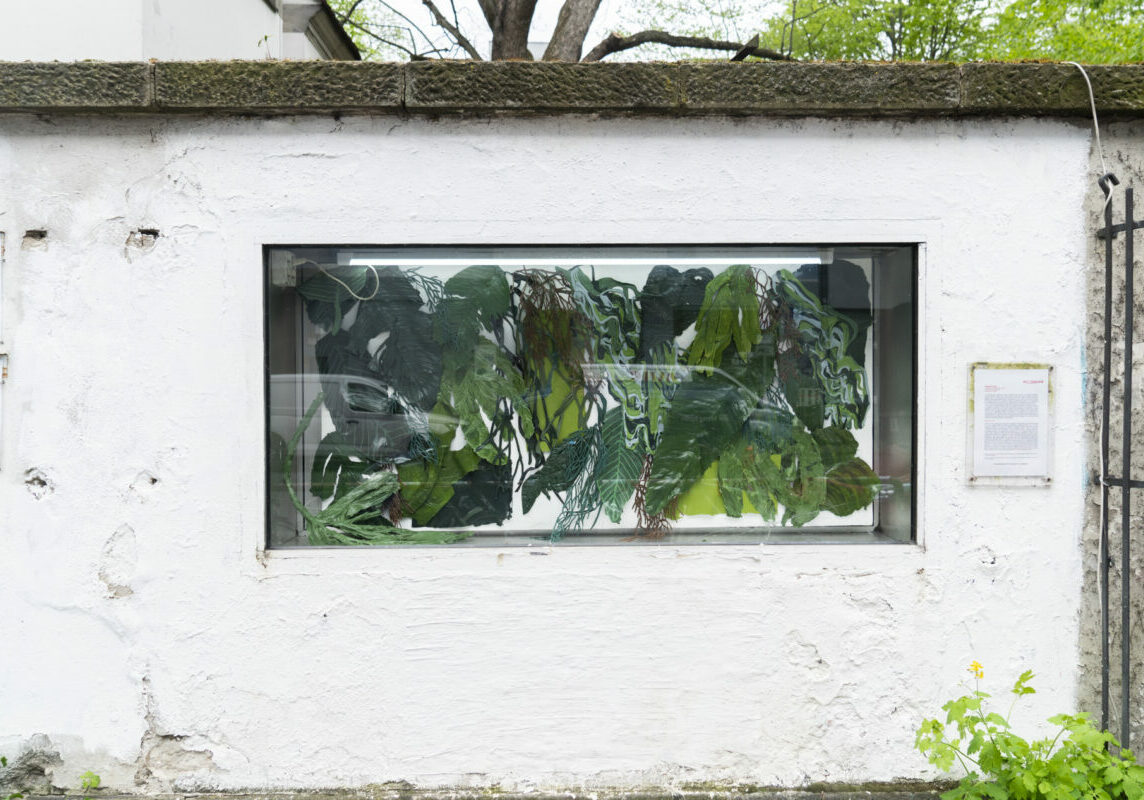
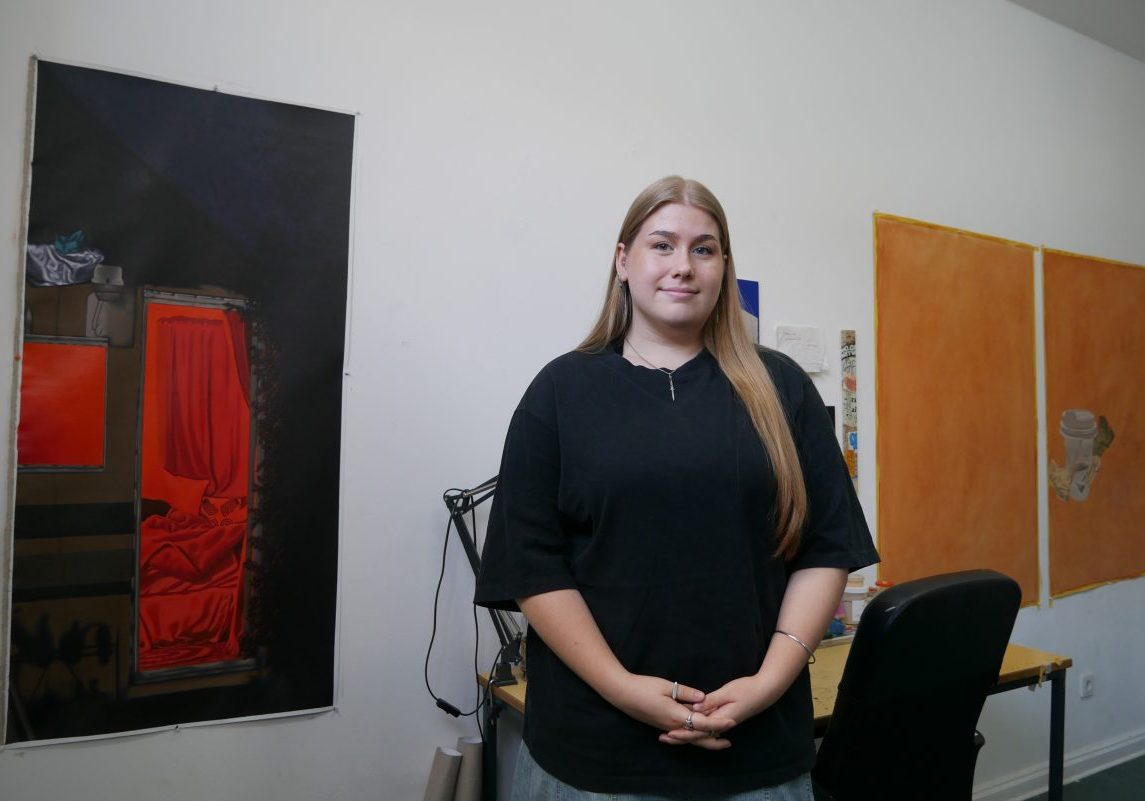
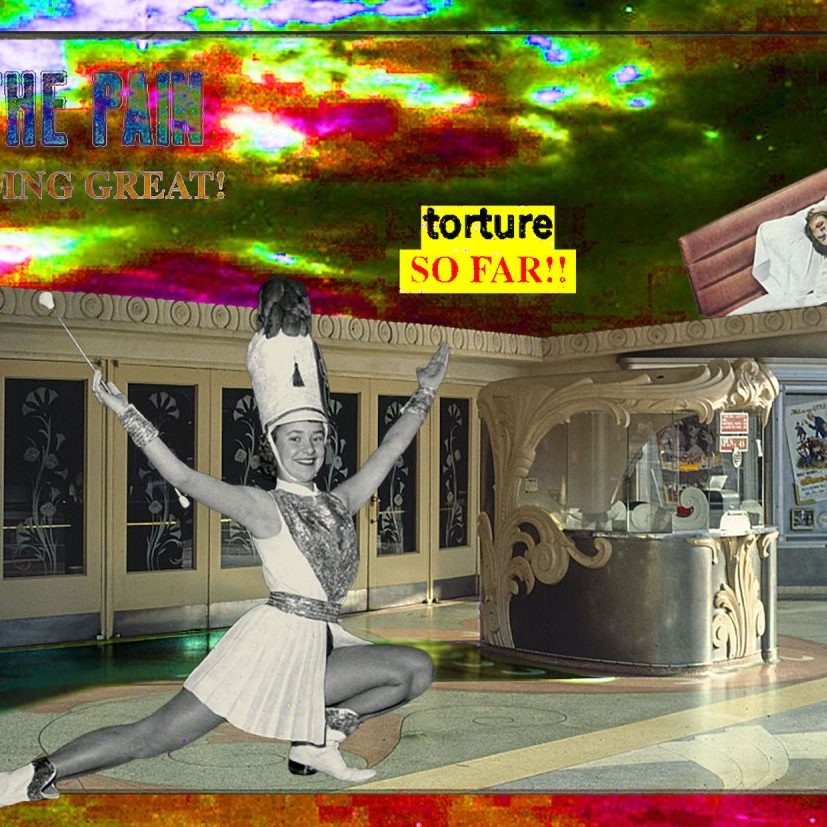
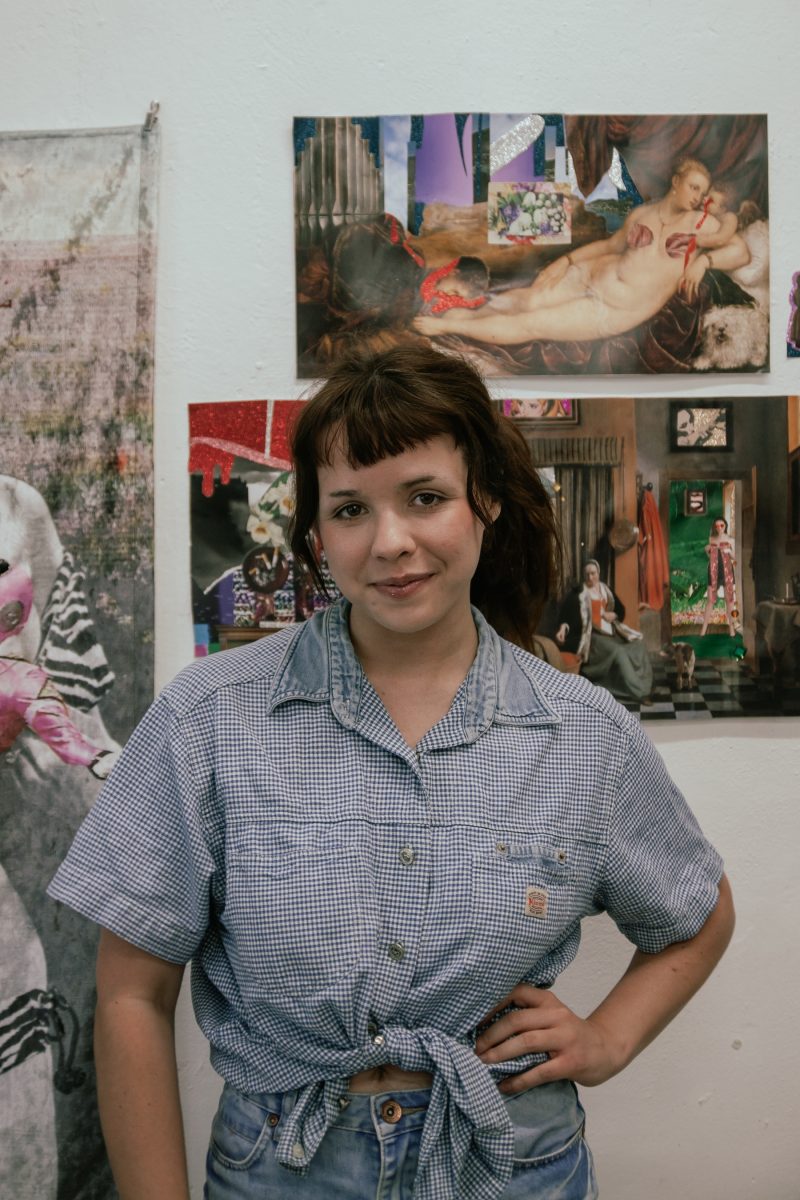
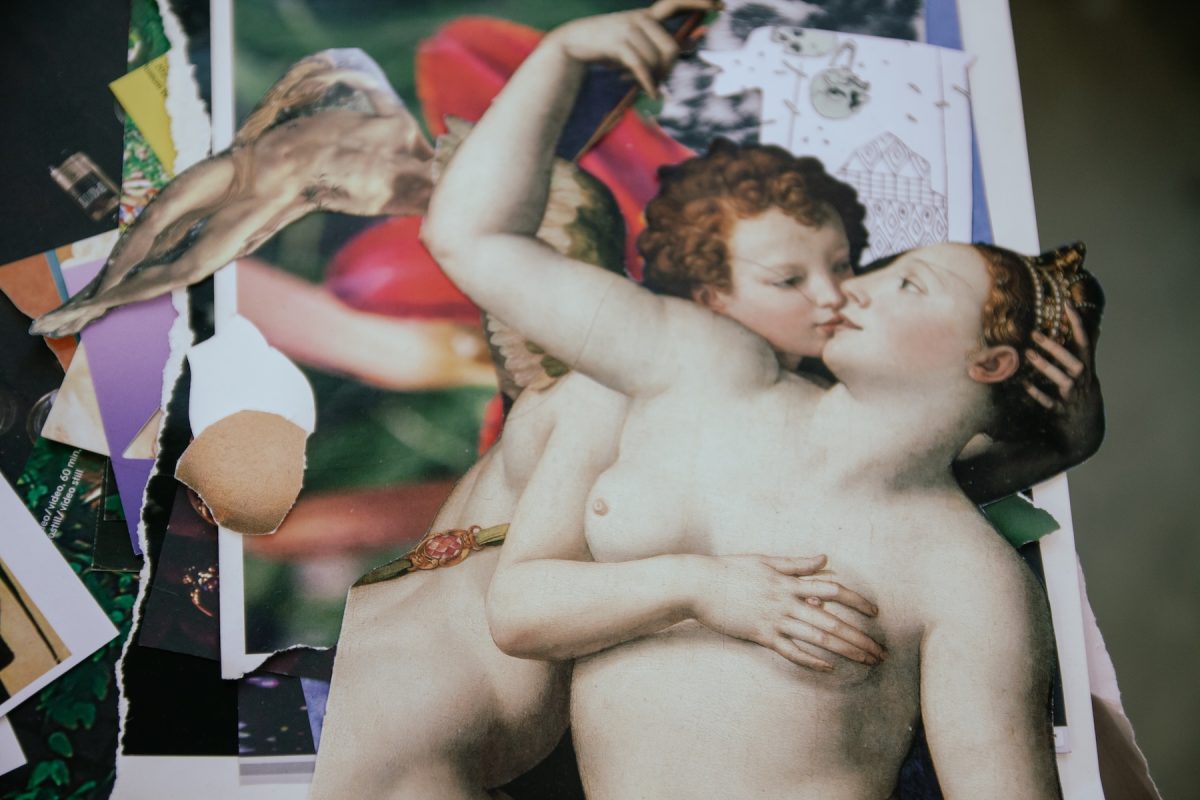
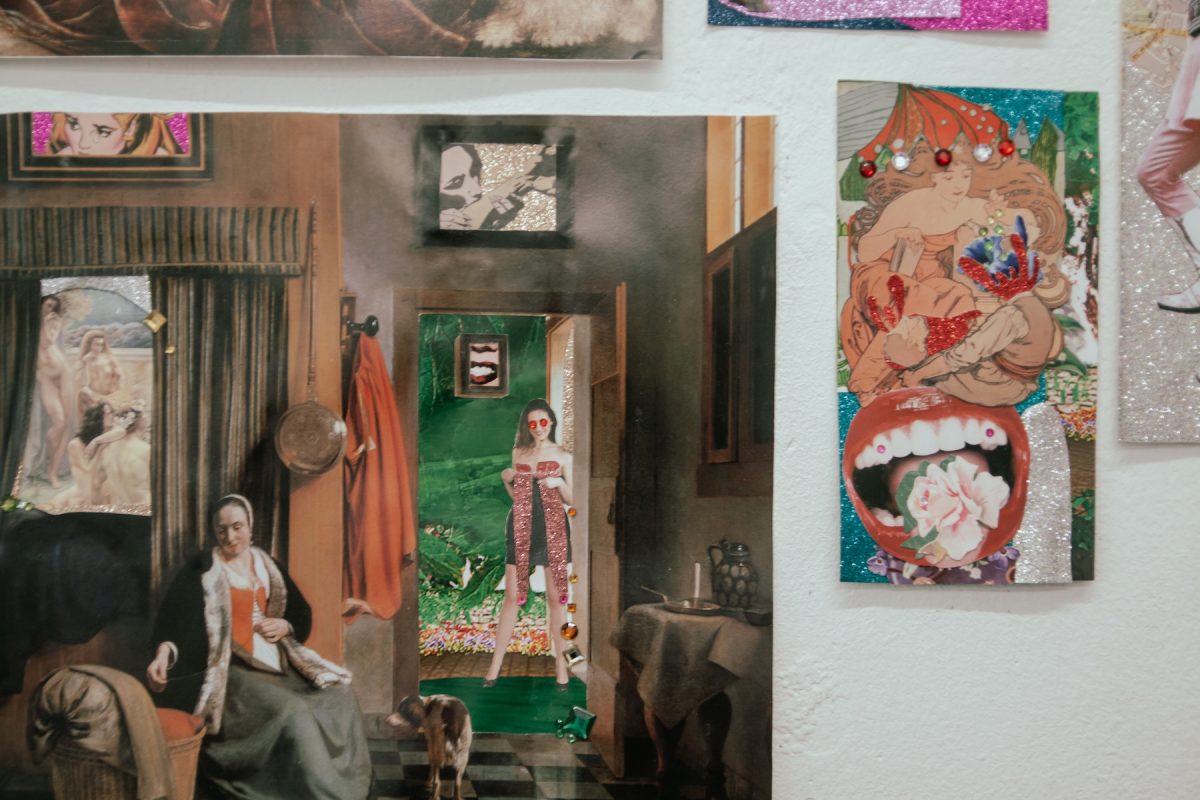
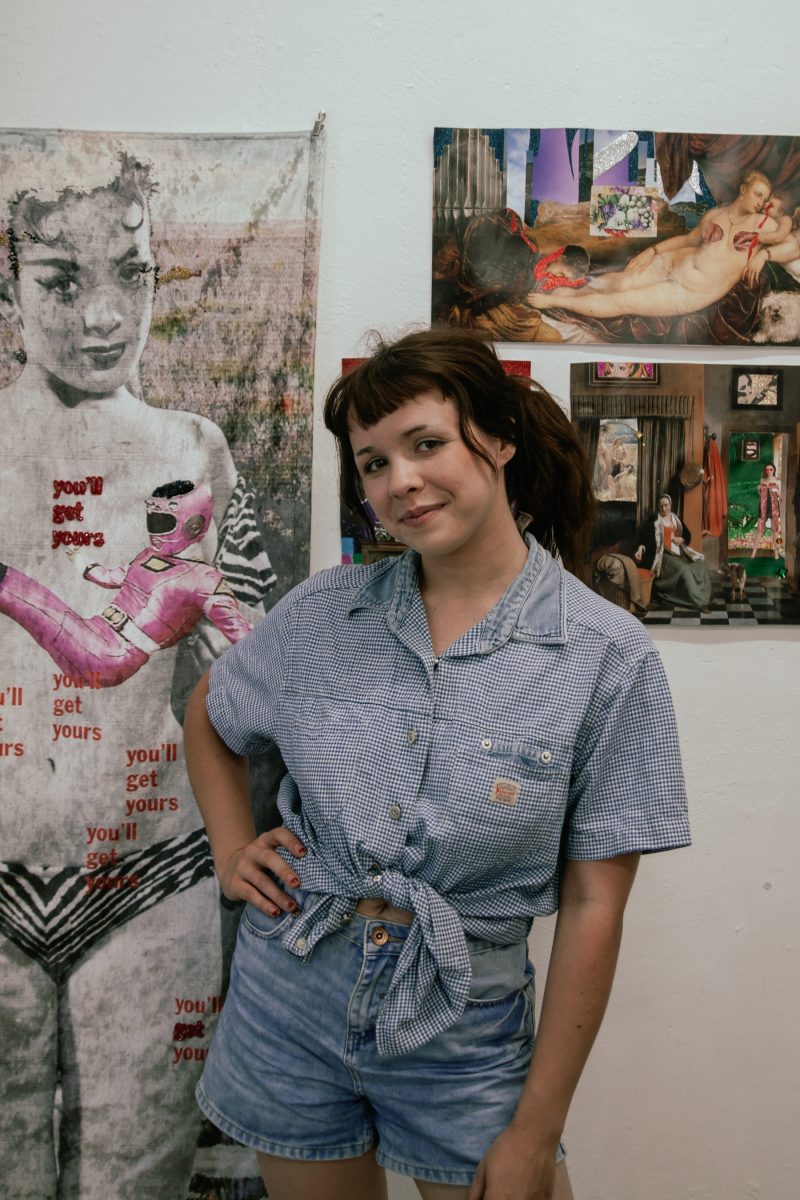
Czeslawa interrogates trans and non-binary femme representation through fiber art, new media, and collage techniques. Sourcing material from sensationalized, often disposable media like tabloids, erotic ephemera, direct-to-video VHS films. Czeslawa transforms the subjects depicted therein into precious treasures. The process ensures that every interaction with my subjects’ visages is made with the utmost intention. Thoughtfully choosing and placing photographs, fabrics, and embellishments are acts of resistance.
Do you want to start by telling me a little bit about yourself and what you’re working on while you’re here at GlogauAIR?
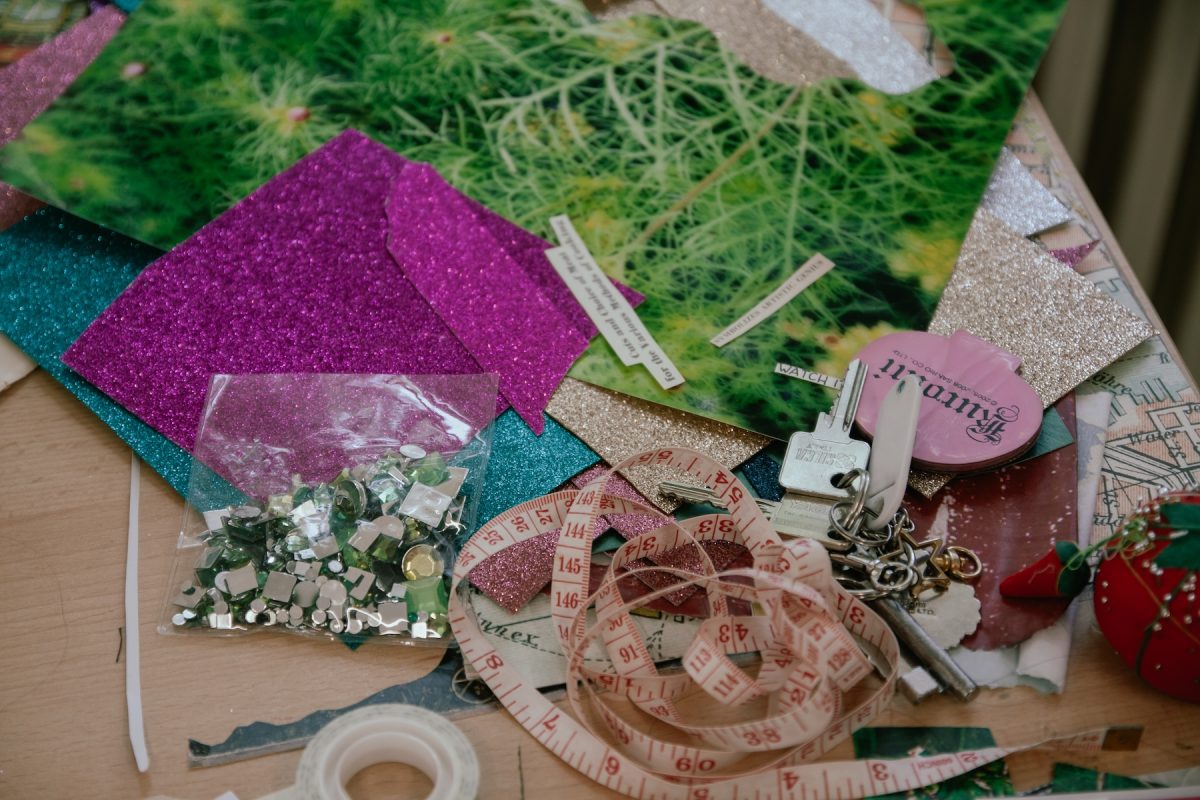
I would call myself a multidisciplinary collage artist, because everything I do is a collage and uses collage techniques. I know that’s like a really big buzzword right now, but I actually do collage. I’ve dabbled in video collage, but primarily I do digital collage using Photoshop. Recently, since coming to the residency, I’ve gotten back into doing physical collage as well, because I wanted to use the materials that are available to me in Berlin. I feel like it would be a waste to not take advantage of the materials in the city.
Where do your images come from?
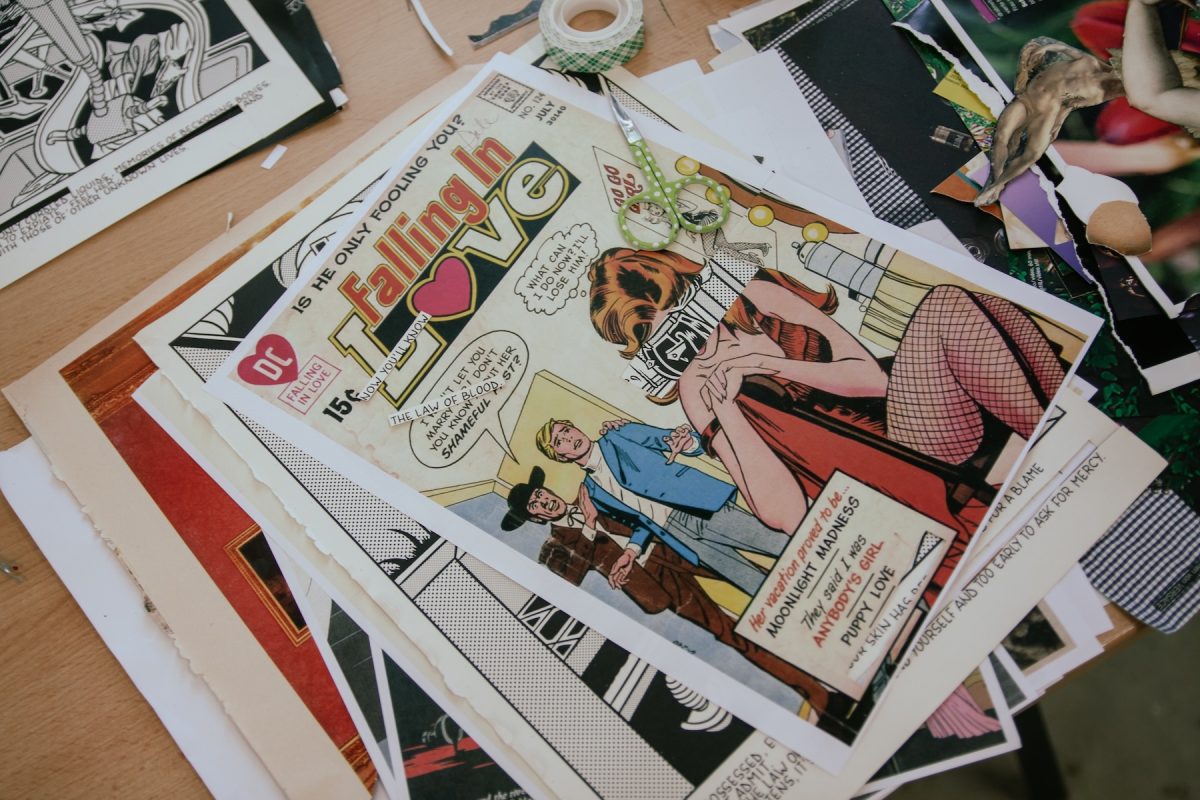
For the last two years, I’ve been really into Tokusatsu, which is a Japanese genre of masked heroes. It’s the same genre as Power Rangers. So you’ll see a lot of those in my work. Since undergraduate school, mid-century, iconic Americana motifs have also been coming up in my work, like pinups and fetish material. I use a lot of pop culture images and images from comic books as well. Or images from the Gothic Lolita subculture. There are queer undertones to being so hyper femme that you’re no longer desirable as an object, or even identifiable as female. It’s interesting to me. You’ll see it throughout my work.
You have a very strong visual language. Where did it come from?
My visual language comes from the fact that I’ve never been one to feel things lightly. I either feel something very intensely, or not at all. I think my visual language reflects that. It’s very strong and in your face. I’m incapable of being subtle or poetic. It’s much more fun for me to just be in your face.
I think experiencing injustices, like misogyny and queerphobia and living in a country where the government uses their language to terrorize my community daily, it just makes me want to yell even louder.
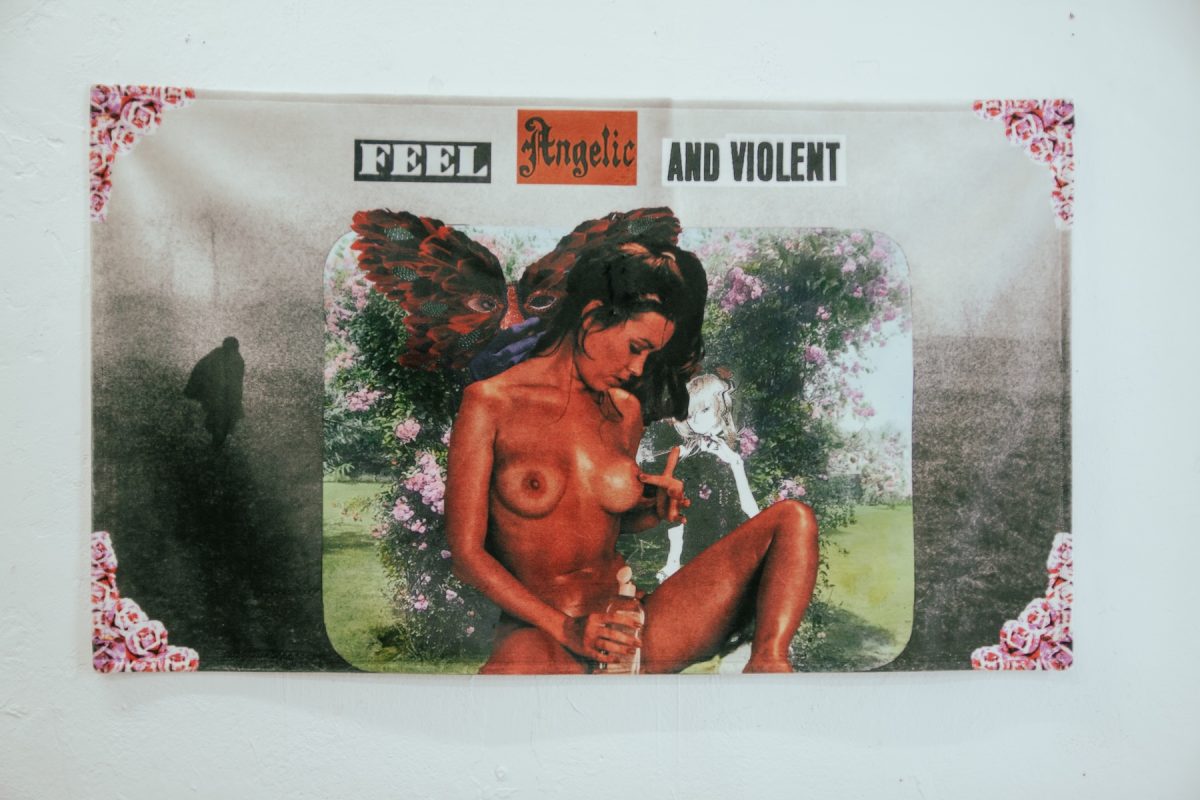
My work is heavy handed. It’s so over the top that it becomes camp. I use camp as a cushion around the violent aspects of my work. I think it makes my work slightly more digestible. You have to laugh to keep from crying, you know? Especially when you’re dealing with such heavy subject matter.
Talk to me a bit more about that. I mean, we’re both coming from the U.S. as a queer people. It’s something I think about a lot. What are you thinking about right now?
Right now, I’m really focused on the counter-terrorism memo that the U.S. Department of Defense released where they name radically pro-transgender ideology as domestic terrorism. What does that mean? They’re intentionally using very vague, broad language so they can ostensibly prosecute any instance of pro-transgender sentiments.
I want to make works that specifically provoke them. They haven’t killed me yet, so I’m going to use my language to be even more radical.
I was assigned female at birth. I’m nonbinary, but when I go out in the world, I’m usually perceived as a woman, which gives me a privilege that a lot of people who are actively transitioning don’t have. So I feel like making specifically radical work that is a call to arms is one thing that I can do, because I have more security than other people.
What do you want people to take away from your work?
I think people who have suffered injustices can immediately recognize something in my work. One reason I prefer to manipulate the highly sexualized female body, is because that also draws in a cisgender male audience. They expect to be titillated, but instead, my work actively pushes them away. Whereas with a queer audience, all the details of my work bring them in closer. I want my work to be like an alternate world.
I want my work to light a fire in people. I hope it connects with something they’re feeling as well. And that it can be, in a way, soothing for people to know they’re not alone.
Interview Jo Birdsell (jobirdsell.com)
Photos Raviva Nsiama (@raviva.ziama)