Meet the Artist // Amy Rondahl
Amy Rondahl’s work is rooted in an interest in how the body is regulated through cultural and social boundaries. Focusing on spaces that function as heterotopias, where these distinctions are temporarily blurred, she investigates the conditions that make such spaces possible. Dirt becomes a central element in her work, marking a refusal or inability to conform to societal expectations of cleanliness and order. As such, dirt emerges as a political aesthetic that shapes these alternative spaces.
Can you tell us a bit about yourself and your practice?
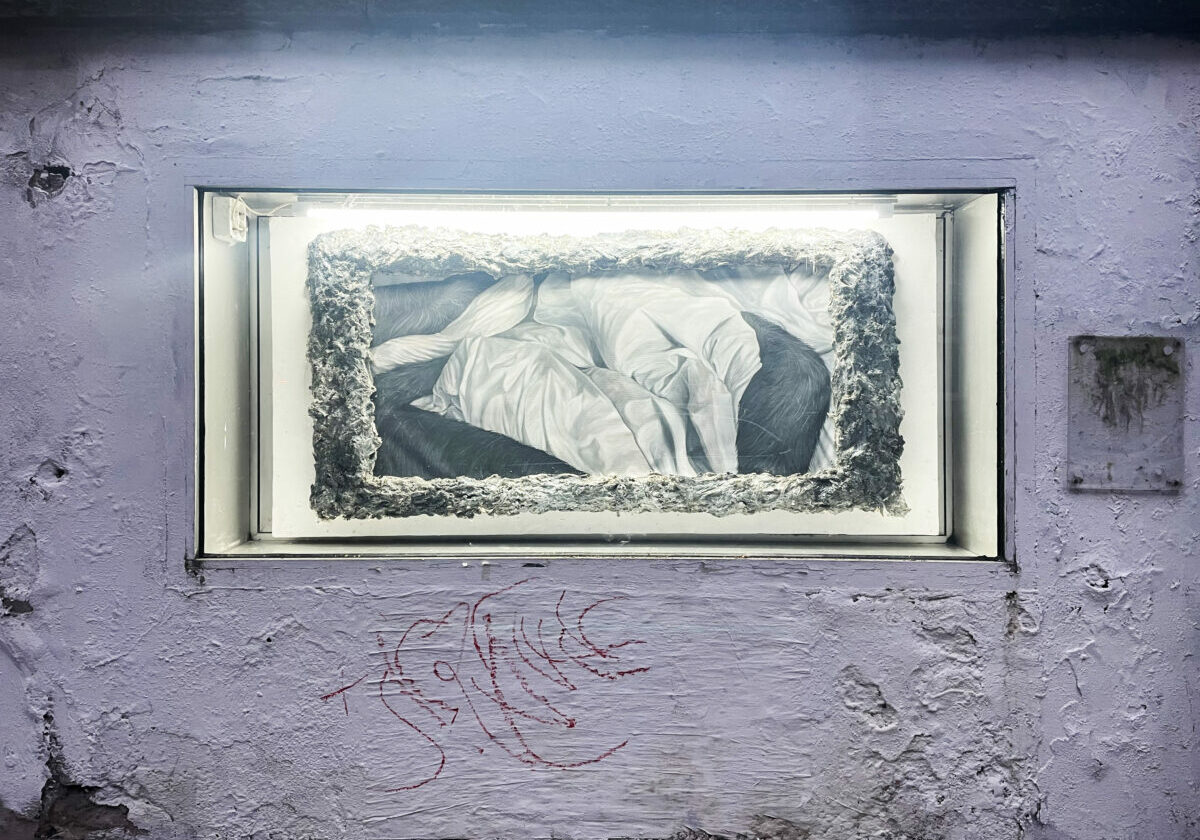
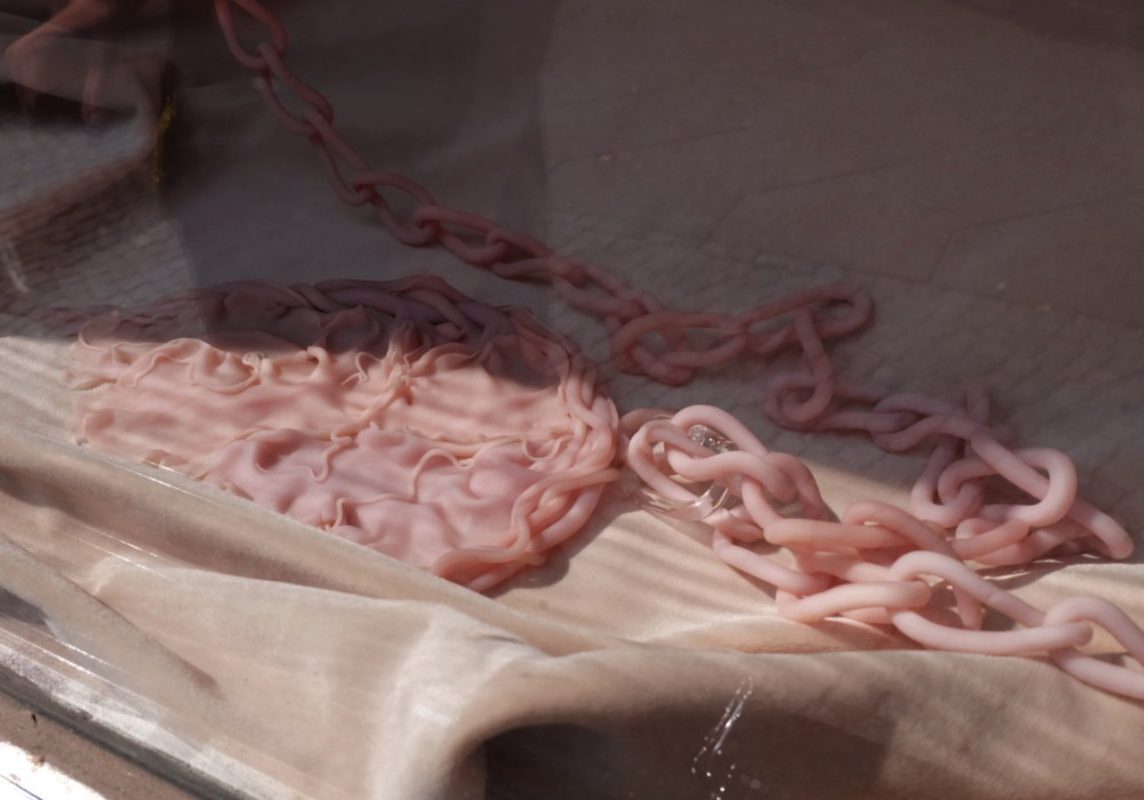
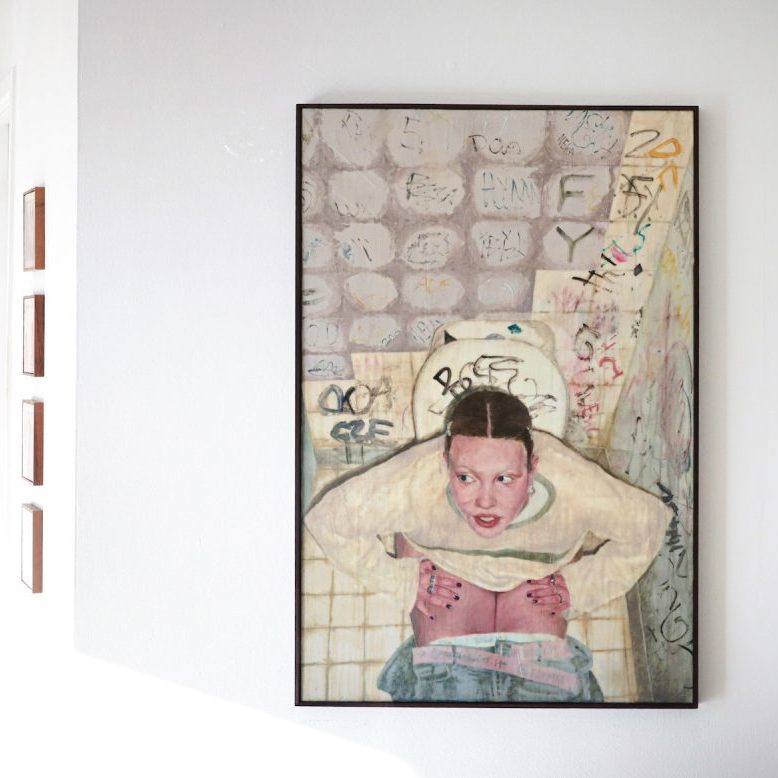
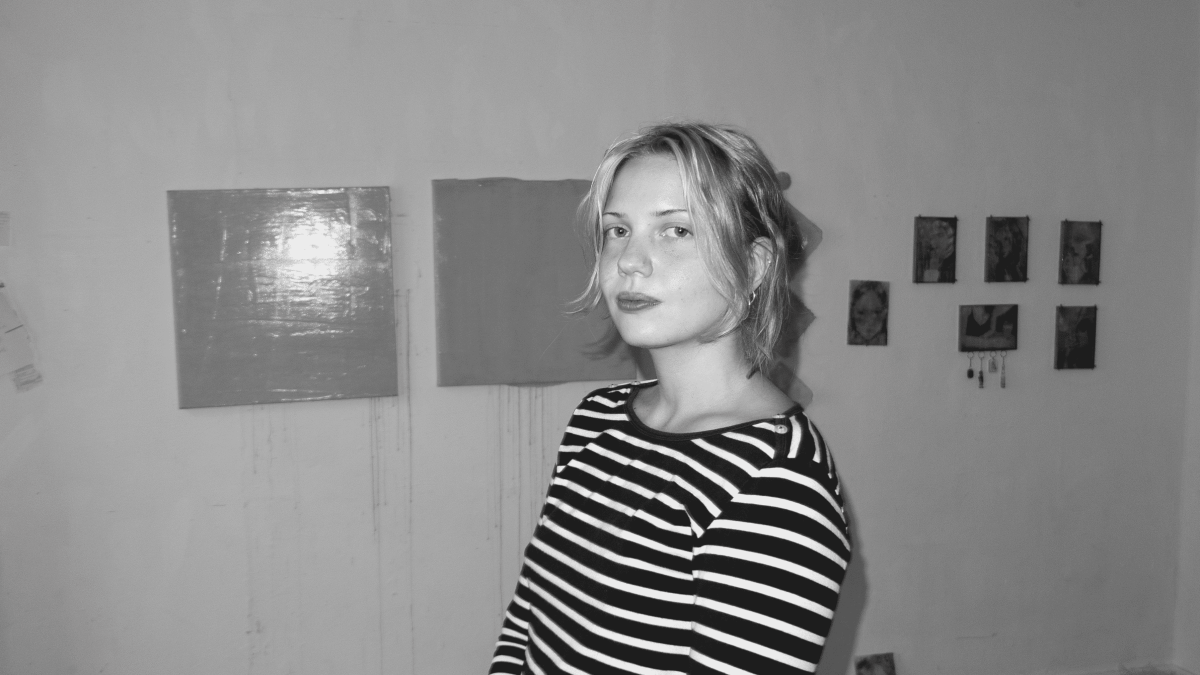
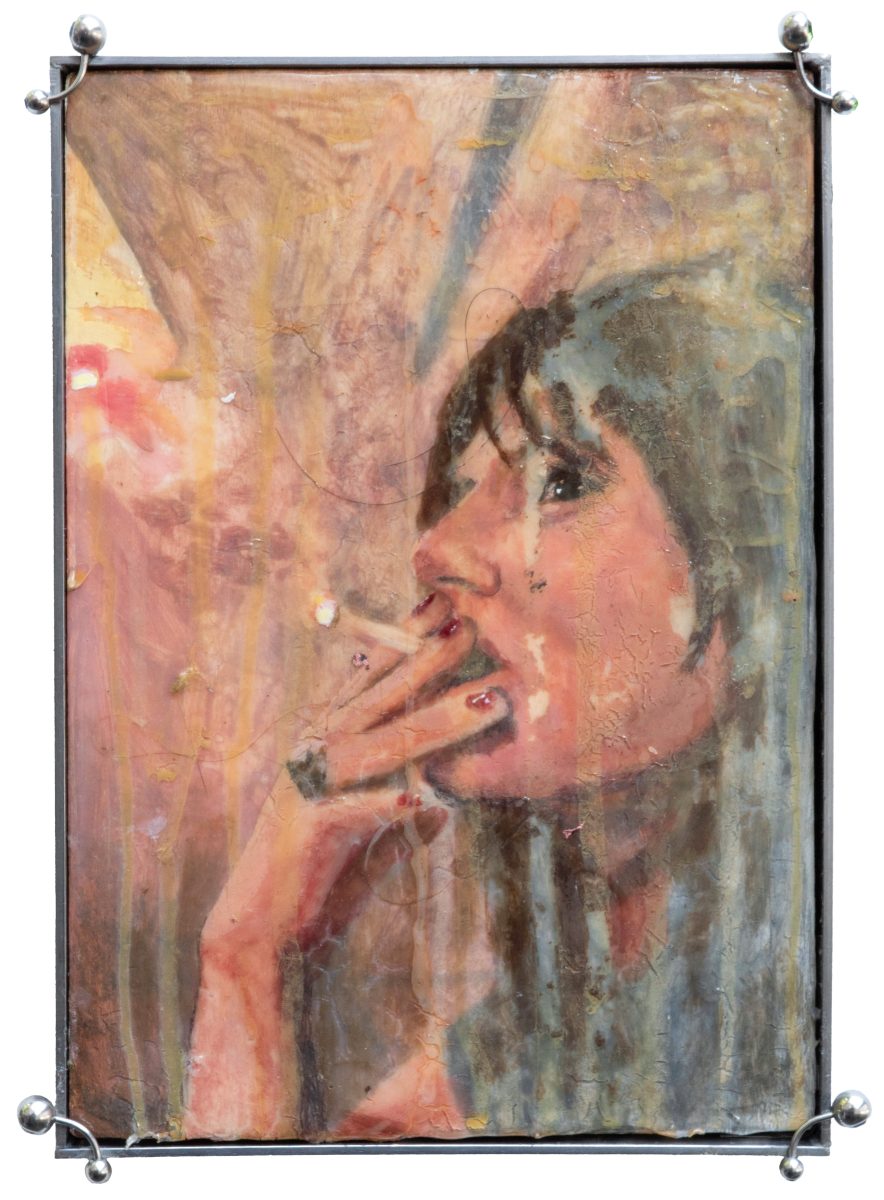
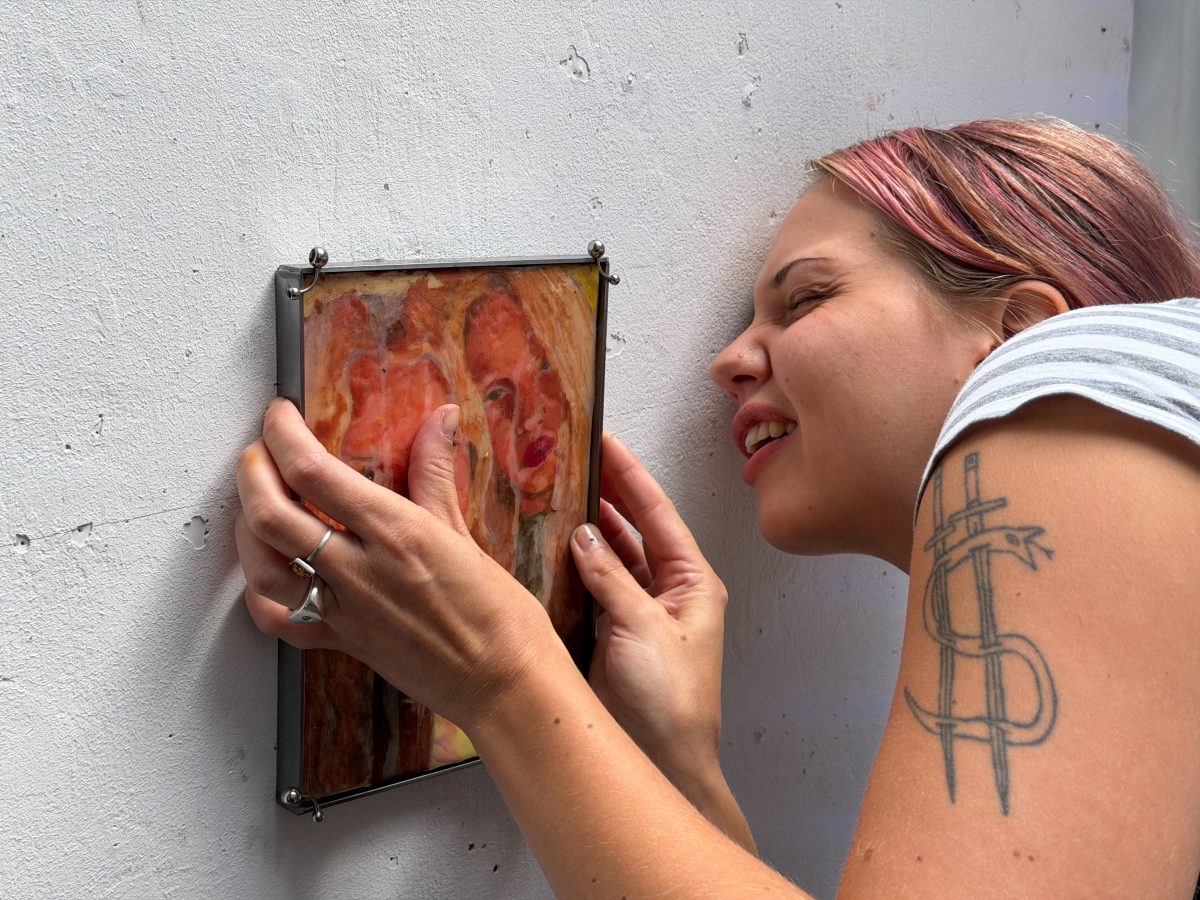
My name is Amy Rondahl. I am a painter from Stockholm. I have a BFA from HDK-Valand in Gothenburg. I have been using different materials for the last two years, a lot of glue, for example. I developed a layering technique with wood glue to build up my motifs layer by layer. I’m interested in materiality, surfaces, and textures. I usually paint my friends posing for me or based on photos I’ve taken of them without them knowing. I work a lot with dirt and spaces where dirt or non-conforming people can exist freely.
How do your very personal themes and topics of universal urban motifs like grime, dirt, and public spaces overlap, and what inspires you in them?
Multiple angles have led to this point. First of all, painting my friends comes from having access; it’s easy to paint people who are okay with posing. It also holds some kind of action, which to me is love. When I paint my friends, I’m also showing them my love by looking at their faces, bodies, personalities, and outfits. Especially when I’m painting them together, their relationship is depicted.
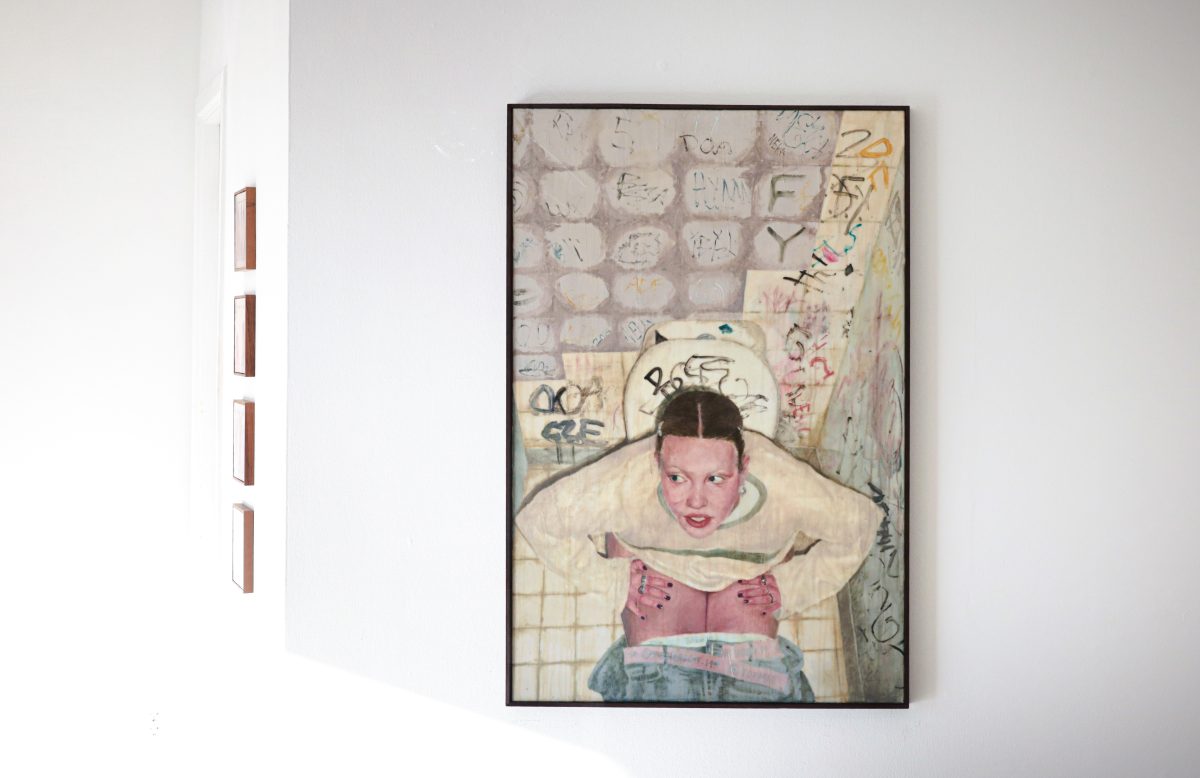
When it comes to public spaces, I’m interested in them because it’s where people exist. Urban dirt and grime are essentially traces of people, and often a characteristic of less monitored spaces. Therefore, they also correlate with sites that non-conforming people favor. Cities hold a lot of those rooms because there’s nightlife culture, bars with their own norms and rules, sometimes even laws. I originally started working with public toilets, and have now branched out to a wider sense of public places that allow one to be themselves. I generally approach places or scenarios where people’s aesthetics, behaviors, or bodies are not regulated or observed the same way as in normative spaces.
What fascinates you about those spaces -also known as heterotopias- and what is your method of showing them?
Foucault talks about places that exist within society, and within their own norms. A graveyard, for example, is a tangibly different place, but when you’re there, you buy into its norms: dead people lying underground, marked with headstones, and it’s considered normal because it adheres to its own rules. Heterotopias occur naturally within different cultures, cities, and countries. I realized that the public toilet, even though it’s not an “official” one, is definitely a heterotopia because bodies can exist in it in a completely different way.
What I find most interesting is that by this contrast, the norms and rules of normative spaces also become visible. Back to the graveyard example: if you put it next to a normal street, you realize the rules of the street because the graveyard functions differently. I started using public toilets as a base for comparison and see what’s being revealed. I get a clearer view of our society through this experiment, using the tools Foucault defined. One of the things I look at is: what makes this place feel like a heterotopia? Public toilets and also nightlife, especially here in Berlin, share telling symptoms, like the amount of dirt and filth they carry. It is non-normative behavior to write on a wall or pee a little on the ground. I started using the aesthetics of dirt in my work to exaggerate this feeling of freedom from the rest of society.
Where does your anthropological sense of curiosity come from?
Initially, my art was political with a very clear meaning. Then I got bored of repeating myself without adding anything new. I think anthropology is a way of experiencing places, people, and cultures to expose norms. I’m still making political art, but instead of talking about policies being wrong or unjust, it’s shifted to looking at very simple places and seeing politics there. Examining the most banal things and understanding how a whole system has been built interests me.
Dirt is such a good example of something so insignificant that you would not stop and think about it. It’s different across cultures and societies and is subjective. By looking at what we consider dirt, we can tell how our norms work, or which people are being marginalized. You can find traces of everything in the simplest things.
Artist photos // Laura Bikulčytė
Interviewer // Veronika Laczai