Meet the Artist // Kathleen Judge
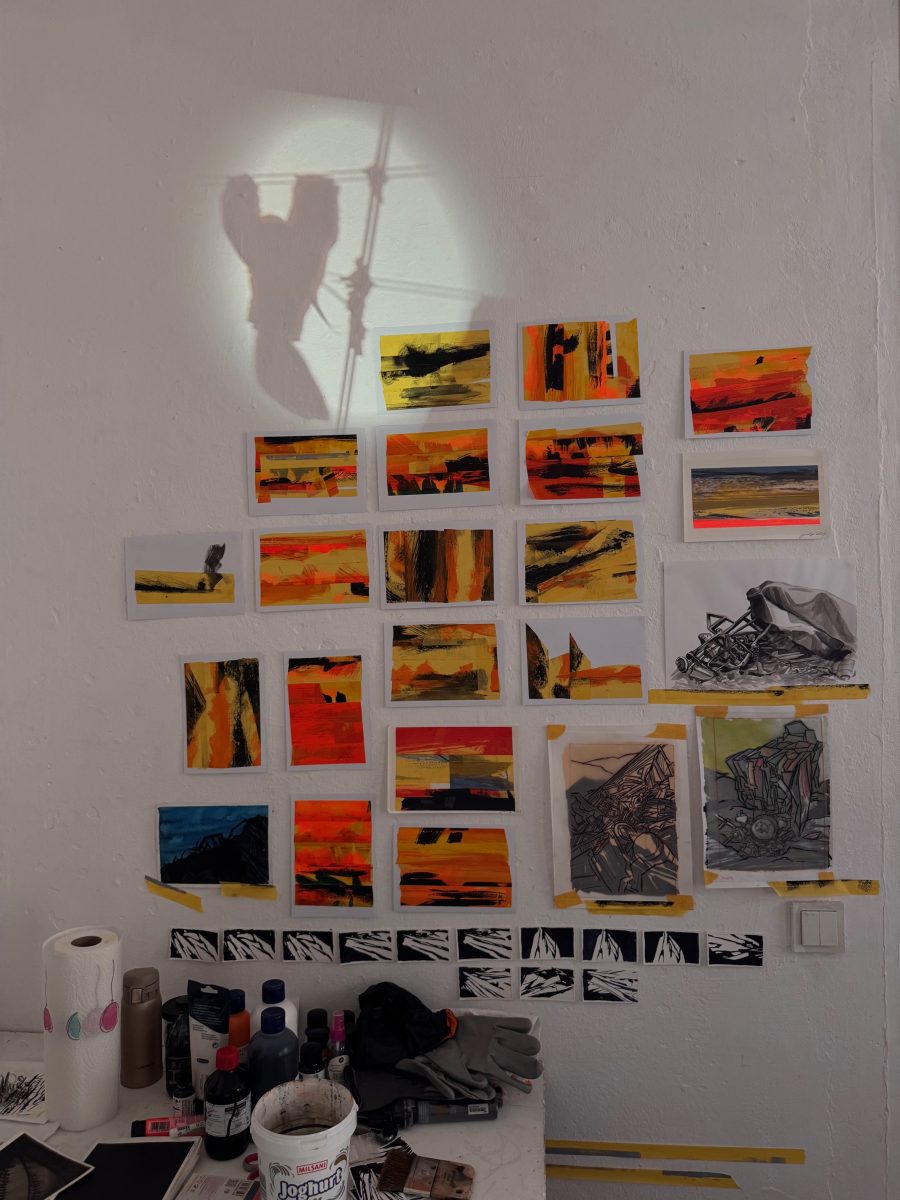
Kathleen Judge is a multimedia artist from the United States working across paint, print, film, and sound to examine moments of impact in material and landscape. the artist explores how force, collision, and time reshape form, creating new geographies through processes of compression and transformation.
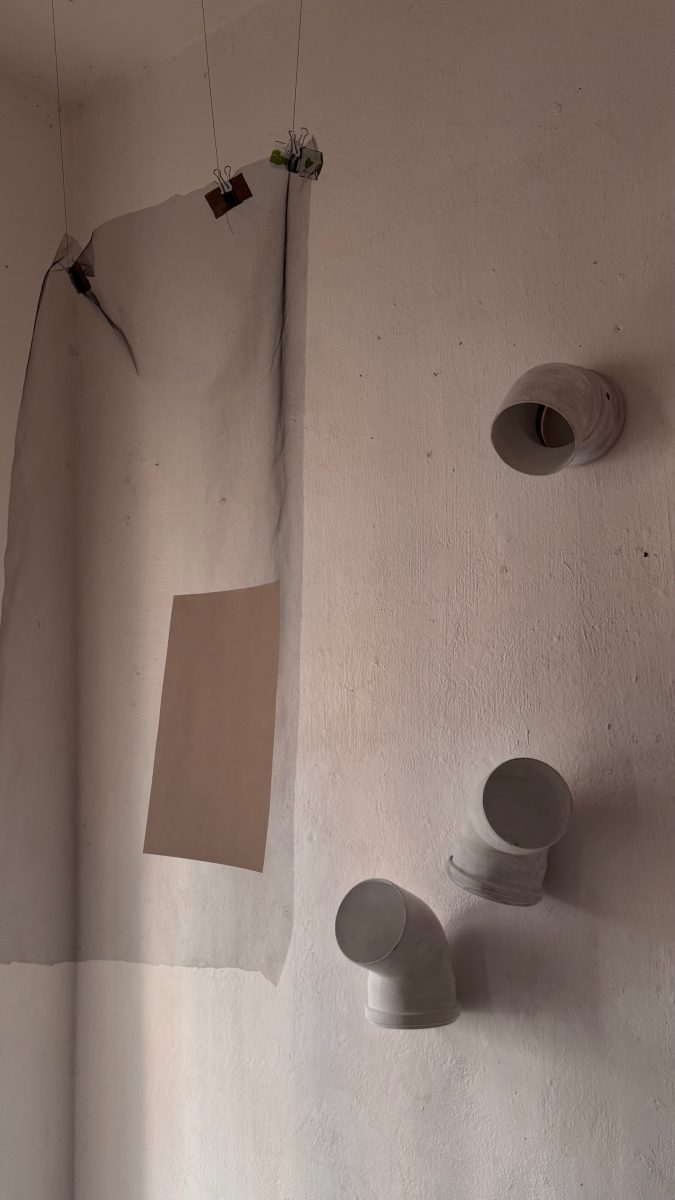
At GlogauAir the artist expands work on metal and geographical structures through interactive installations combining projection, paper, ink, sound, and video. the practice explores displacement, material, and memory while developing technical approaches to light and electronics.
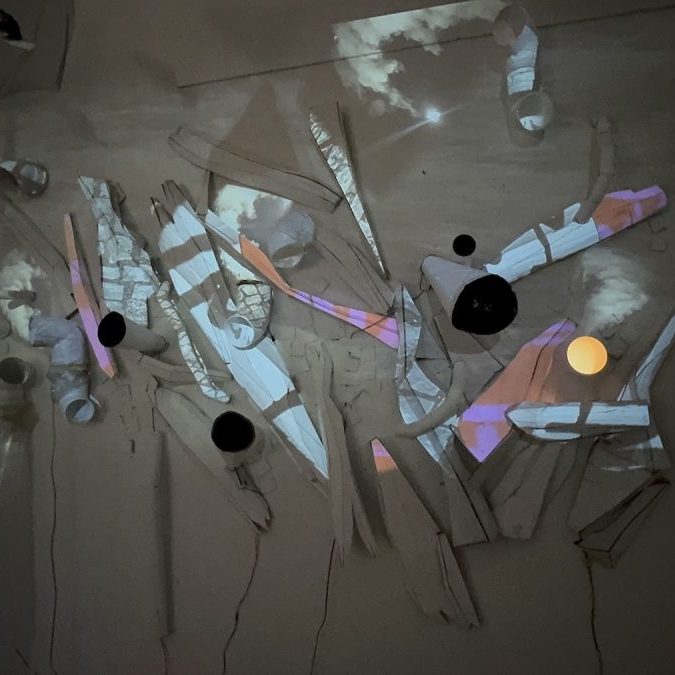
Can you tell me a bit about yourself and your background? Can you tell us why you came back to GlogauAIR again and what you hope to do for this part of the residency?
I’m a multimedia artist working mostly with drawing/painting on paper, print, animation and video projections. In the commercial art fields I’ve also worked across mediums such as screenprinting, animation, storyboarding for TV and illustration.
I returned to Berlin and Glo to expand on a few visual ideas I’d started during my first residency period here. During my first residency I created large paintings, drawings and sketched out some small-scale video and sound installations.The installation sketches, especially, were directly inspired by Berlin streets and history. Berlin is so dense, physically, historically, visually and sonically.
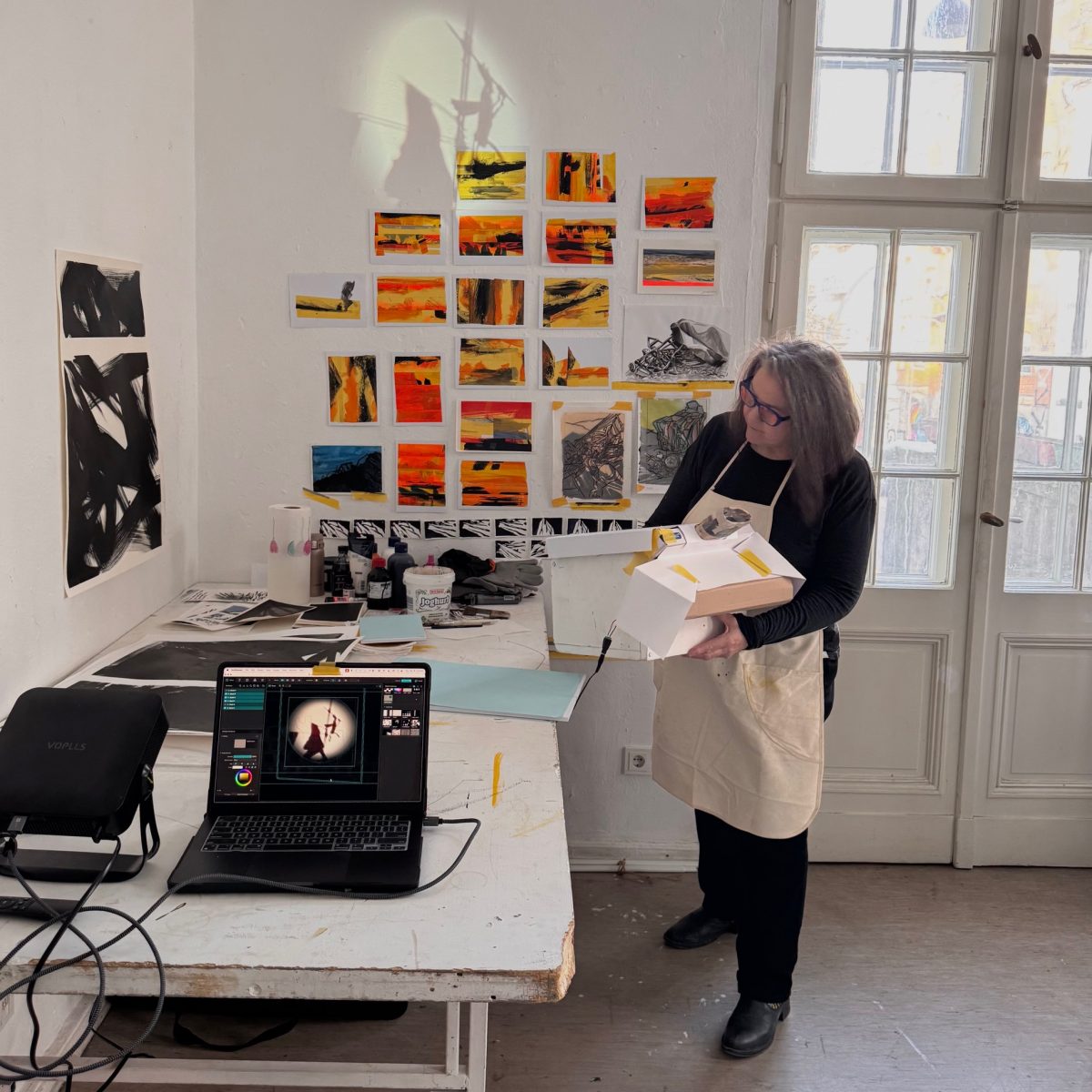
During your six-month residency at GlogauAIR, you’re incorporating projections, light, paper sculpture, and ink painting. What are you most excited to explore with more time and space here?
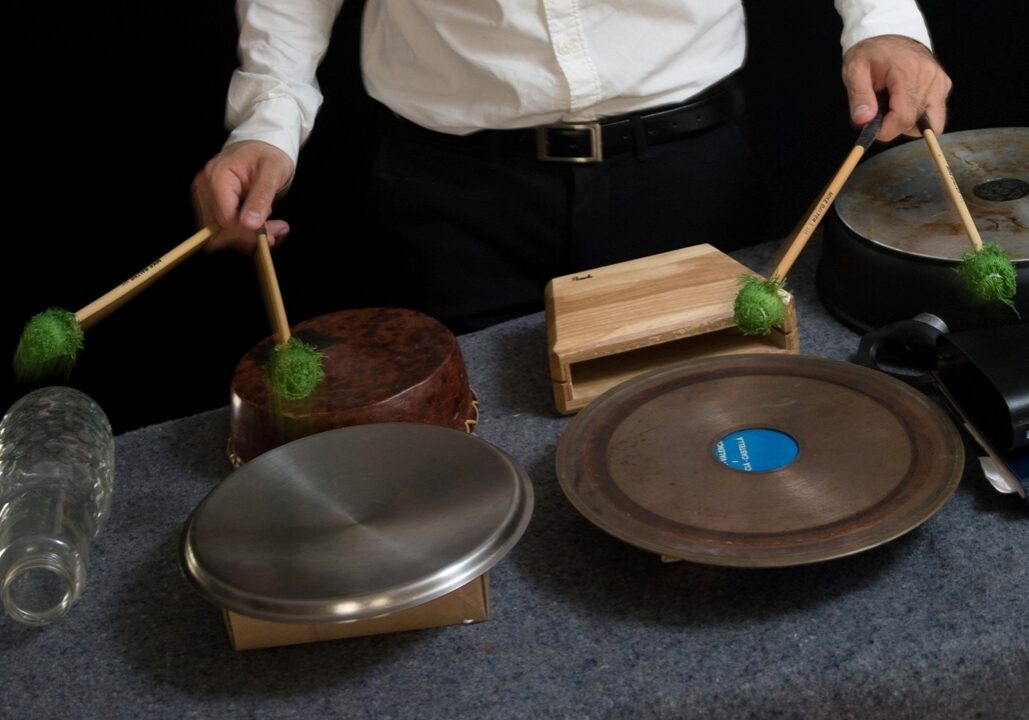
When I arrived in January there were a couple fantastic sound festivals where I was able to catch a number of sound artists’ exhibits/performances and talks. That really inspired me and caused me to reorient my original intentions for my residency. Not a deviation really, more like an expansion. I’m still working with video, animation and drawing but I’m expanding the sound and electronics aspect of my work. I’ve collected field recordings all my life, but while here I’ve been playing more with how I can use my recordings in an installation and possibly interactive format.
Meeting many Berlin artists working with sound and technology has been really wonderful and inspiring. I’ve been using this time to explore electronics (such as Arduino’s, motors, sensors) and sound, having some successes amongst a lot of failures, but that’s what I find most valuable during a residency: to have the opportunity to try and fail at new ideas and to develop through the failures and see what comes out on the other side.
For the last two months of the residency I will be focused on sound, light and drawing.
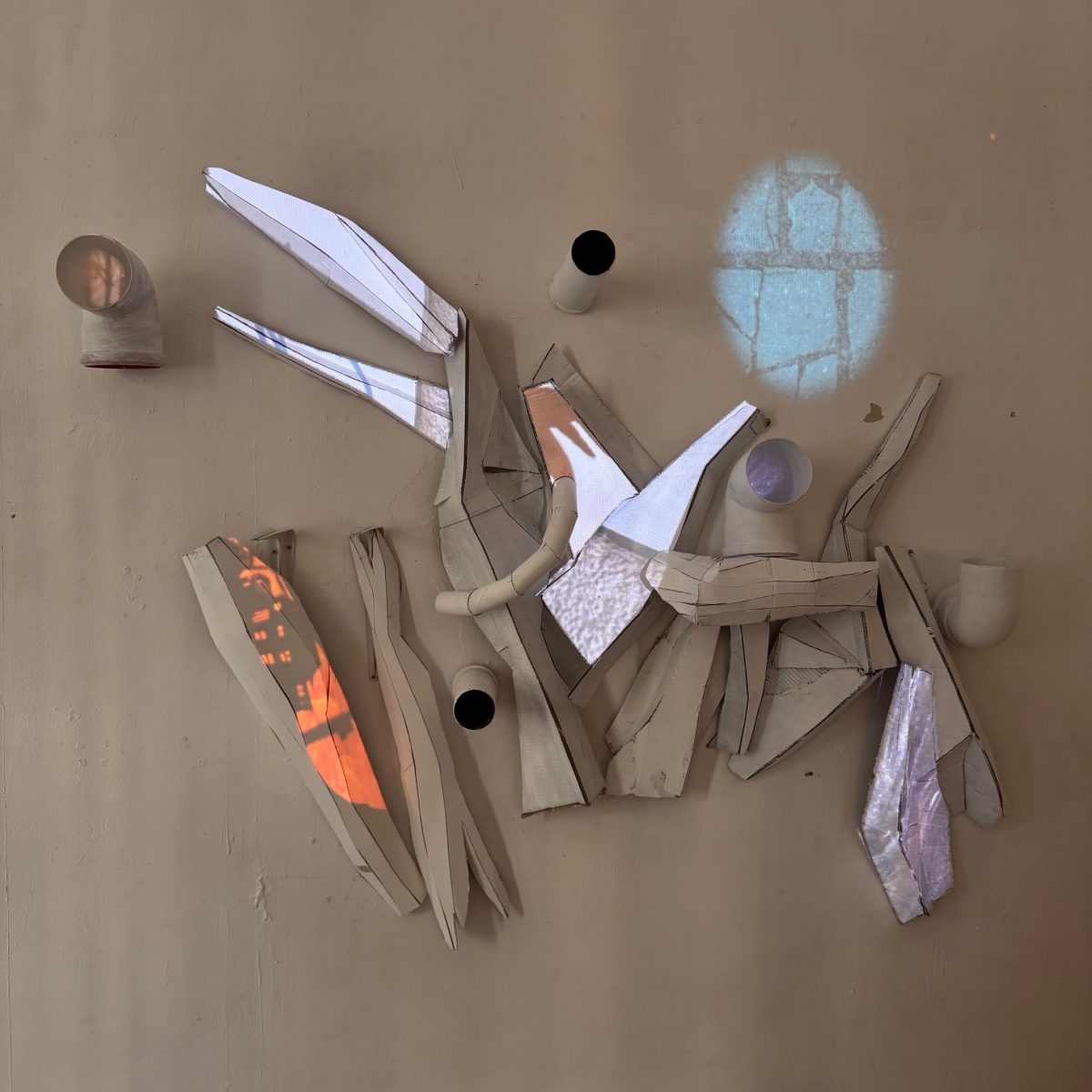
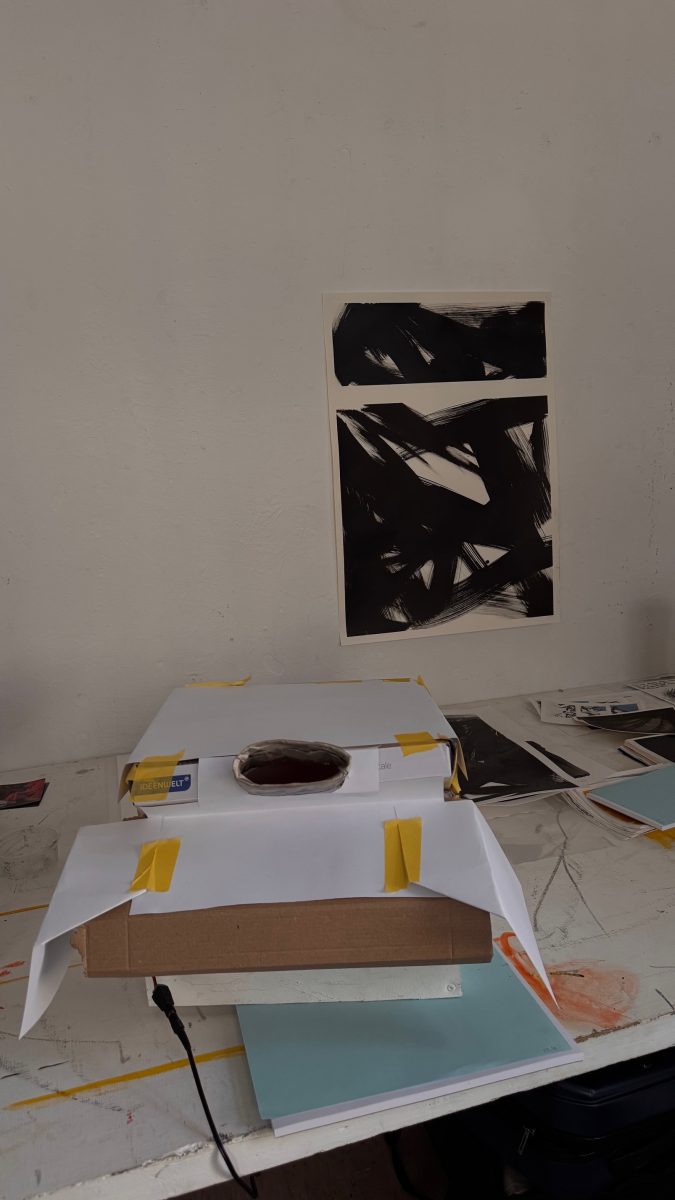
You often focus on materials that have been crushed, shifted, or removed from their original context. What interests you about that sense of displacement or transformation?
The physicality of the material, whether it’s crushed cars in a junkyard in Chicago or Wyoming, a closed factory in Whiting, Indiana or the jumbled wires of old telephone poles in a city like Paterson, NJ, interests me from a visual and memory perspective.
These objects, buildings and landscapes originally had a different purpose, and now are drastically transformed, altered and disconnected from their original purpose…they hold two memories.
The first is the “ oh that used to be this or that” condition (a sort of nostalgia state) and the second is its current memory state, which is as I see and draw it. This second state isn’t nostalgia. It’s that these materials have shifted into a different state of use or disuse.
An example may be when I was in a junkyard in Wyoming that was shuttered and being moved to another state. As I wandered and drew engines and bales of metal, I came upon the windshield of an old school bus laying in the dirt. Through the window I could see many small plants growing under this windshield/greenhouse. This could be an example of a second state of memory that I’m referring to. And perhaps this second state appeals to me to draw because it puts the material and structure first. The energy portrayed within this second state is most compelling to me. The forms and shapes of crushed car metal project the energy it took to crush the vehicle. Similar to metal, striated rocks or boulders I’ve drawn reveal the immense pressure of their creation. Showing a memory of energy and pressure that was part of that rock’s history.
I find an intense beauty in materials such as metal, glass and stone. I’m interested in their current composition but also in that first memory state. What stories can they tell me?