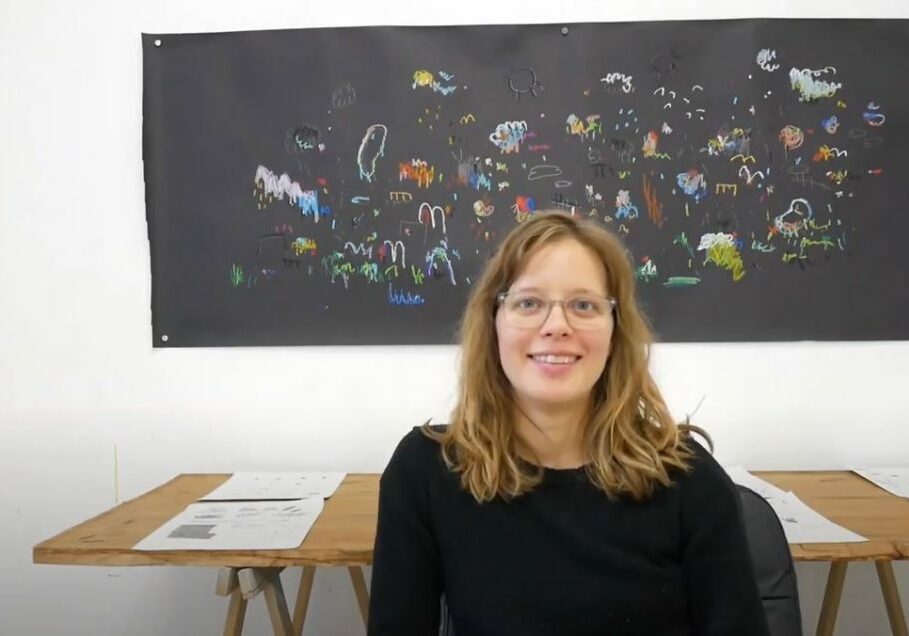
Meet the Artist // Jing Xia
Trained in industrial design at Emily Carr University (Canada) and Lund University (Sweden), Jing Xia grounds her practice in experimentation. Her work begins without a predetermined outcome. Gestures and textures accumulate through trial and error, often traced by found tools that inscribe immediacy and presence. Forms shift between chaos and balance, fluidity and tactility, echoing cycles of making, unmaking, and remaking. Each work unfolds as a process of becoming, attuned to movement, transformation, and moments of discovery.
Can you tell me a bit about yourself and what you’re working on so far at the residency?
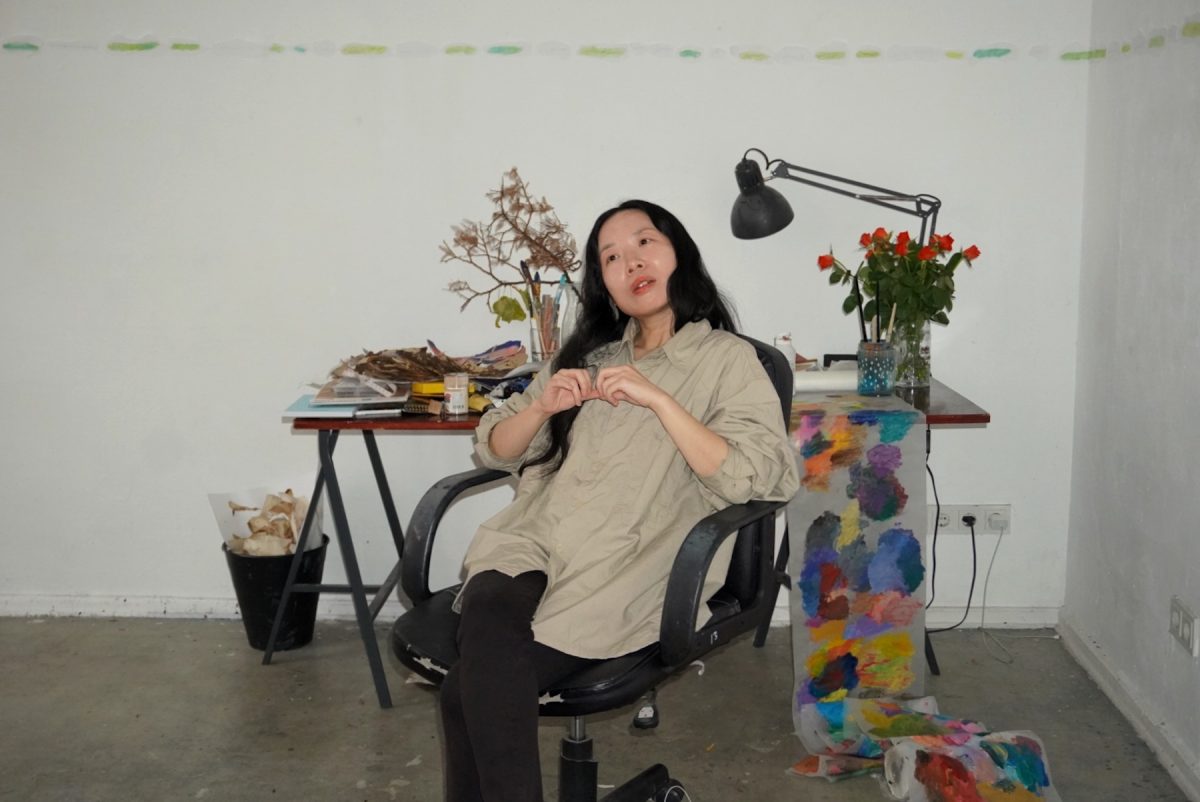
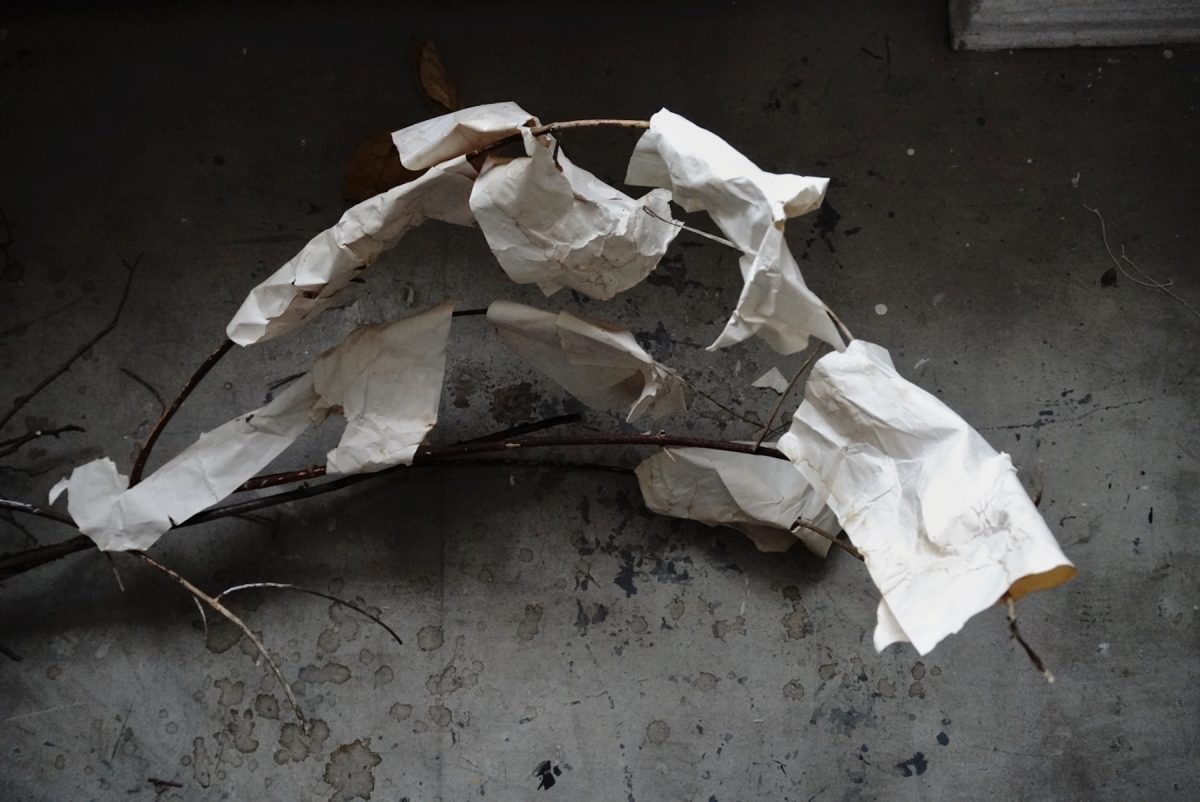
I’m a visual artist working with installation, sculpture and painting. I’m Chinese-Canadian. I was born in China and I moved to Canada about sixteen years ago. For the past ten years, I’ve lived in Vancouver. My practice is quite process driven. I am obsessed with designing processes and coming up with different methods of making. Currently, I’ve gravitated towards the idea of designing a process so that the work can make itself. At GlogauAIR, I’m taking inspiration directly from my daily routine and the surroundings. I try to embrace chance elements and unpredictable factors such as fragments of conversations I overhear, the rain, and the objects, flowers, and tree branches I stumble upon during my walks in the neighborhood.
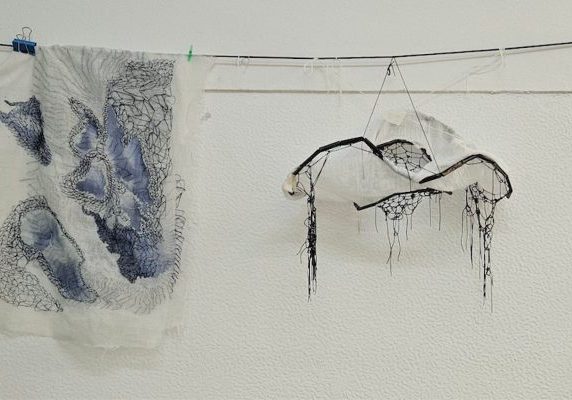
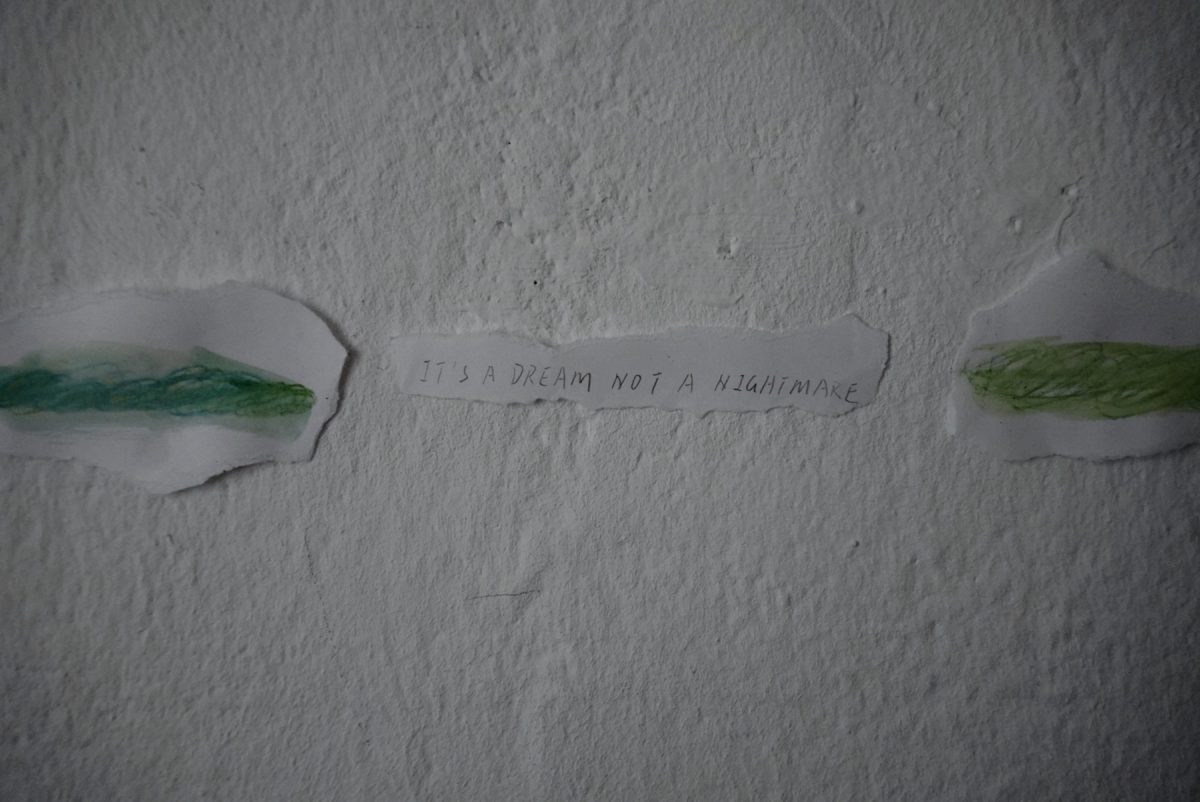
Right now I’m working on a wall installation inspired by my morning walks, and my book of rain project. I’m also playing with decomposing leaves. I probably want to make a sculpture from them but I’m still testing it so I don’t know what the final outcome will be. We’ll see how it plays out.
You have these textures between sculpture and painting that evoke various movements and have altering relationships with negative space. What does playing with texture in both sculpture and painting entail?
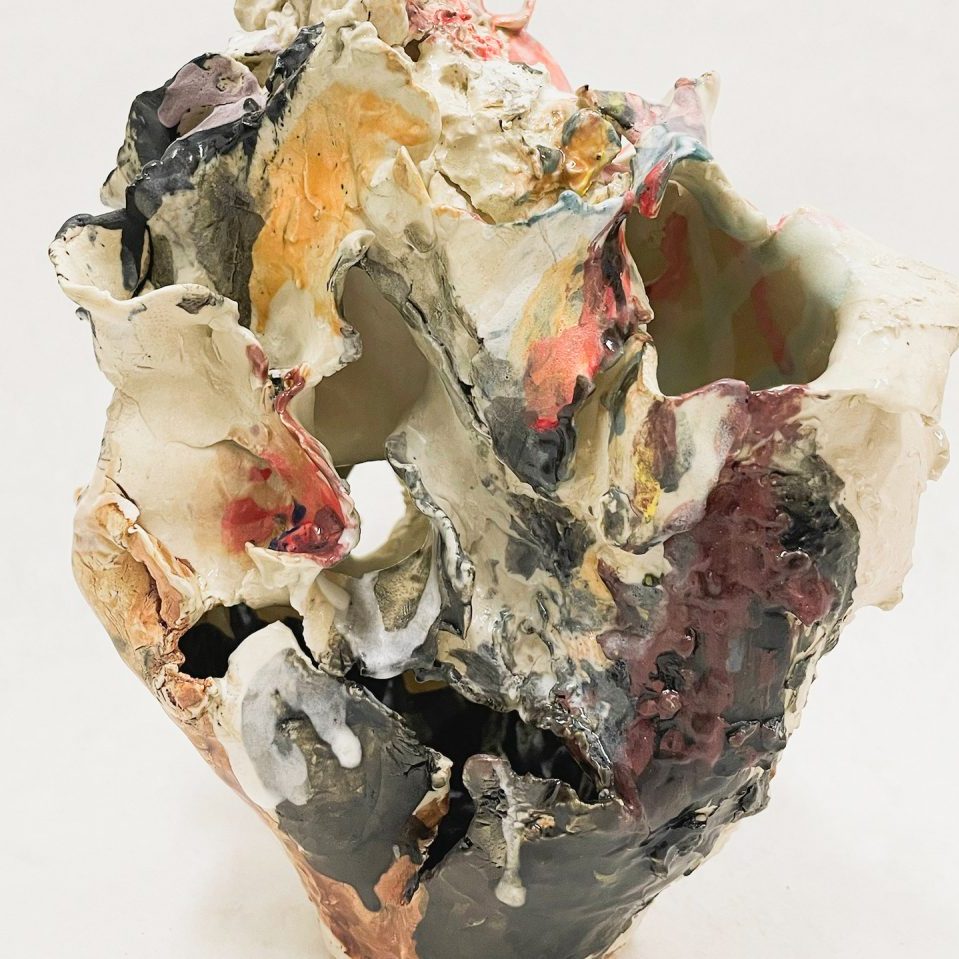
The textures are the direct result of my experimentation with different methods of making. This applies to both sculpture and painting. For example, in my ceramic sculptures, I ask myself, “What if I use cake piping tools to apply this clay slip?” “ What if I smash these two vessels into one?” “ What if I drop this sculpture onto a textured surface to let gravity and the surface shape the work?” I’m quite rough—maybe even brutal—with my materials. I’m not a gentle maker. In that sense, all my sculptures feel like survivors. They’ve survived my experimentation.
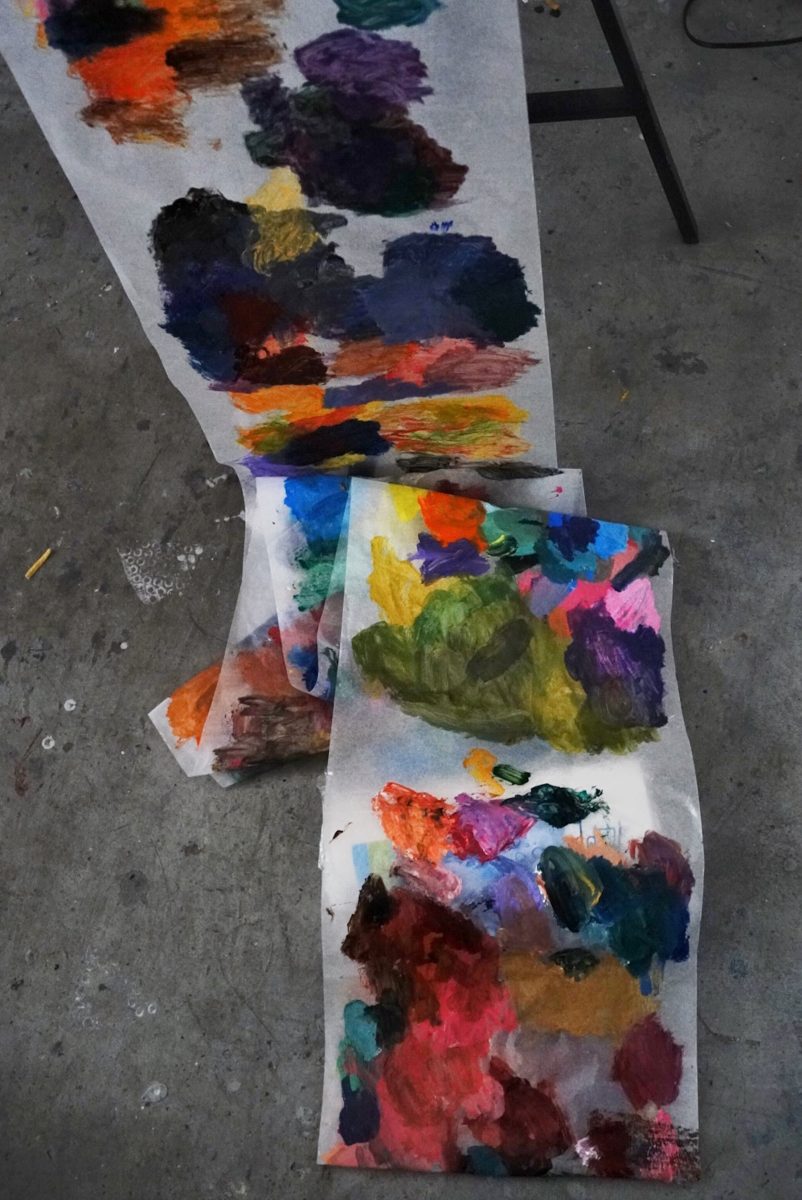
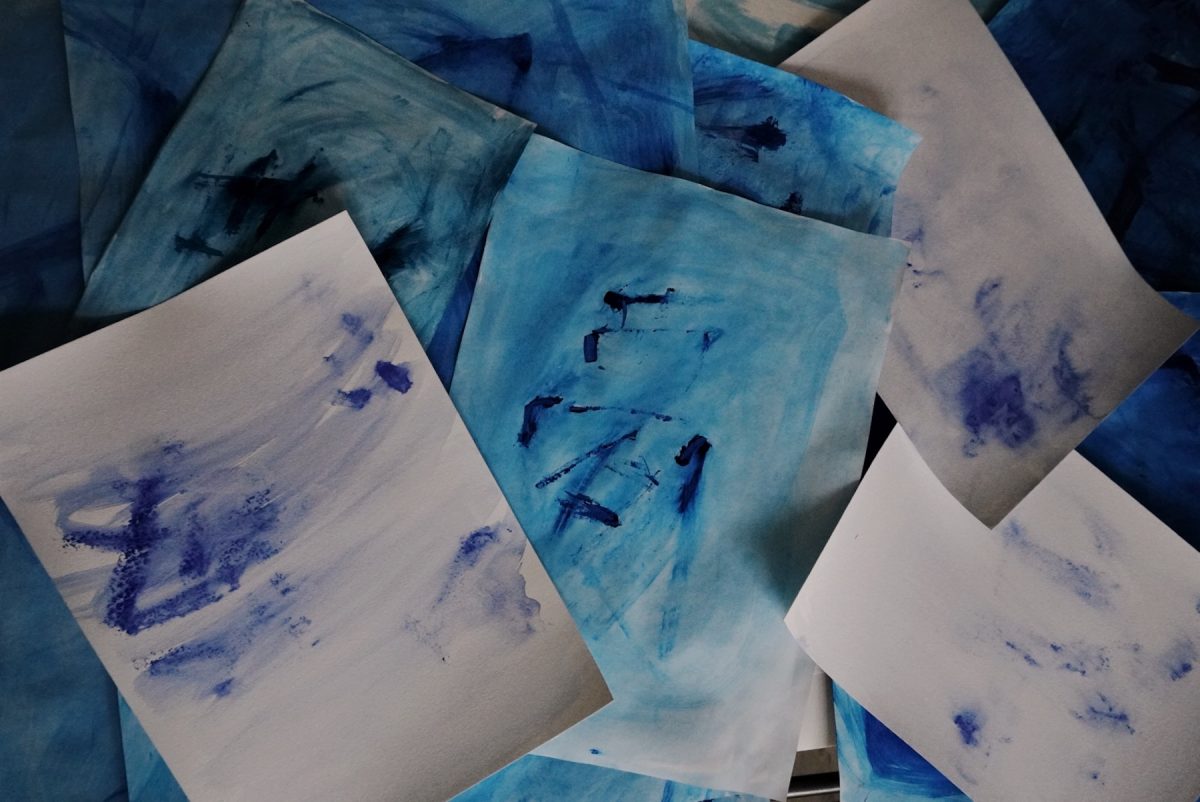
The same goes for my paintings. The textures in the painting are quite thick because they are layers and layers of trial and error. I don’t use paintbrushes much. I do use them, but not as much as I use the things I see around me. For instance, I use chopsticks. I use rocks. I use fabrics. Sometimes I use my hand directly.I love when the paint becomes very bodily.
How do you know when you finished a sculpture and when you finished a painting?
My heart tells me. It produces a pleasing sensation within me when it sees something satisfying. But it can also say, “Wait, not done yet.” I feel that time is a really good indicator. I often leave the work and give it some distance—maybe a few days, maybe a few weeks. When I return to it, I look again to see if I still like it. If I do, I consider it done, at least for now. If not, I keep working on it.
Interview Shay Rutkowski (@sruutrut)
Photos Yasemin Erguvan (@yaseminerguvan)