Meet the Artist // Gaelle S. Warner
Gaelle S. Warner is a French visual artist and photographer based in Paris. She transforms urban spaces into palimpsests, layering the traces of successive eras and usages. She explores these environments to bring to light a reality interwoven with contradictions, revealing how architecture tells our human stories.
The artist has developed an artistic protocol based on assemblage and collage, in which the image ceases to be a record and becomes a critical tool. Her photographs are arranged in grid-like matrices that evoke the orthogonal layout of American cities.
 Can you please tell us a bit about yourself and your artistic practice?
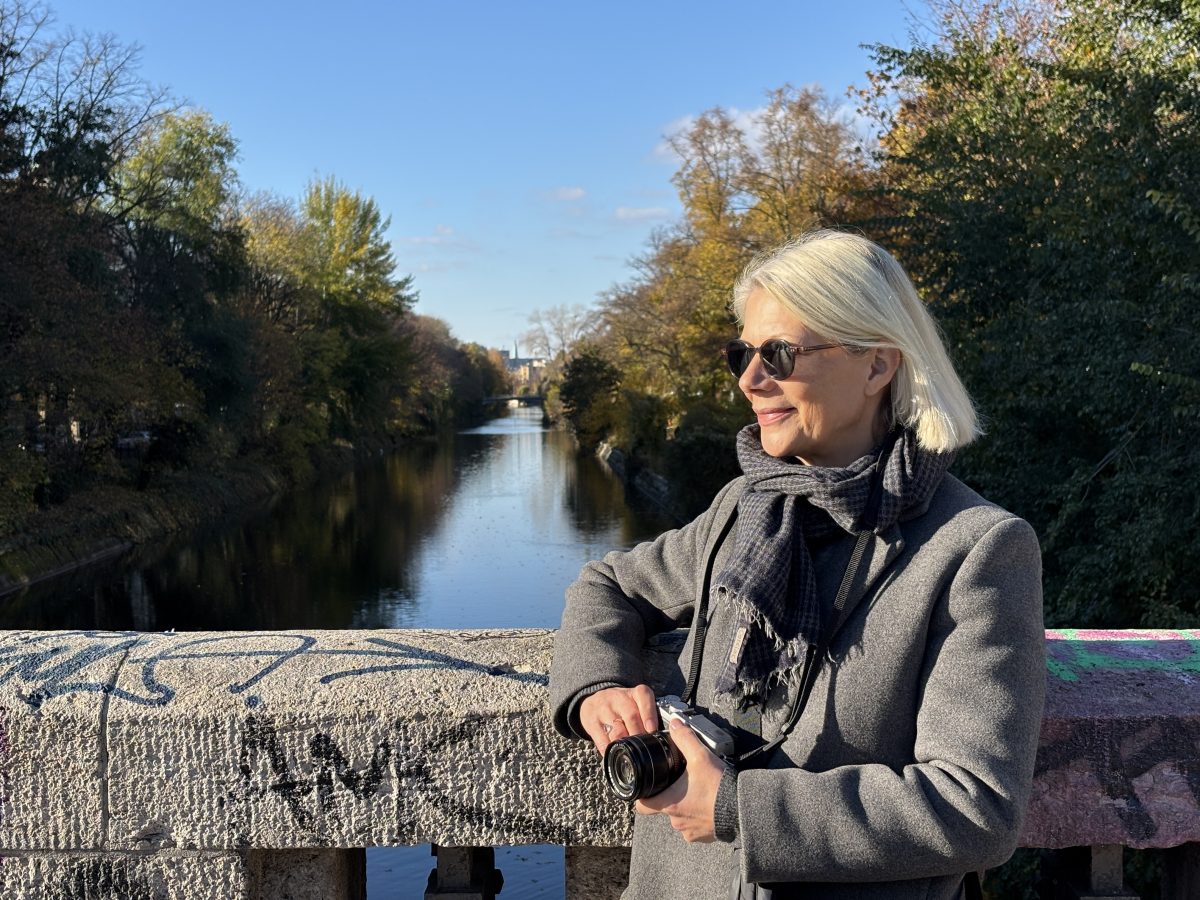
I am a photographer who focuses strictly on architecture and our urban environments. I typically omit human figures from my work and instead look into the cities we live in as decor. Maybe because I worked in cinema and television in France and the United States, I view cities through a theatrical lens: I feel that I photograph the space right before the actors step in to perform. And I am fascinated by how we shape our surroundings.
My artistic path has never been linear. I originally studied political science. However, as far as I can remember, I always made art. As a teenager, I used to draw all the time and cut out magazines to make collages. My father was a photographer who gave me my first camera at age 7 and taught me how to observe the world.
After I graduated from university, I moved to New York and then Los Angeles, where I work in the entertainment industry and turned to painting. But when I returned to France, the space and the light were different, which led me to transition into photography. It seemed natural.
Lately, I have been focusing solely on my artistic practice. That is one of the reasons I am currently in Berlin.
 Your process begins with long walks and capturing urban details that are often considered secondary. What do you try to reveal in these spaces?
My protocol is about walking around my surroundings.
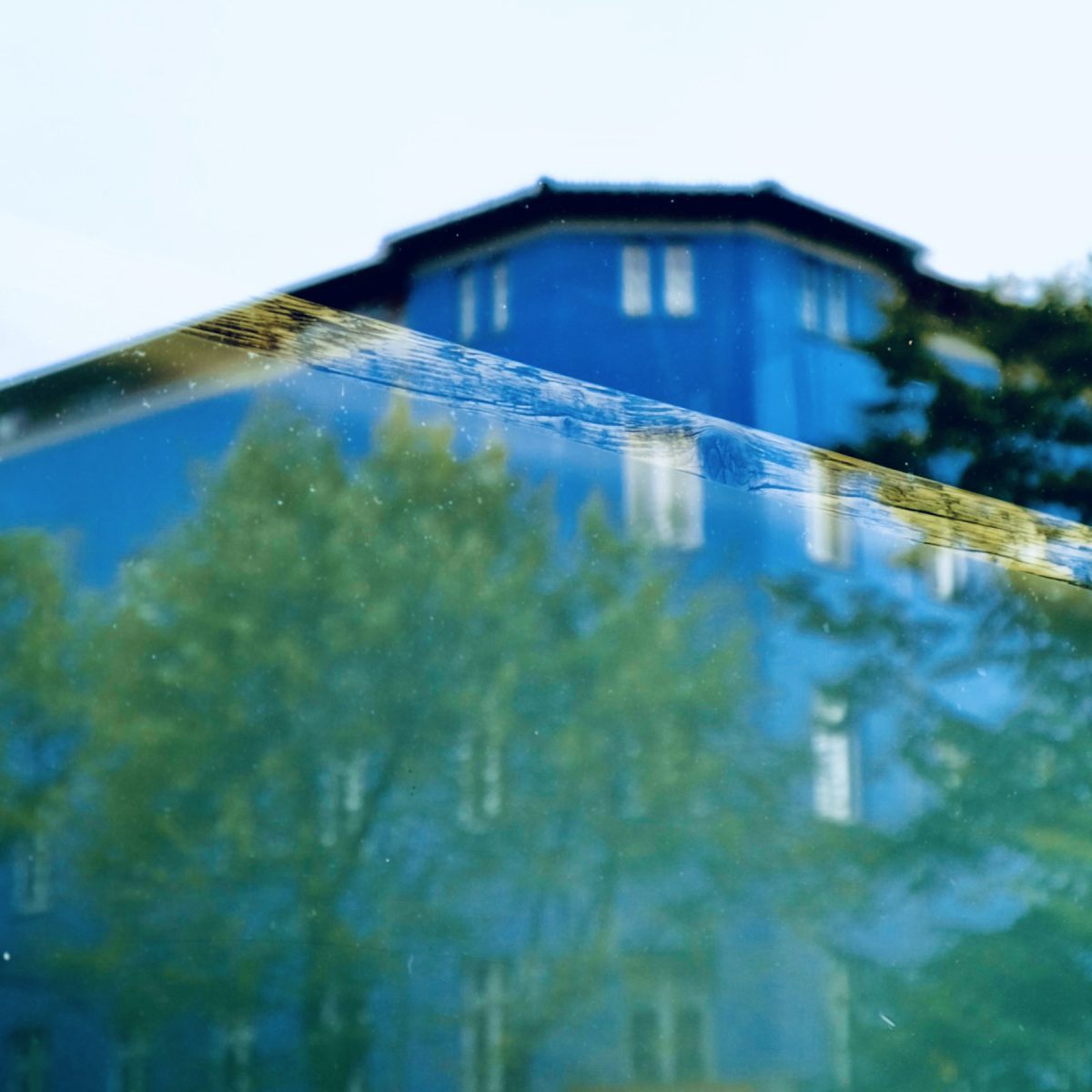
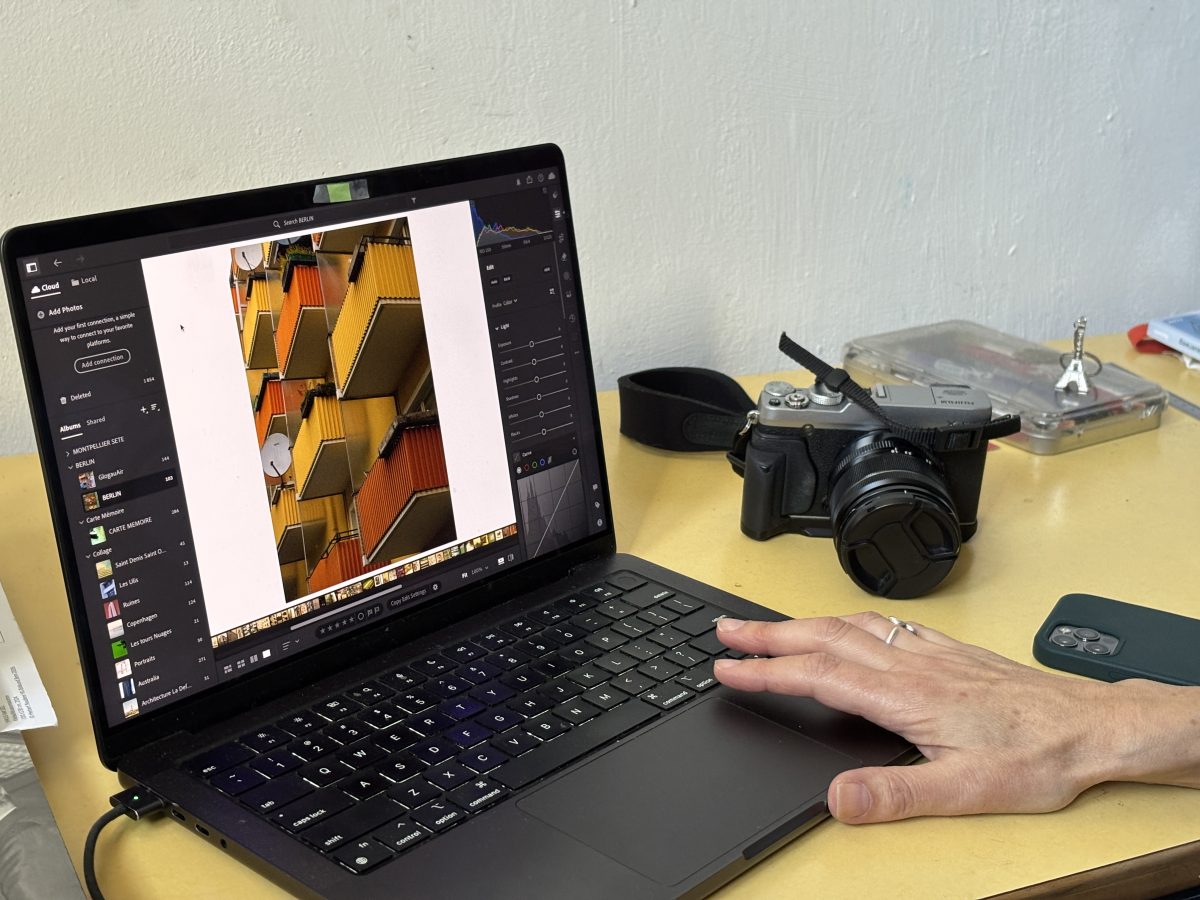
I take a city, like Berlin, and divide it into neighborhoods that I then explore on foot. During the first three weeks of the residency, I covered 200 kilometres simply by wandering, turning corners, and seeing what happened. I pay close attention to where I go, almost like collecting pieces of the city. While other artists gather wood, paper, or objects from the street, for me, it is to bring back images. I steal fragments that I use as my palette to form collages.
I usually take photos of architecture, but I also like to focus on what is considered neglected or mundane architectural details. For example, when I was in Seoul, I was obsessed with electrical poles because they were staggering and looked almost like sculptures of trees. I love working with that kind of imagery. Usually, photography tells a single story within its borders. However, I feel that to capture a city, you need small vignettes that provide a deeper sense of it. It could be something tactile or a smell that brings back an emotion or a form of nostalgia.
I love Berlin. It is a very special place for me. I have a deep connection with it, and it brings me to tears sometimes. Some cities simply touch you more than others. It is a place that has been through so much history and trauma. Metaphorically and symbolically, you can feel all the scars intertwined and running through it. You can find beautiful new designs, alongside ruins or remnants of the Nazi era, and amazing Art Deco buildings. It is all mixed and matched like a patchwork.
 From your first photographic collages in Rome in 2010, to your recent works, you bring together realities that are miles apart. How does this assemblage of fragments connect to your childhood memories and the creation of an imaginary geography?
I was born in Brittany (France), and when I was about three and a half years old, my family moved to Algeria, in North Africa. We lived there for two years, so my earliest memories are of a foreign country: sunny, full of palm trees, with a language I didn’t understand, and strange surroundings. It was a dramatic shift, presenting a striking contrast with France.
So I guess, when we came back, I simply superimposed the two countries into one. My souvenirs were a mix of these two different places.
It might sound strange, but because of these early experiences, I feel a real pleasure in being in another country where I don’t understand all the codes, nor am I understood, while still holding a key to connect. As a photographer, you likely relate to this: being behind the camera creates a space between reality and ourselves. The camera acts as a boundary. Being a foreigner in a country where you don’t know the culture or the language feels very similar. You aren’t completely lost, but you easily could be. There is a thrill in that. It is exciting and scary, both at once.
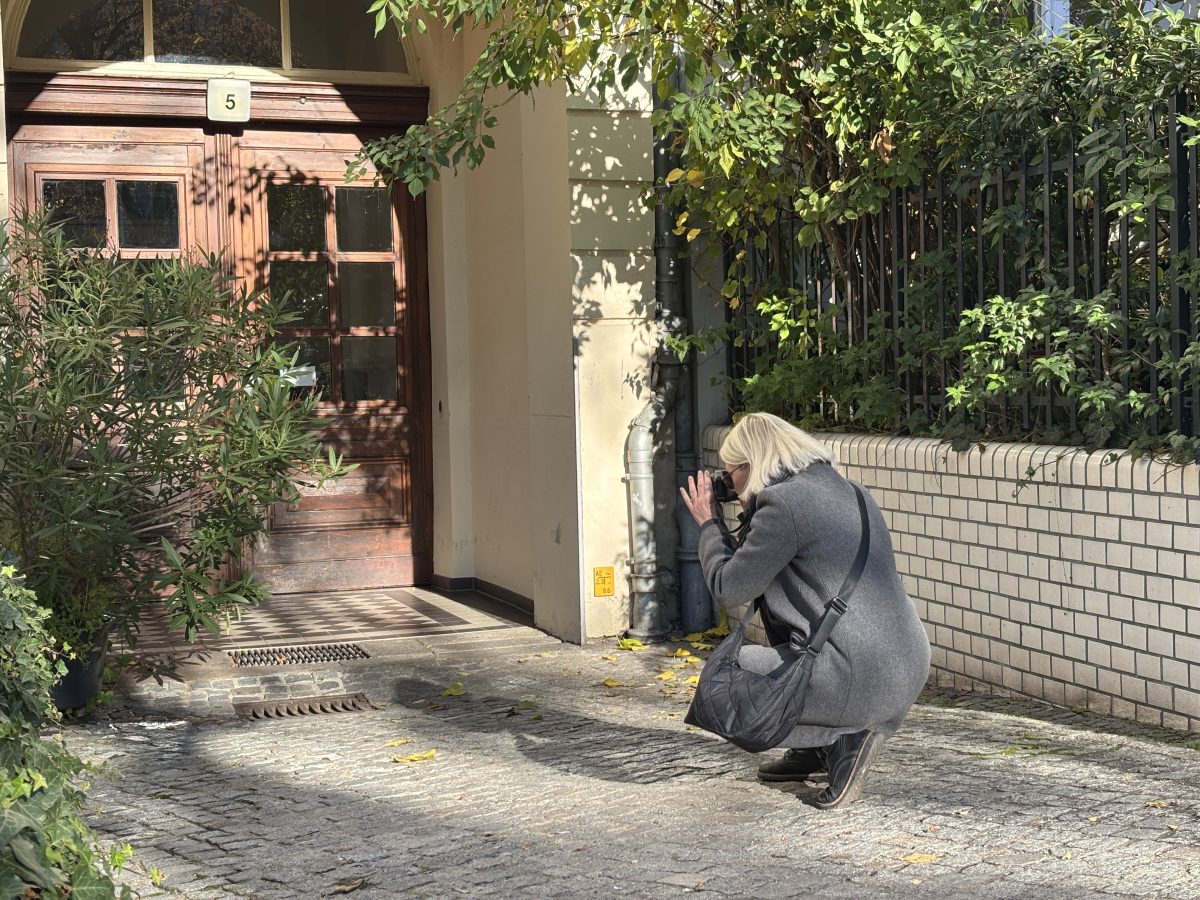 You try to understand the intimate relationship with the city to find “a place to exist,” treating architecture as a stage set. How do you convey this need for belonging and human presence even when people aren’t there, creating a balance between the solitude of the buildings and the energy of their inhabitants?
I see the city as a portrait of its inhabitants. Even if no one appears in the picture, we can still feel a human presence in it.
That’s exactly what I’m trying to say. I take photos of different places around the world, like Paris, Berlin, or Los Angeles. And when I put them together, it may seem that I want to create an inaccurate patchwork. But because we are humans living in a world of contradictions and globalisation, my collages reflect exactly that. So they represent who we are and what we can become.
Some architecture gets replicated across multiple cities, for example. It is especially common when it comes to financial districts or new residential areas. You go to Hong Kong, and the financial center resembles the one in Seoul or Los Angeles.
There is a dialogue between vernacular architecture and the newest forms of design, between nature and the built environment, between the intimate and the collective, and that is exactly what I am trying to express in my work.
Interviewer // Mariella Raia
Photos // Danae Ripley