Meet the Artist // Esteban Patino
Esteban Patino explores the multitudes of language creation and perception. Spanning sculpture, collage, and painting, he investigates the transmission, reception, and creation of arbitrary forms and semiotics that permeate his practice.
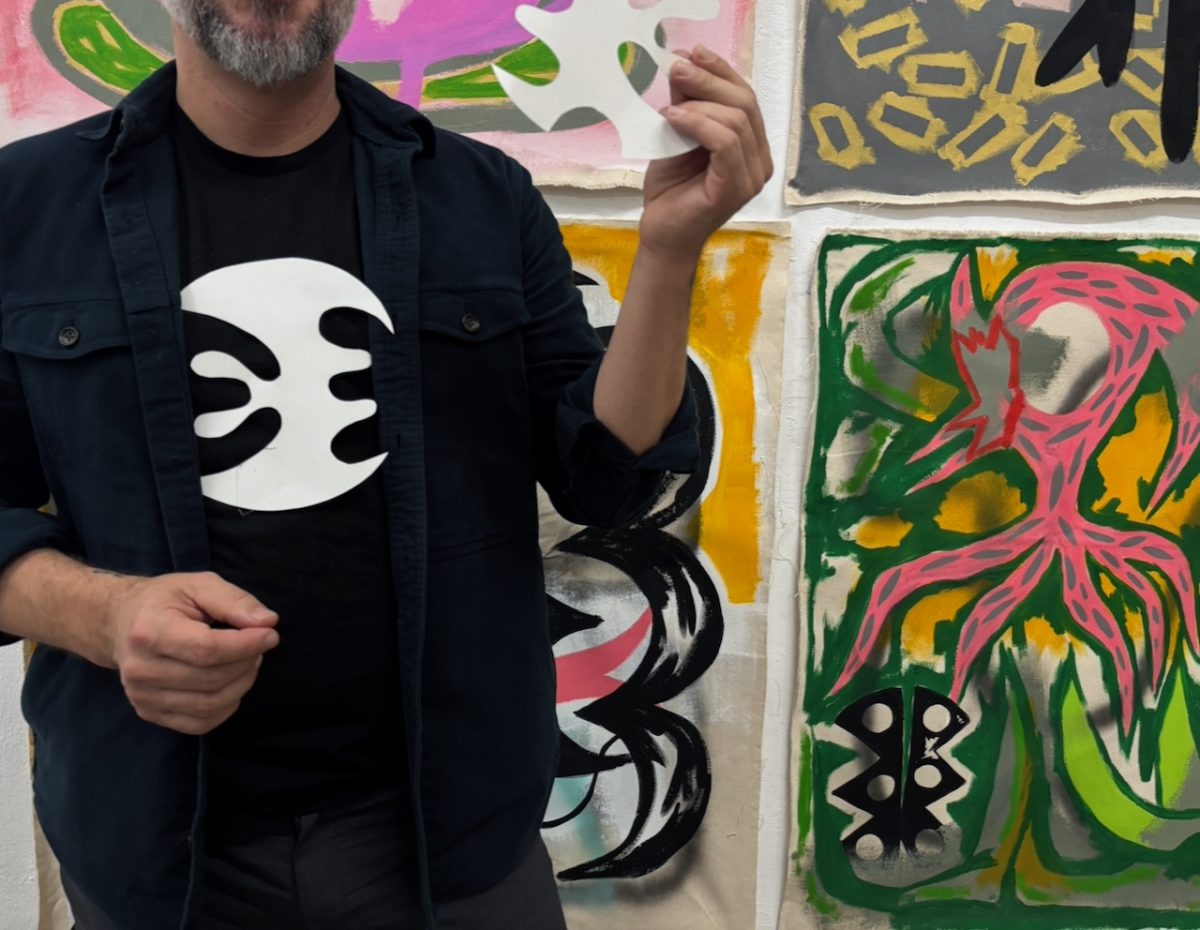
In order to consider these questions, he has created a system of symbols based on six characters, each of which rotates on its own axis four times, resulting in a total of twenty-four characters. Through these shapes—which form an alphabet that creates the illusion of language—he plays with word structures by creating text-based pieces, such as speech bubbles, palindromes, and metaphors, to explore how written and visual language is understood and interpreted.
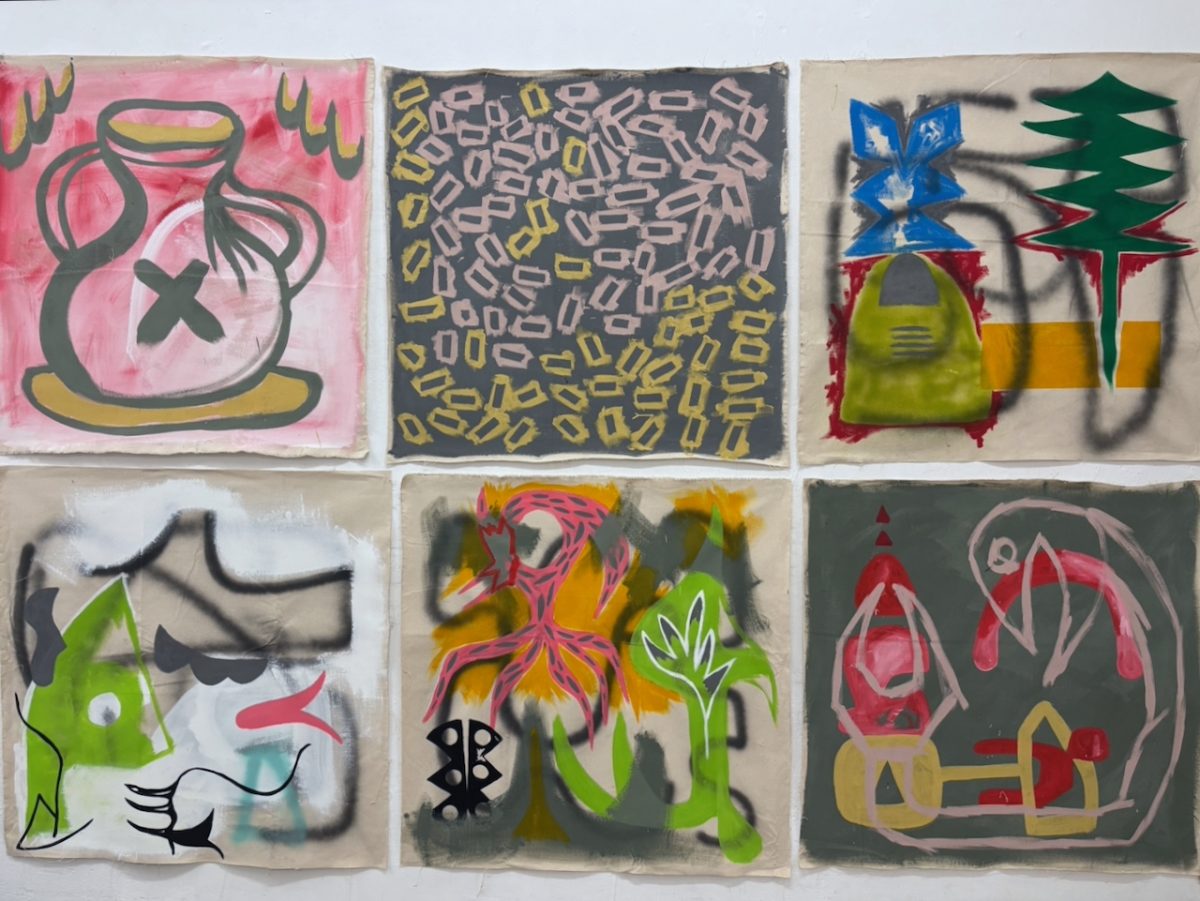
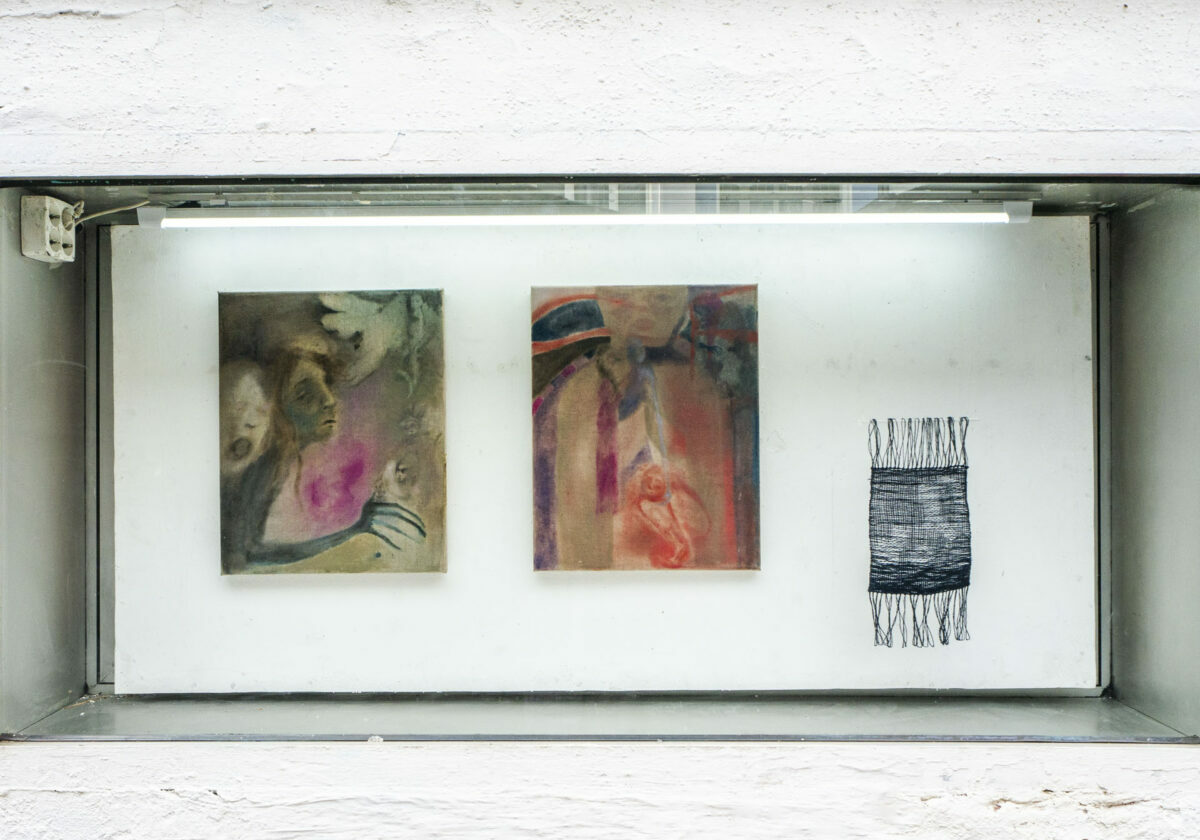
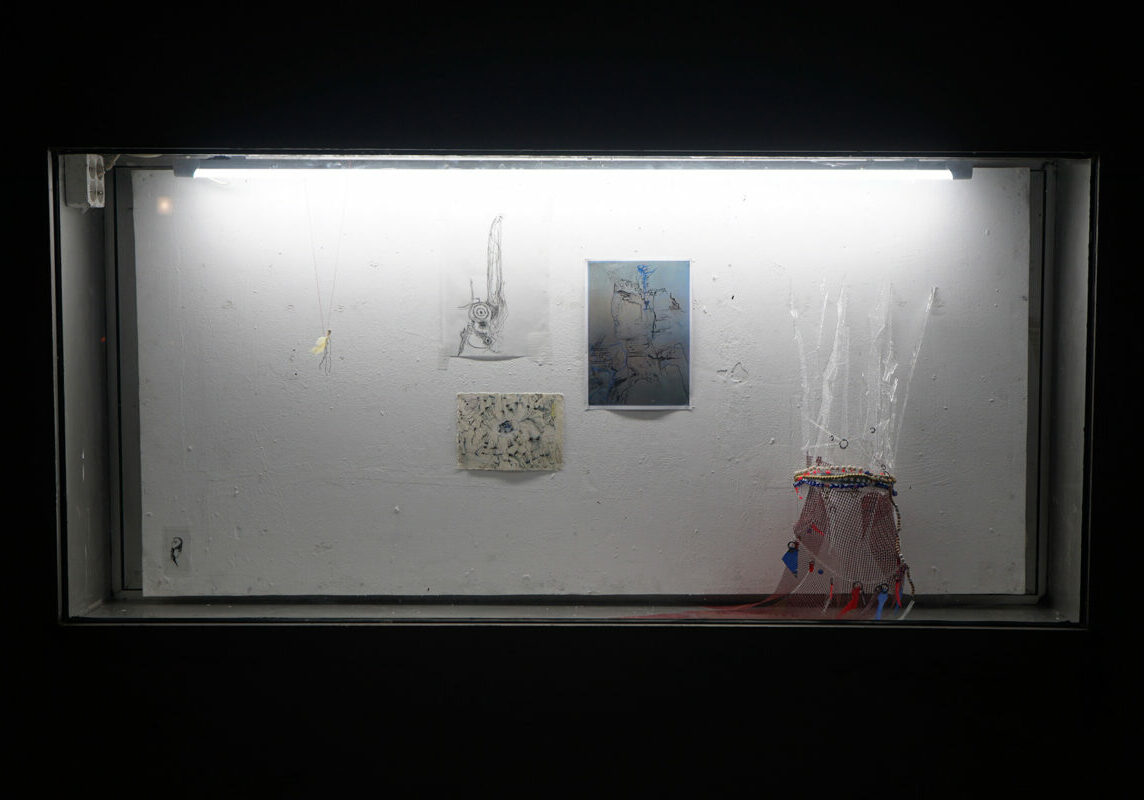
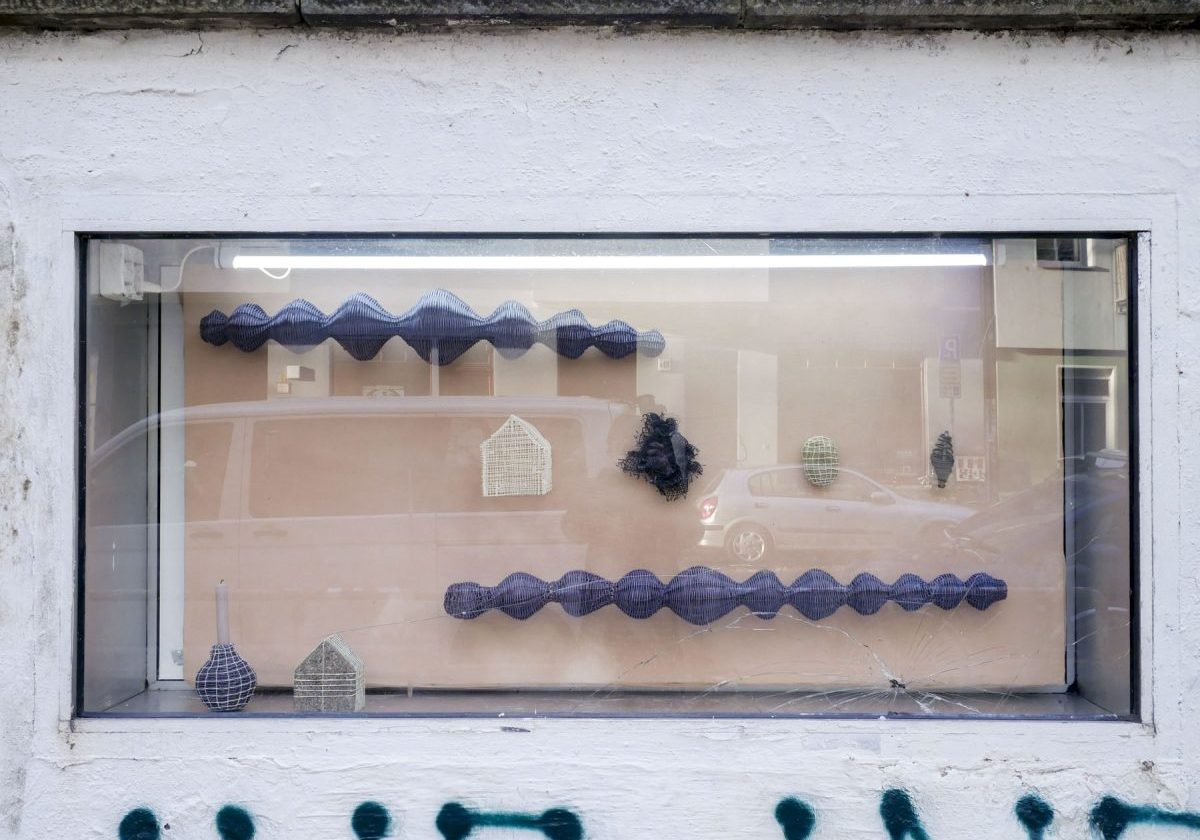
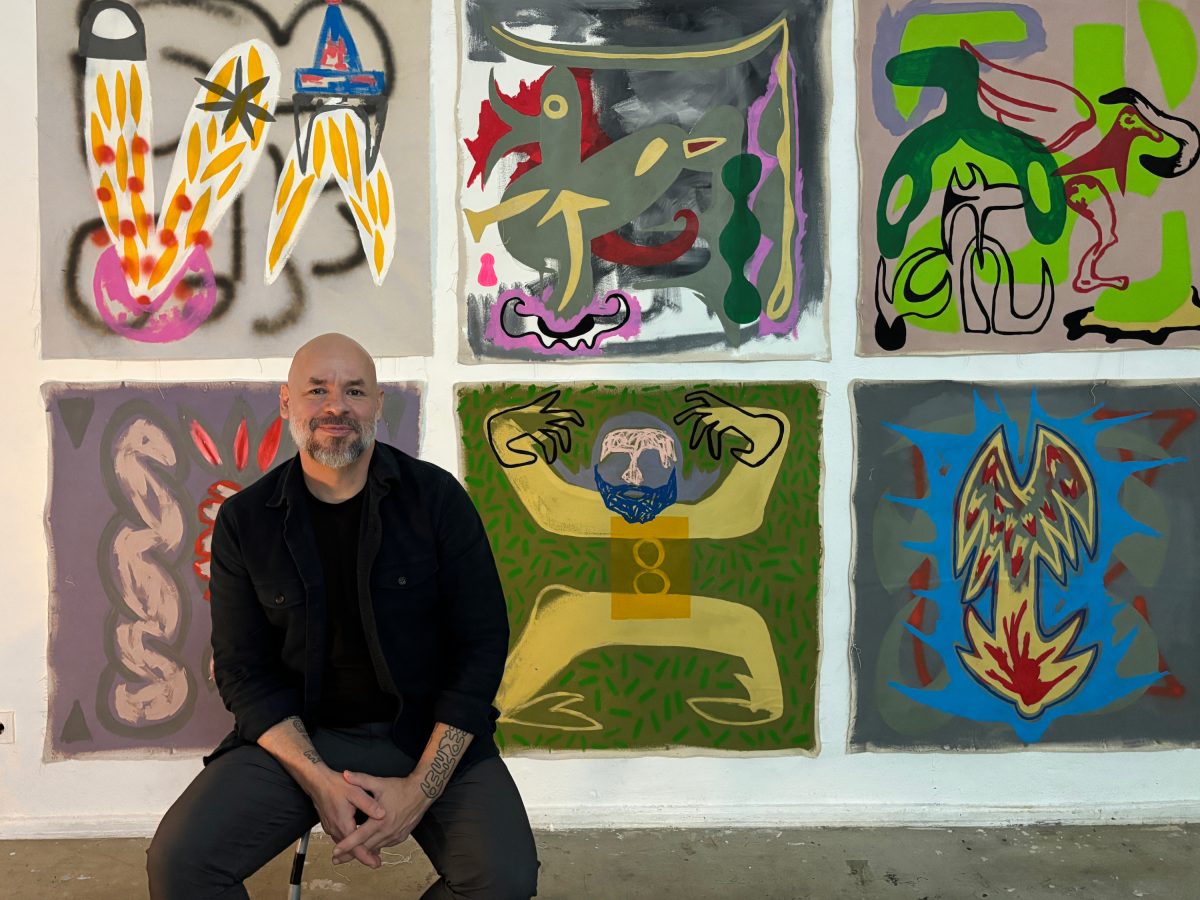
Aesthetically, each iteration of his language study is distinct. His sculptures are systems of repetition, seeking symbolic approximations of atemporality and the possibility of universal shapes. His collages are humanoid bricolages: amorphous, inquisitive monsters that portray the complexities of time and human existence. His paintings emerge as deeply intuitive forms that awaken on the canvas, sometimes producing mythical beings or entities. Through these works, he aims to bring into existence representations of timeless activities and interactions.
Though distinct, these approaches are deeply interconnected pushing him to (re)consider the nature of words as symbols, their infinite and idiosyncratic interpretations, and the human mark within our landscape.
Interviewer // Mariella Raia
Photos // Danae Ripley
Could you briefly introduce yourself and your background? What are you hoping to explore or expecting to get out of this residency at GlogauAIR in Berlin? It is your third time at GlogauAIR, why? What will you do differently?
I am a Colombian artist based in Atlanta, Georgia, originally from Medellín, Colombia. I moved to the United States many years ago. My work revolves around symbols, signs, and iconography, things that, when you look at them, give you a quick message. I created a symbolic language around typography. That is not a language; it’s a way for me to play with abstract art in a way that evokes linguistic structures.
I have been developing that for many years; this is my third time at GlogauAIR. The reason why I keep coming back, it gives me time and space to do something different from what I do at home. During my past residencies at GlogauAIR, I’ve explored mediums like collage and taken my work in new directions. This time, I’m giving myself total freedom to experiment without a predefined outcome, letting the process guide where the work goes.
You move from highly planned and structured steel forms to collections of street posters to paintings driven purely by instinct. How do you realign your mental state when you move from such a rigorous language to one that’s completely improvised?
I’ve always struggled with purely emotional art, art that lacks concept, thinking , or clear intention. When I was developing my symbolic language, I wanted to create something specific, something designed to transport the viewer. At the same time that I was doing that, I also did collage and other works, like sculptures, which are more by instinct or by chance. It’s like having two parts of your brain working at the same time, which reflects how I live my life: one side is rigorous and disciplined, while the other is completely open and spontaneous. I find it essential for my paintings to inhabit both worlds and move fluidly between them. That tension provides me with an intense sense of balance. To me, art must exist in this duality: it requires intention and meaning, but it also demands the freedom to create.
During your residency at GlogauAIR, in what ways are Berlin’s environment, long nights, and rhythms transforming your palette and imagery?
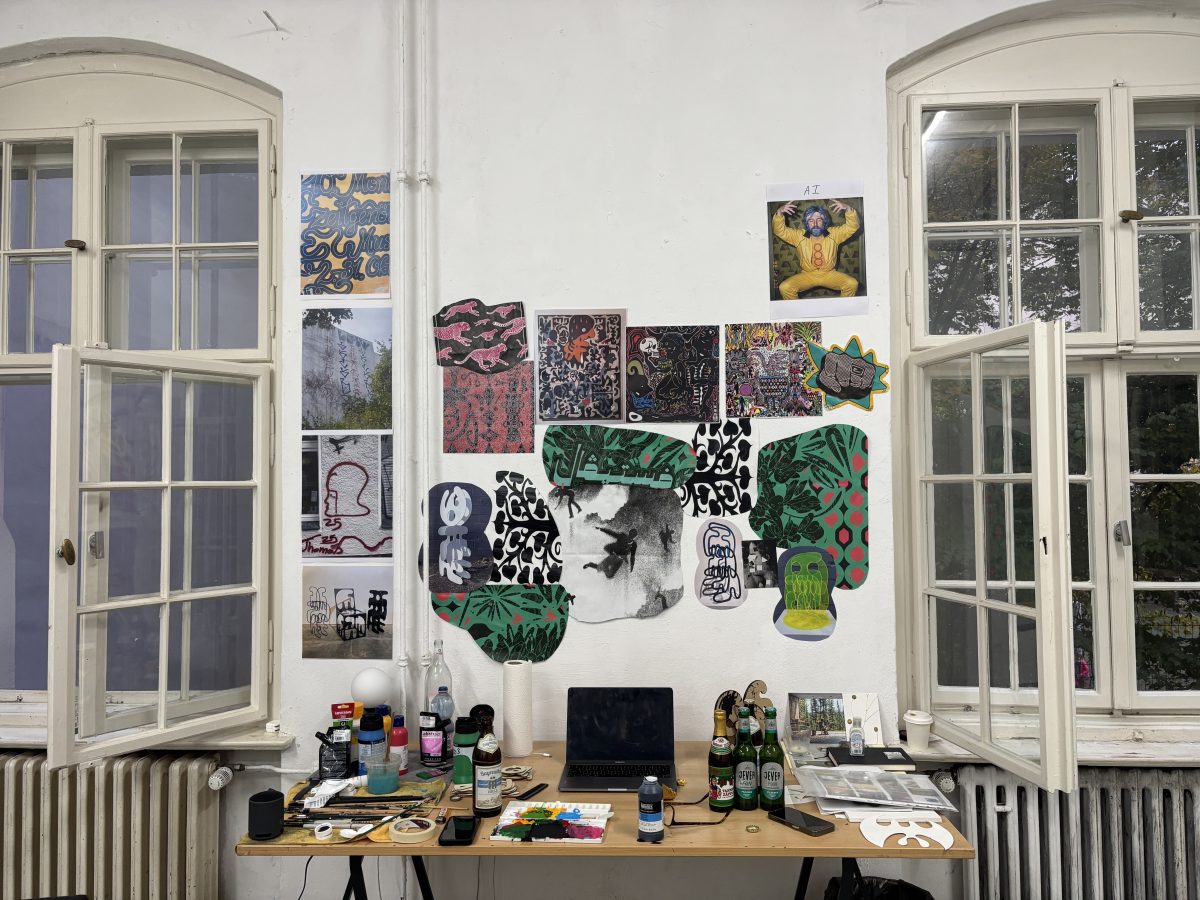
In 2021, I came to Berlin for a self-directed residency, renting a studio in Schöneberg during the darkest months of the year, January and February. It was the first time I started working with collage. I intended to step out of my comfort zone: I started visiting traditional local bars, not the trendy spots, but the old neighbourhood pubs where locals gather. Even though I didn’t speak any German, I’d order a beer, strike up conversations, and observe. Back in the studio, I’d put together portraits of the people I met. Although I no longer work on such portraits, that experience hooked me on Berlin’s nightlife. It offers a raw, contrasting side of life, where you step into the night, test boundaries, flirt a bit with danger, and then retreat to the studio. But for me, nightlife is just one piece of the puzzle. To truly absorb the energy here, you must experience everything: the museums, the galleries, the streets, and the late hours. Berlin brings together incredibly interesting people, provoking real conversations and connecting you to a completely different creative fiber.
You’ve lived and worked in Atlanta for 24 years, yet you’re looking ahead to new projects, including the idea of setting up an artist residency at your uncle’s coffee plantation in Colombia. What does this connection between your American home base and returning to your Latin American origins mean to you?
To be honest, I don’t know anymore. I went to this farm and talked to my uncle because we wanted to do something together, but that required me to be there in Colombia full-time. And that’s not going to happen. I think it was a nice dream, but I’m not planning to pursue it at this moment. My first idea was simply to go by myself, have a studio in the mountains, and paint. But when I got access to the property, it started to feel like a task, like work. I realized it isn’t necessary for me right now, maybe when I turn 70, but currently, it just takes energy away. Sometimes you try to do things for everyone else, even in art, but I don’t think that’s necessary. It sounds great on paper, but it’s not what I need to do. So I am evolving my dream into a different kind of dream.