Meet the Artist // Hera Wing
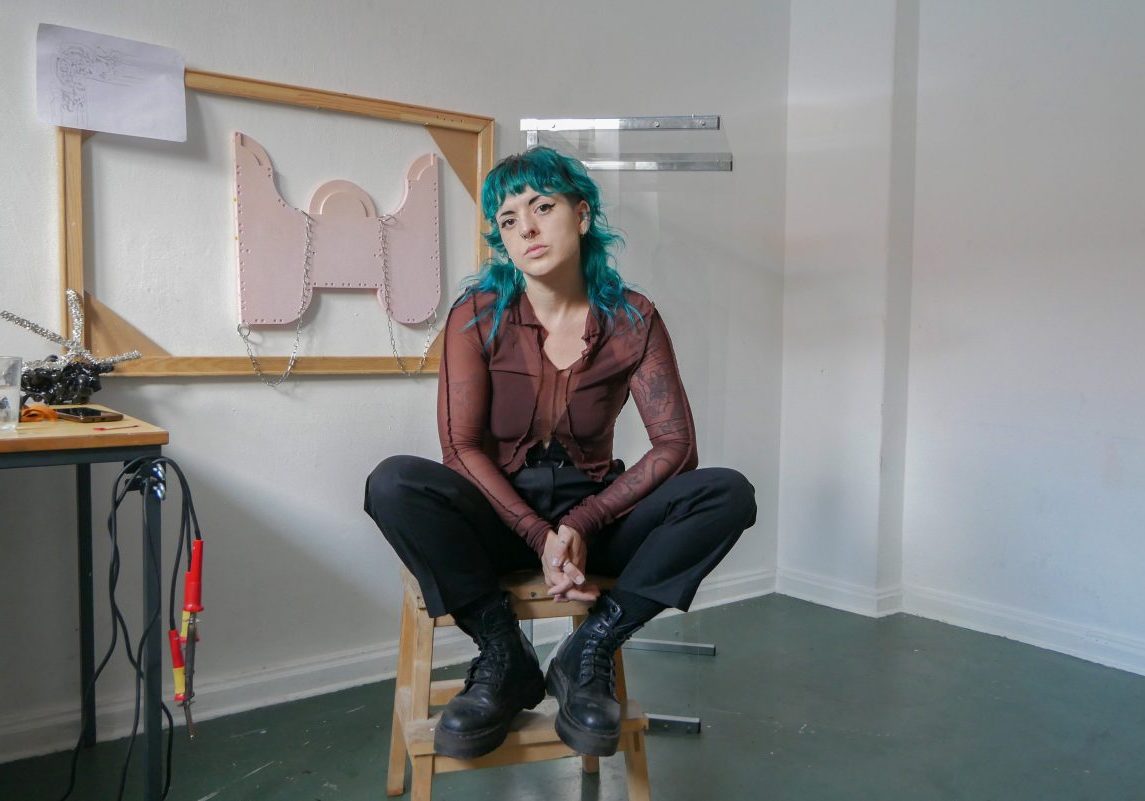
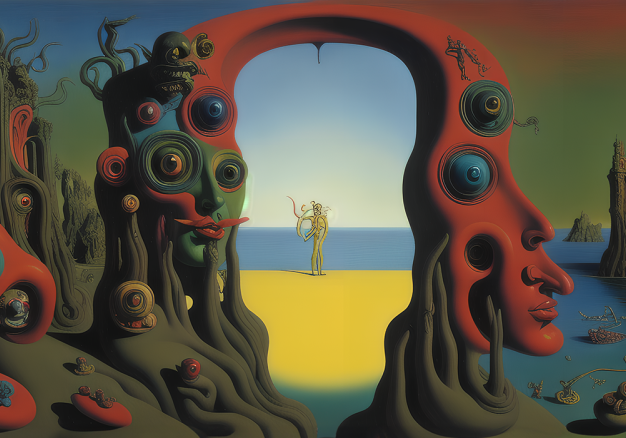
Hera is a multi-modal artist from New Zealand, residing in Melbourne, Australia. She blends creative practices, mediums and disciplines—using sensorial stimuli, found objects and new media to distill surreal imagery into immersive worlds that bend notions of utopia and dystopia.
Raised off-grid in the forests of northern New Zealand, she developed a deep affinity for biological structures and the rhythms of the natural world. This solitude nurtured an enduring curiosity for human psychology and the interplay between internal perception, external realities, and technological interference.
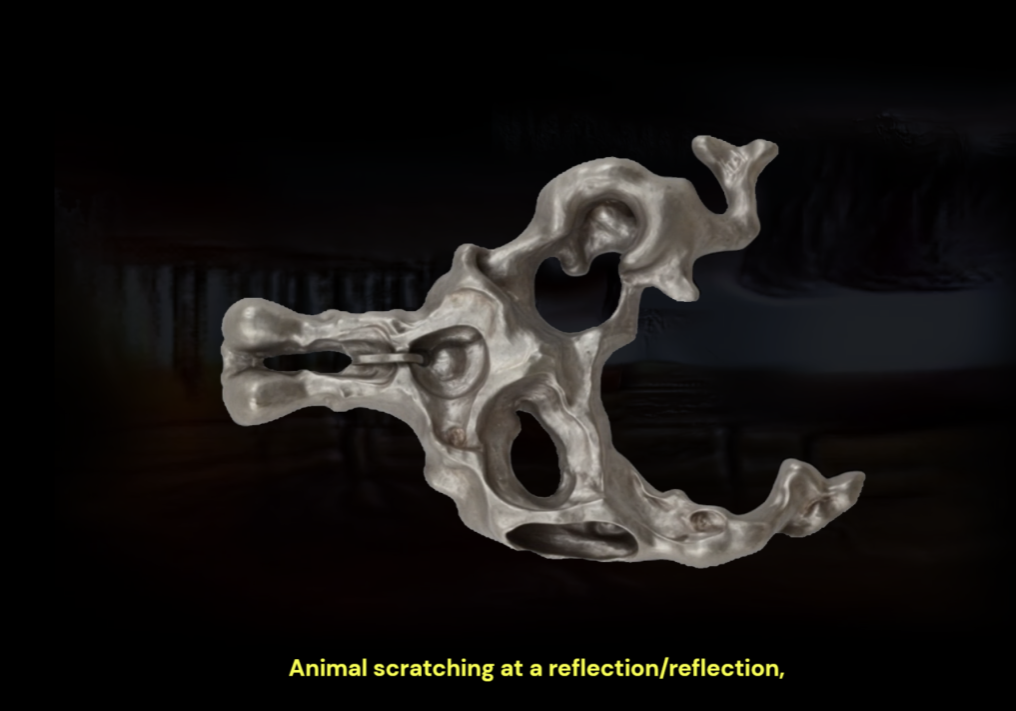
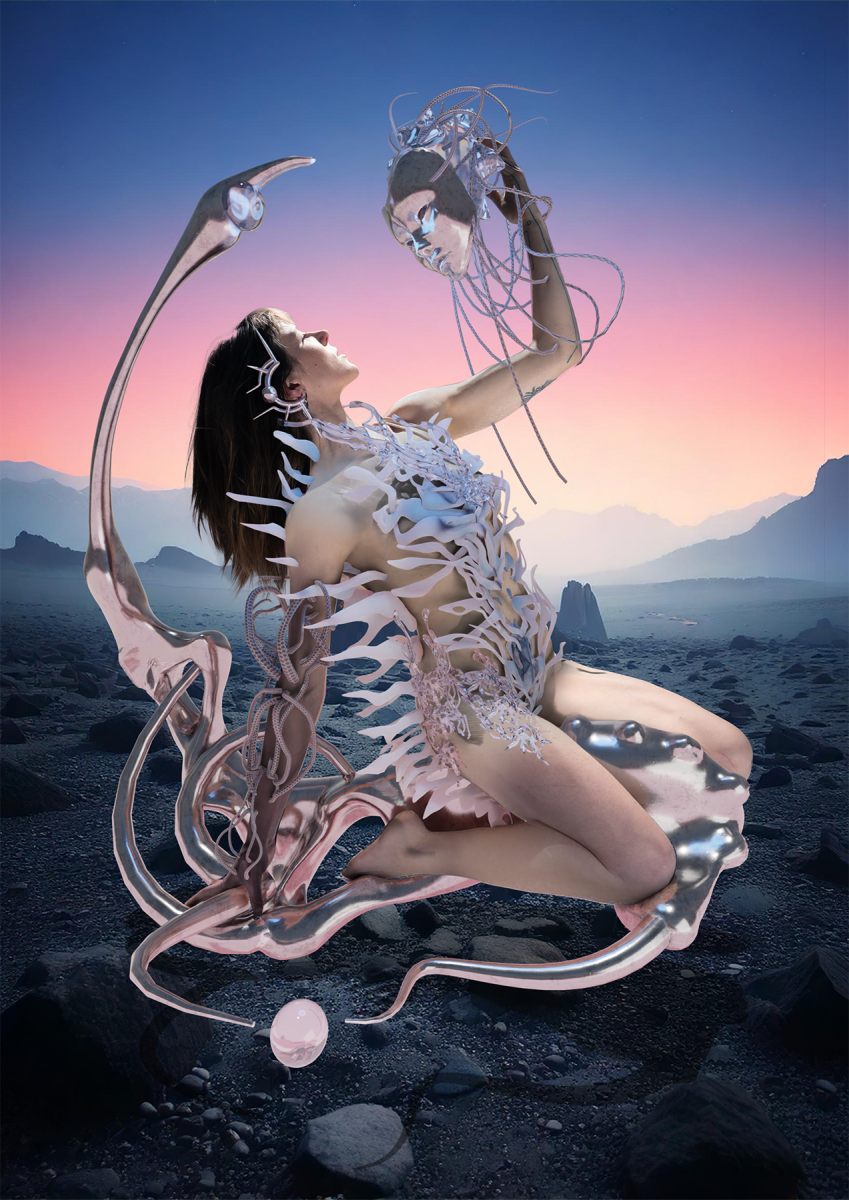
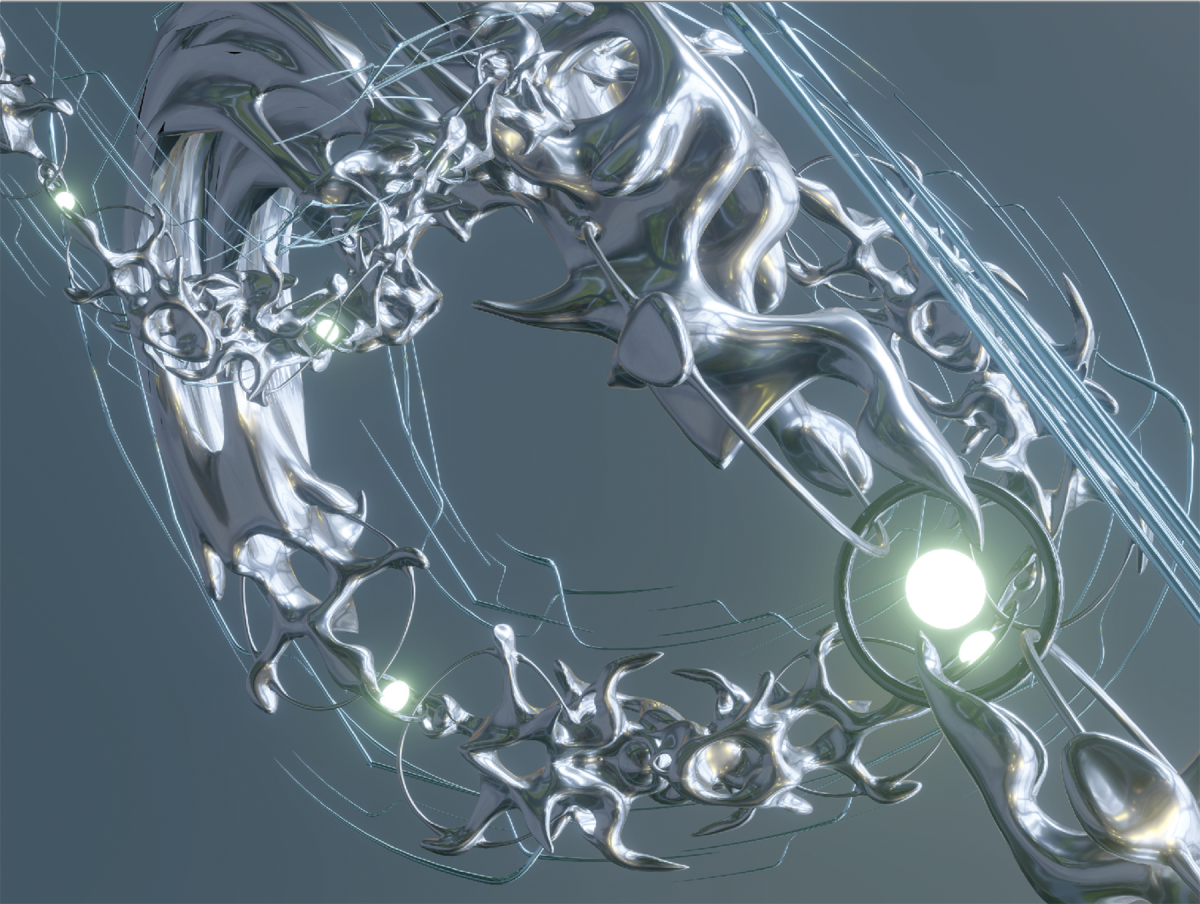
Her work often explores chimeric hybrids—biological and technological forms tangled in dreamlike refractions of life and sentience. What first appears alien reveals its earthly origins upon closer inspection, reflecting the fluidity of nature and an ever-blurring line between the natural and the engineered.
Can you please tell us a bit about yourself?
I am based in Melbourne, and I have been living there for about 10 years. I’ve been in the festival art scene, and within that, the visionary art scene for quite a while. I’ve ended up doing so many different things, because I’ve had this platform where experimentation is encouraged.
You were raised off-grid in northern New Zealand, which, I imagine, inspired your practice as well. What were the main influences in channeling your interests and ideas into creating?
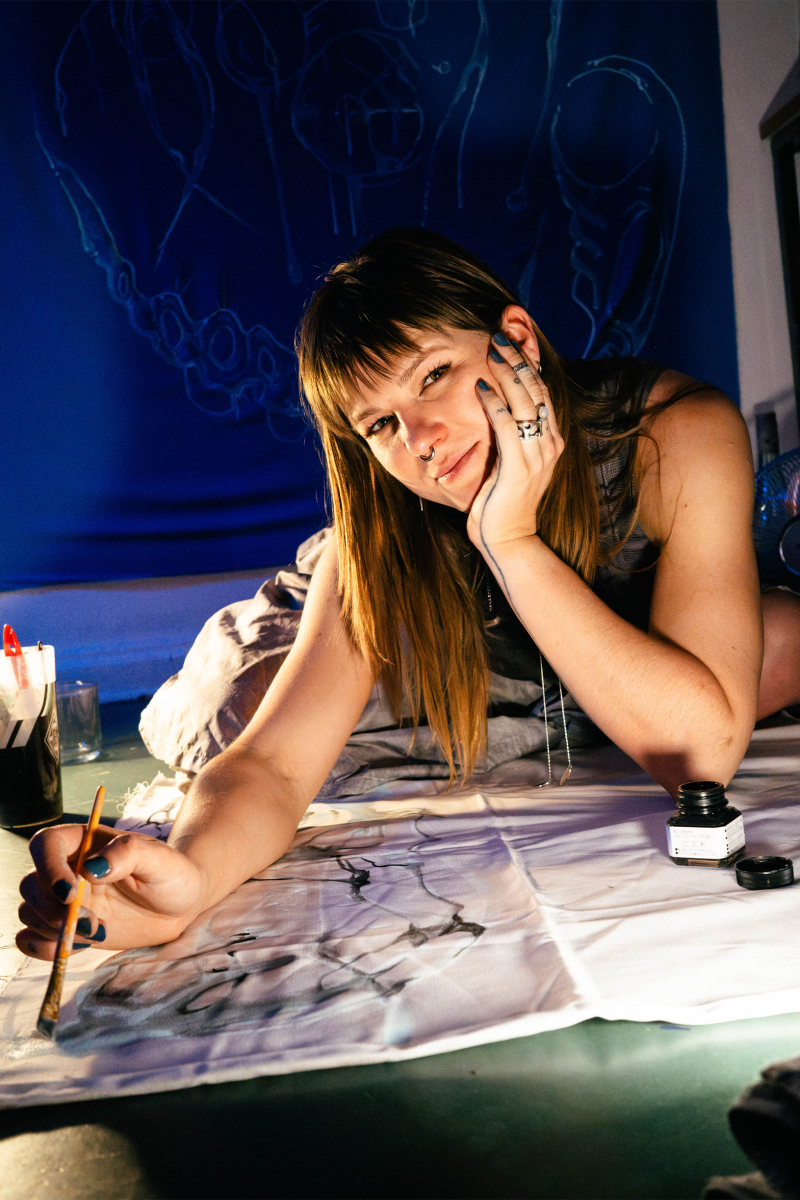
It definitely influenced me. I have always been a drawer and painter, primarily because I had nothing else to do; it was very isolated. My upbringing was quite magical in a way. My Mother’s property is in the middle of the forest by a harbor, so I spent a lot of time in nature, playing pretend, building huts, and I had this very big imaginary world with maps and characters. I think that’s still coming through in my work now,
it’s a lot of world building. I would play out all these stories and use art as a way of communicating them; draw character sheets with all of their details, their bio, and dwellings, which would then become plans for huts. These interests are resurfacing now that I am studying spatial design; it’s basically just playing Sims, you know?
I left New Zealand when I was 19; I felt like it was too small for me. I didn’t know what I wanted, but I knew that the art scene there wasn’t giving me what I wanted, and I didn’t feel like I fit into it. Finding festivals in Australia has really shaped me as an artist; it’s an environment where we are able to continue playing as an adult and have these spaces where using your imagination and being weird and silly is really encouraged.
 So playfulness determines your process?
Yes, absolutely. I would say it’s the core of my work and magic is an extension of that. It’s a way to tap into that imagination, wonder, and curiosity. And this is how we learn, right? This is how we grow; through experimentation.
Does that mean you can let go of striving for perfectionism?
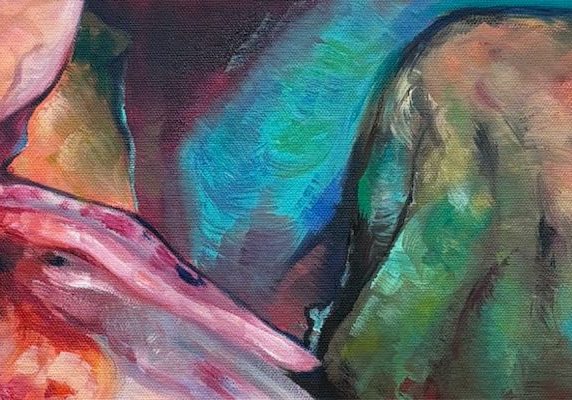
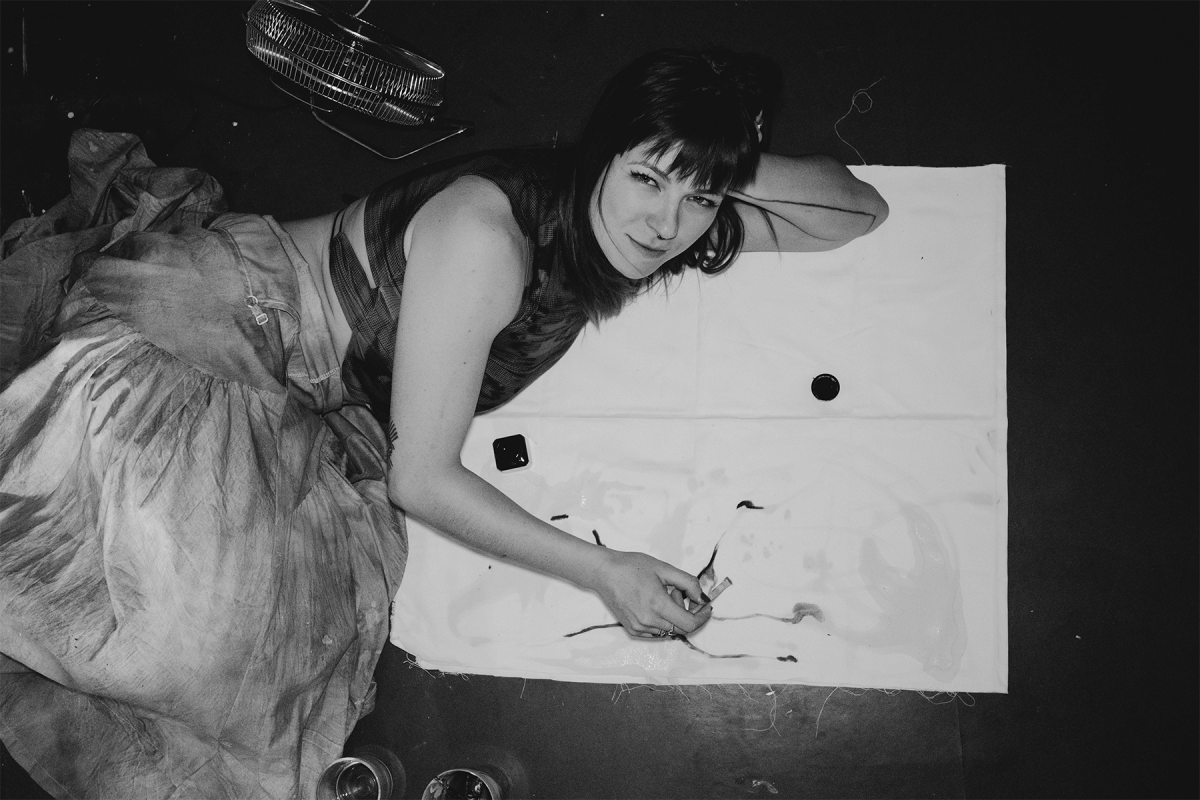
I am hard on myself, but I’m definitely not a perfectionist. I really welcome chaos. I see, especially with painting, it’s a conversation with the universe, and you have to allow enough space for chance and accidents, because you can’t control everything. And when you try, the work becomes stale; there’s no soul in it. When you have this dance with the universe, and allow some chaos, you can create work that is so much bigger than yourself.
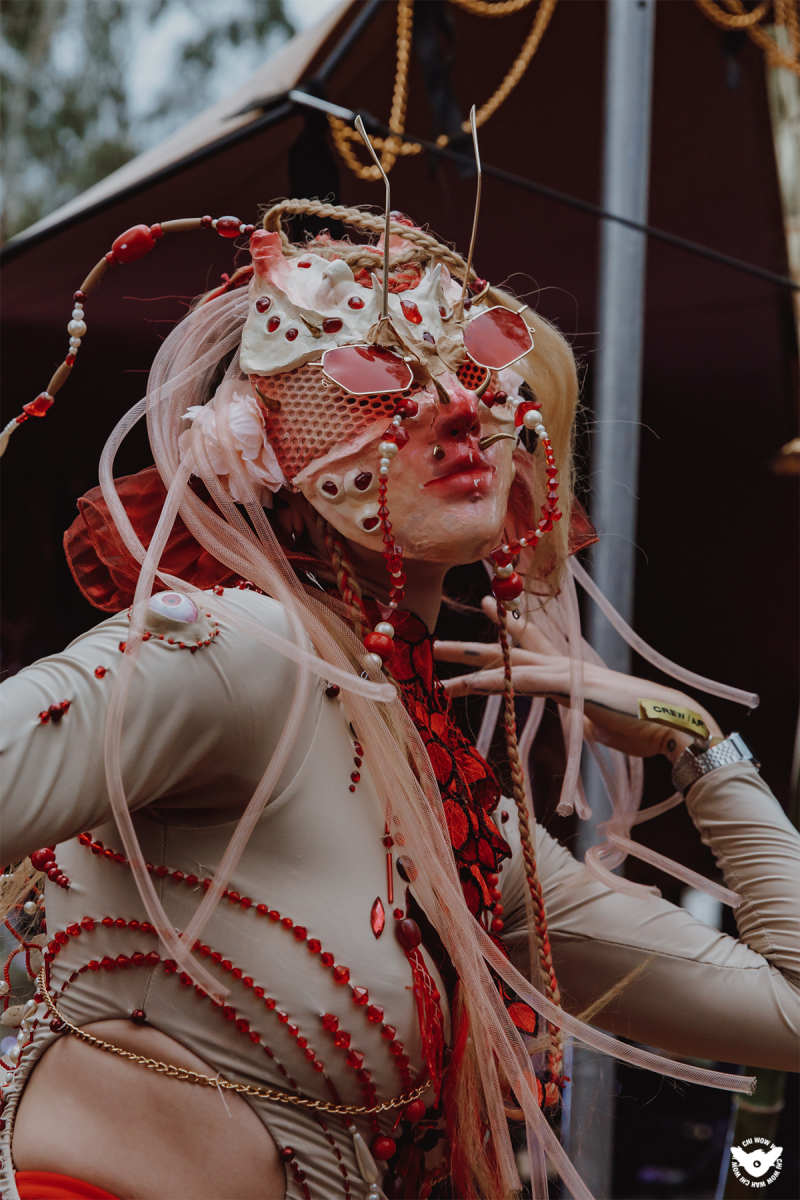 How do you determine your medium as a multi-modal artist?
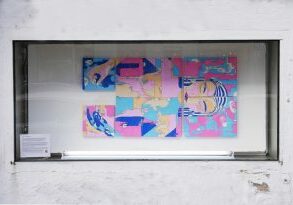
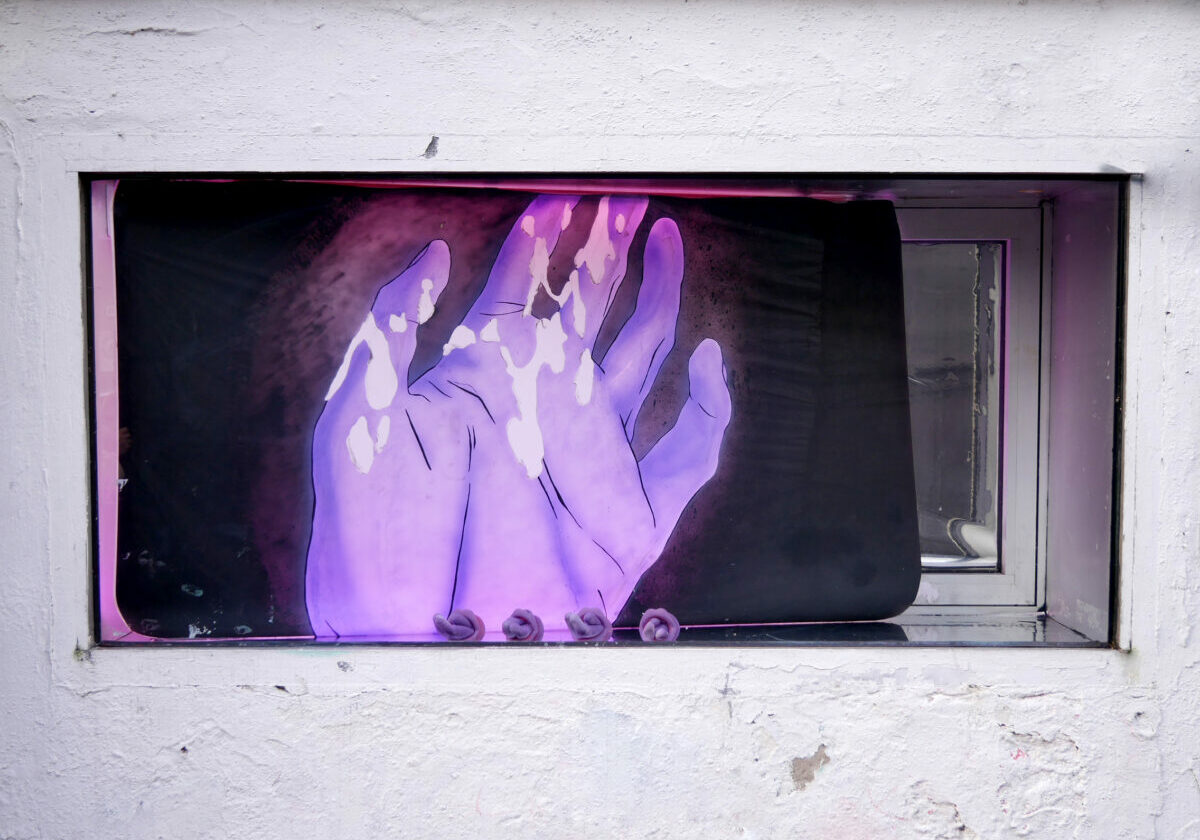
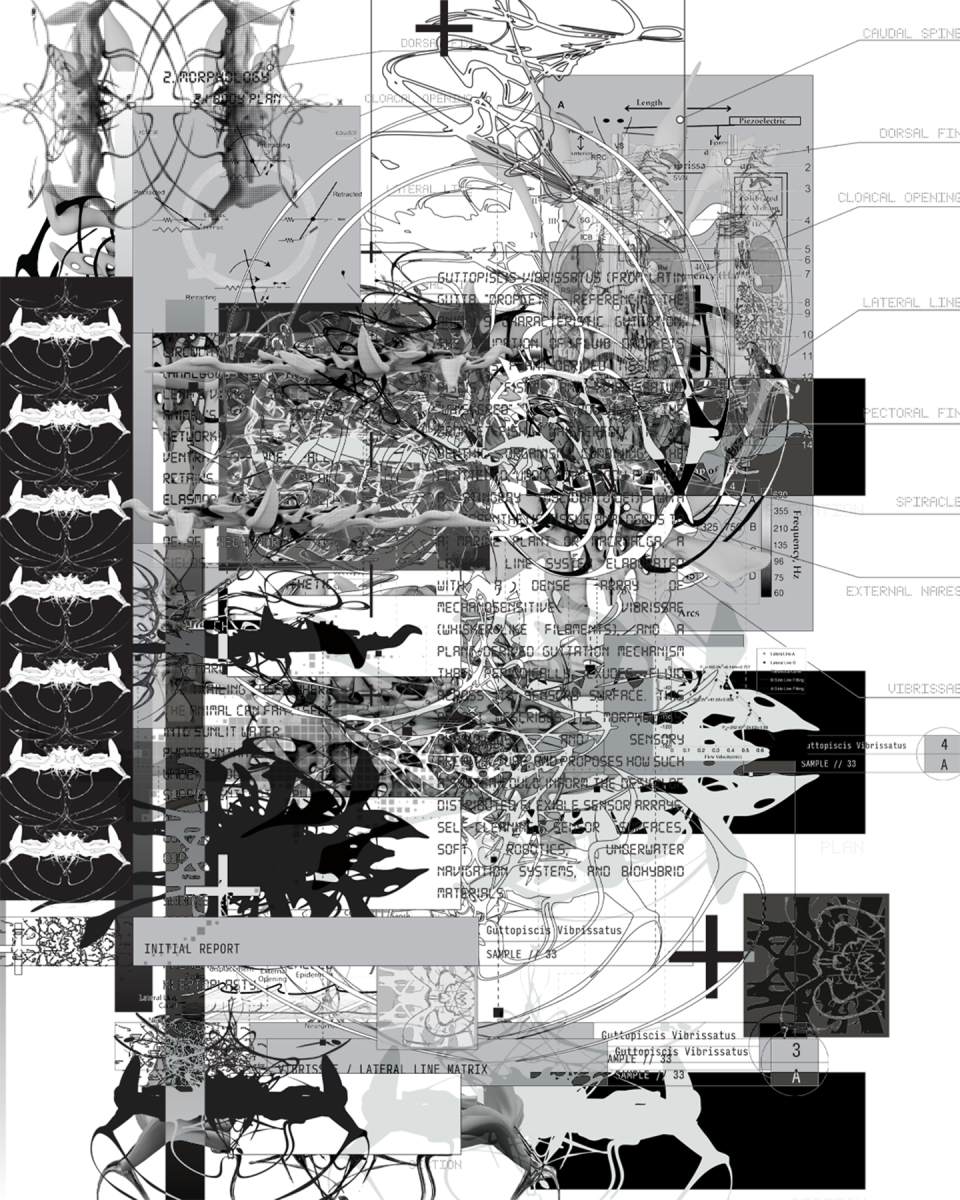
I think it’s just a matter of what material, what mode is going to convey the narrative best. It all supports building these worlds and their layers together. It’s the purpose of the art as well. If I’m doing an exhibition, I’m going to focus primarily on painting and have these kinds of little portals. It’s also a process; I always start with painting and drawing, and then the sculptures are a further exploration of texture, structure and silhouette.
With costume, it’s a way of bringing all that into the third dimension. With animation, you’re adding the fourth dimension; you can depict time, and bring these things to life even more. So with each layer, I am making things more and more real. I think that’s what different mediums help me do.
What role does magic play in your practice of world-building and storytelling? How do you incorporate animism?
It’s something I’ve always accidentally been engaged with. My mother brought me up with quite magical thinking, and as an adult, I think I’ve been accidentally practicing it without much awareness, which can end up messy. I’ve gone through some really tough moments in life. Magic has become a way of understanding and transmuting these experiences
In the last year, I’ve really started coming back to it and letting it in in kind of traditional ways, like practicing ritual and tarot, and then taking from that what resonates and making it my own and playing with it.
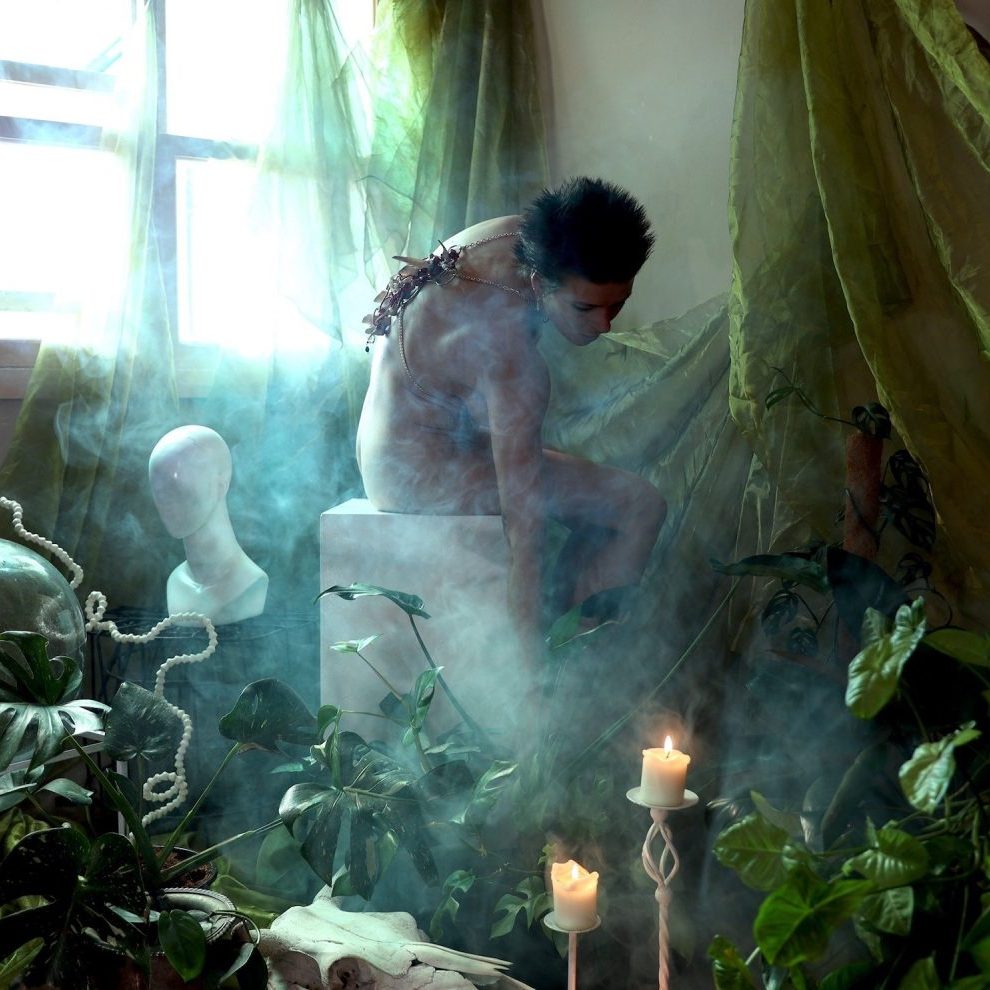
Ritual is at the core of all my performance work. I love to create these deities, mirroring where we put our belief in contemporary society. Because we do that accidentally too. We worship things without realizing it; that’s a really powerful thing that we have to be way more conscious of.
I like the idea of DIY deities – create your own God.
And this is where the animism comes in. I’m depicting these made-up imaginary creatures, but I get to choose how much weight I put into them, what they represent, and what their roles are. Storytelling is a way to shape your reality. That’s the root of the magic that I’ve been playing with.
Photos // Dari
Interviewer // Veronika Laczai