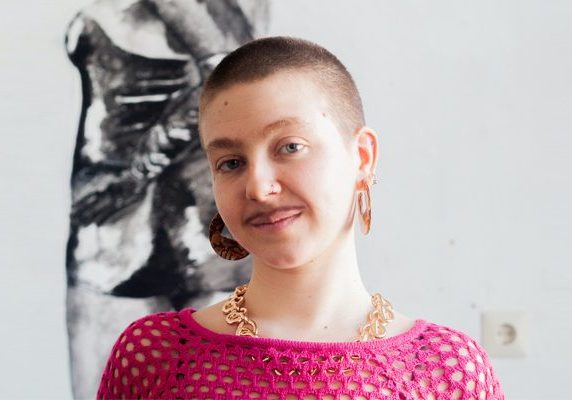
Meet the Artist // Cian Handschuh
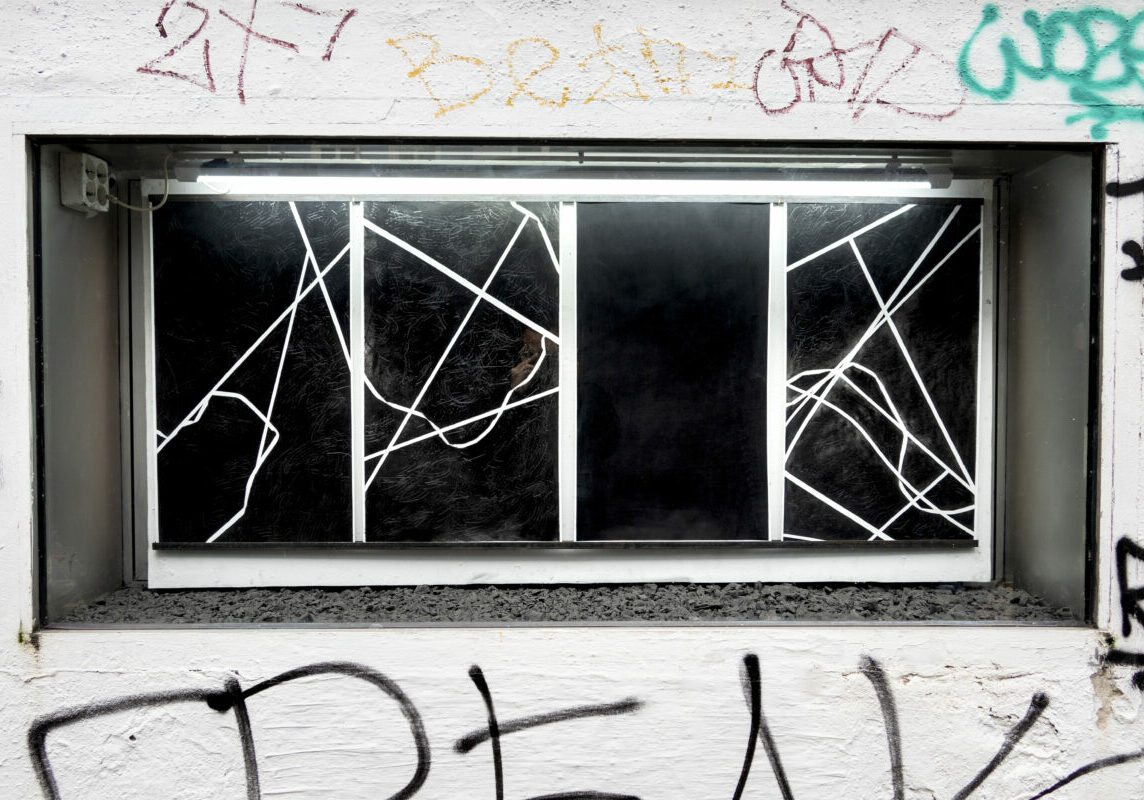
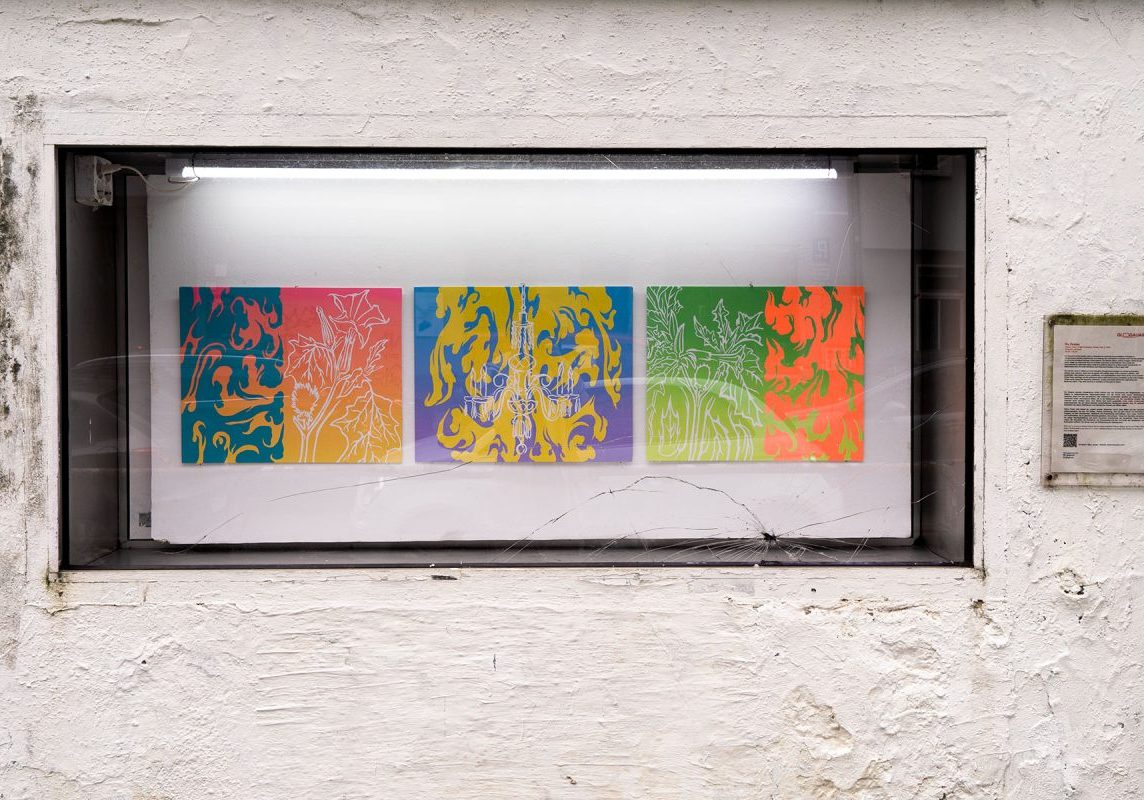
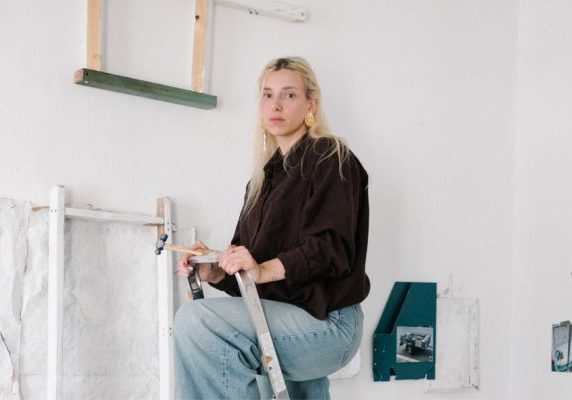
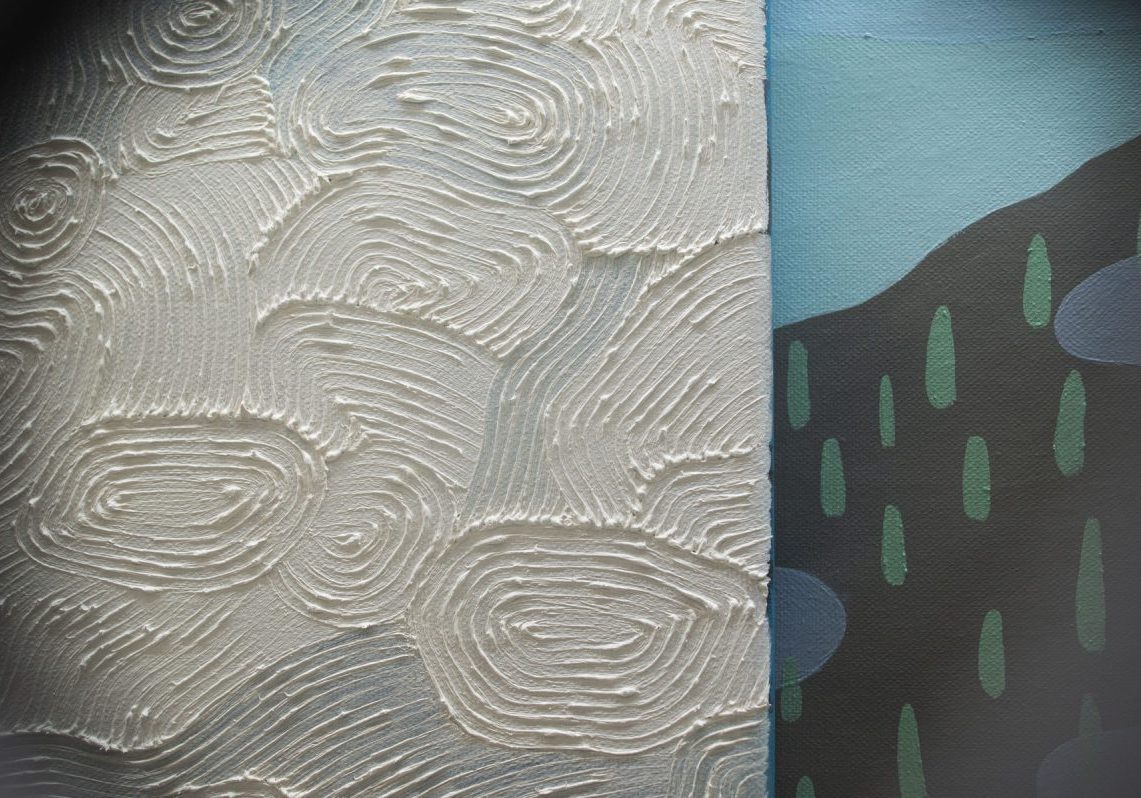
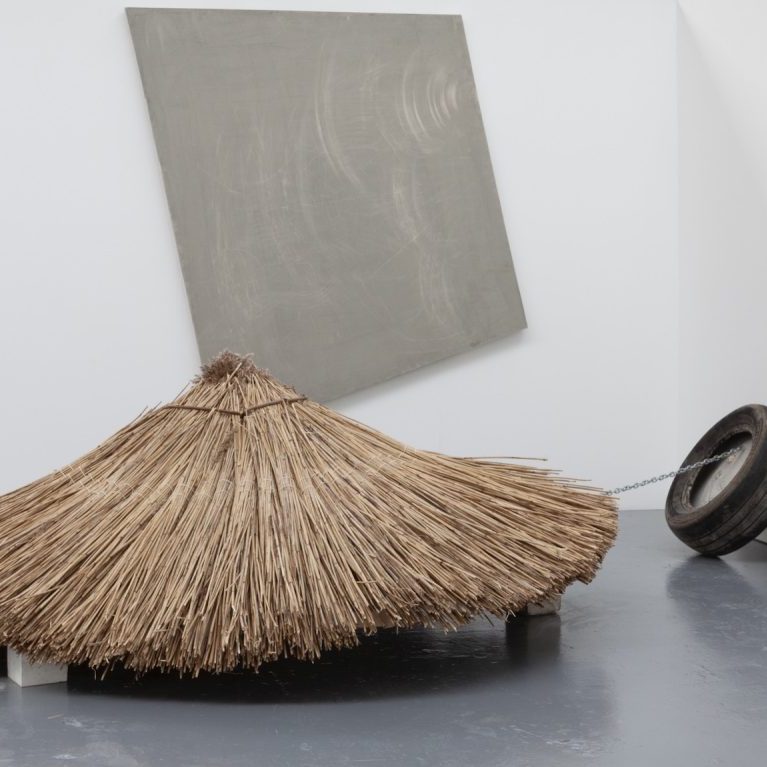
Handschuh’s practice engages sculptural installation and site-specific intervention to explore questions of dwelling, ownership, land dysphoria, wildness, and heritage. His work examines links between body and land using dwelling as a mutual space and as such an analysis point for their interaction. This draws from the built environment and its function as an ‘extended body’ and thus contrasting and combining formal modern building materials with those of the natural world.
Can you tell me more about your background and what you’re working on for your residency?
I’m from Ireland and I’m half German, so I’ve been back and forth between Ireland to Berlin the last couple of years.
I mainly work in sculptural installation, but my practice has moved to a mixed media thing now. Right now, medium wise, I’m focusing on sound and moving image, stuff like that.
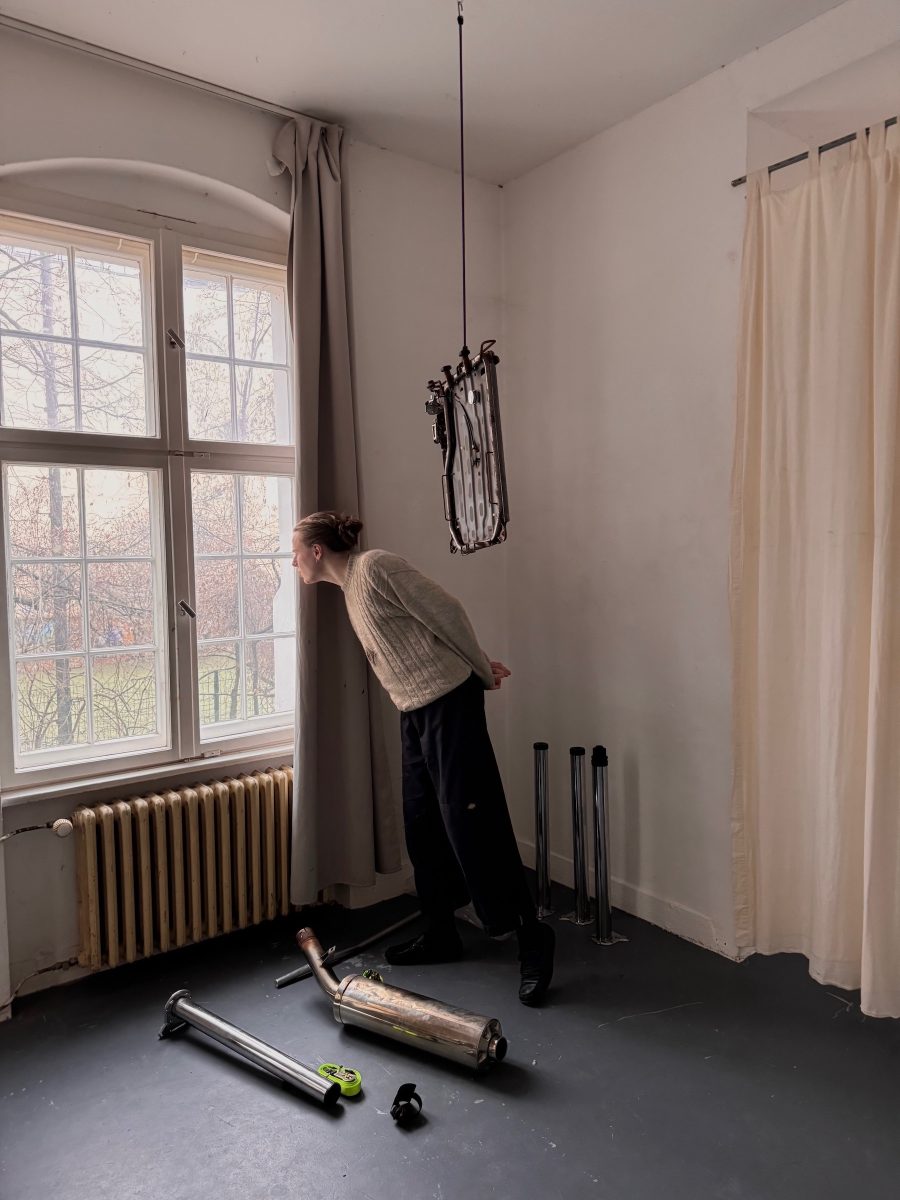
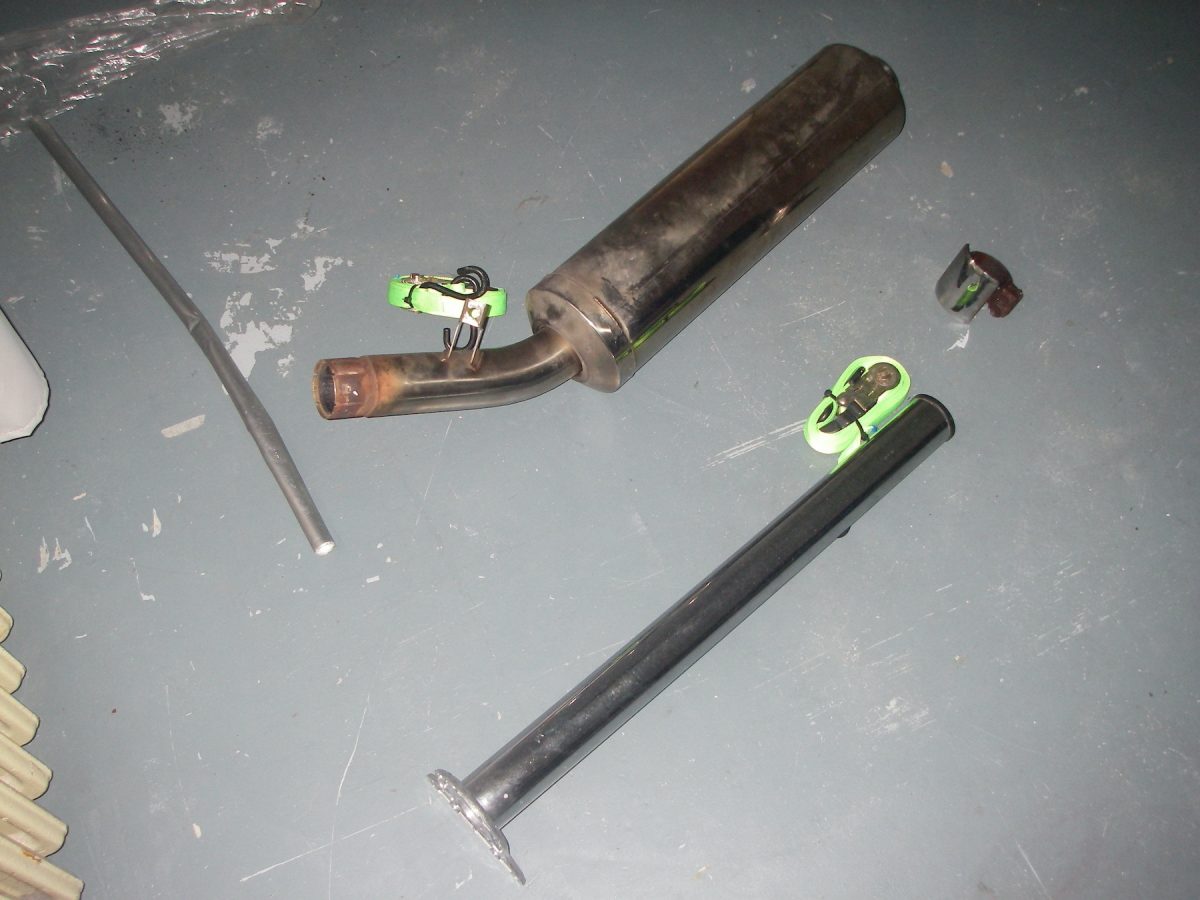
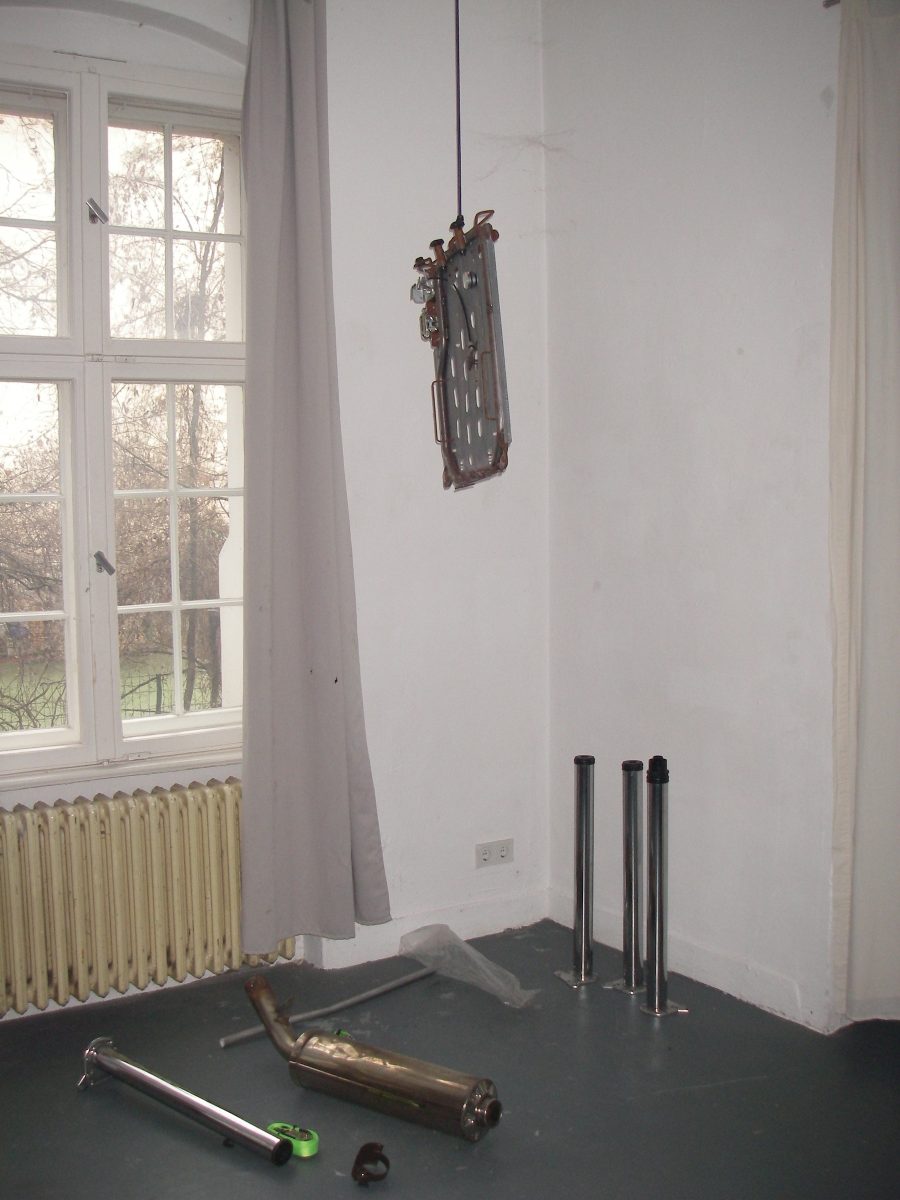
For my residency, well, right now I’m trying to make a horn, similar to an Organ Flue or Uileann pipe, using reeds and a motorbike exhaust I found.
I’m also shooting a film with Grace Baggott, an artist based in Berlin, who’s a sculptural filmmaker.
I think the two of them naturally will work together, and the aim would be to compose some kind of music, and performance, in which I play the instrument to the film.
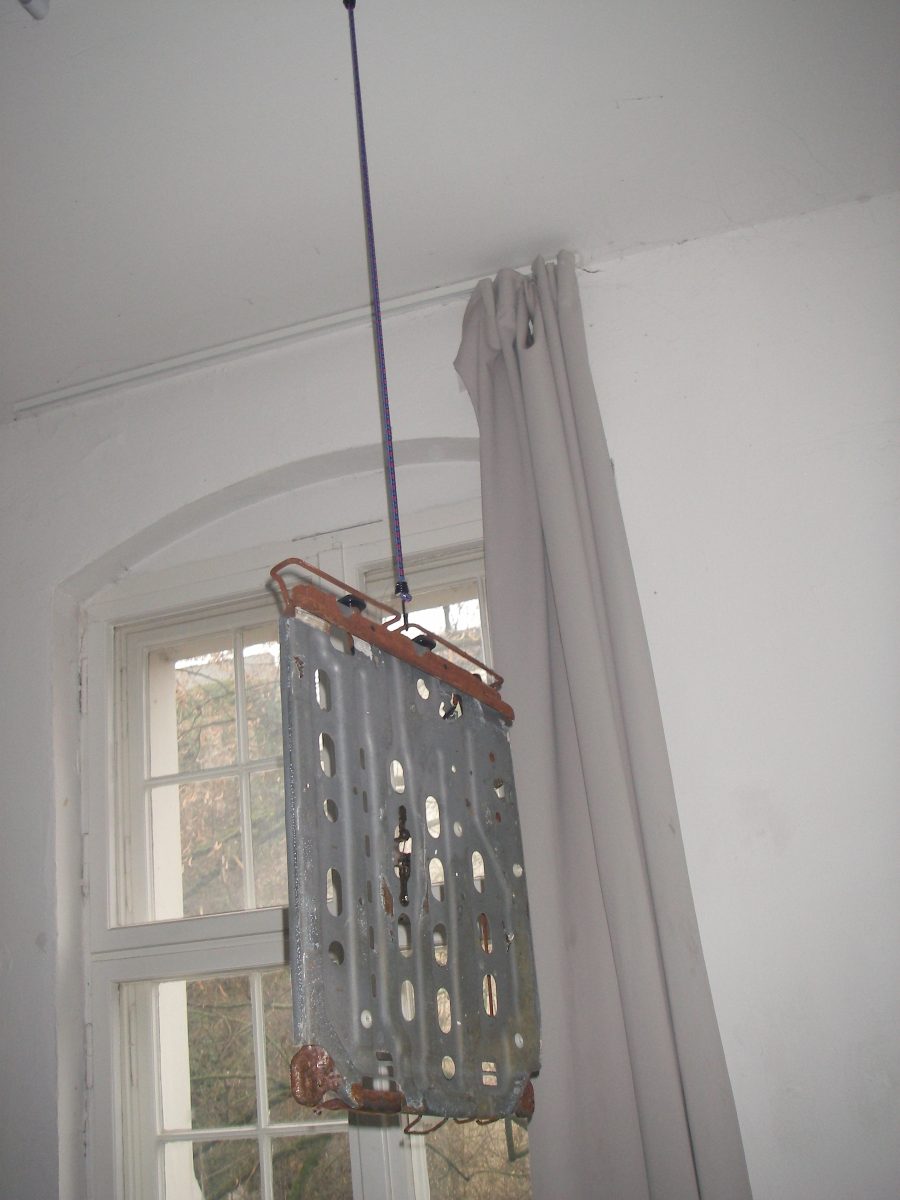
I also have these metal car seat backs, beautiful objects, that I have these bone density speakers on, so I’ll be able to play through the vibration of their material.
These seats come from the last project that I was working on and have kinda followed me into this new project. I think they’re interesting things, but in this work, I haven’t really found where their histories fit in yet.
You often talk about “dwelling” as a space where body and land meet. What does dwelling mean to you, and how do you hope people feel when they step into your work?
I see dwelling as a mesh work and in my work I’m looking at where the person fits into this mesh work, as opposed to being above it. I’m always looking at the return to the mesh work from having kinda been outside it. I do think it can be a physical place too, somewhere you can go from and return to and there’s no hierarchy in that place, things rely and function with each other and there’s this sense of belonging as well, something we’ve lost.
That’s what dwelling means to me. It’s important in my work, because I’m always looking at this in life too, belonging and connection and how things that should be near, nowadays seem so far away. I’m very entangled with the work and I don’t im able to keep it very separate from me.
I have this belief that things have this energy that’s within them, like a soul or a spirit inside the object. It’s not something that’s attributed to me, but something that exists outside of my perception. Like animism but for everything.
These are all other things that dwell in the mesh work. The project right now is to illuminate this soul in mechanical mass produced objects.
And I don’t think there’s really an intention for how people should feel when they see it. I’m not expecting somebody to visually engage with the work and think, “Oh, this means this, this means that.” I think ideally the objects would emanate this energy like a water spring or a well. The work ideally can give perspectives on dwelling through several different lines of thought or questioning.
You work a lot with gleaned and recovered materials in your previous works. How do these materials shape the direction of a piece once you start working with them?
I’m always open to a thing catching me or if I see something I think is ‘thinging’, I’m gonna borrow it if I can. I think it informs the work because I’m trying to figure out why that thing was appealing to me or maybe on a subconscious level there’s something there. The thing normally ends up attaching itself to something I’ve maybe been reading or thinking about.
I also think that a lot of the objects that I use have very personal attachments to them as well.
For example, these car seats I’m using were from my mum’s car when I was younger, but I had recovered them. She scrapped the car when I was a young fella and then I went back last year on a man hunt to get them or the exact same ones.
I think there’s kinda all those personal energies there as well in the objects, and I’m also looking at the soul of the material that I’m using to make something ー if I have to make something. All the things come from somewhere very intentional or they intentionally don’t
During your time at GlogauAIR, you’re continuing your investigation into ownership and land possession. What question feels the most urgent to you at the moment?
I suppose the question of possession over an object or the ownership of a thing, and why a person can feel entitled to own something. This is the case for land, objects, things – everything outside of the body. There’s a big difference to me between owning and belonging too.
Really what comes next is this question between land, things and us within other contexts, like myth or folklore – how was the relationship treated through story, is this an old relationship or a new one? Has the narrative changed and why.
You begin to slowly work out imposed systematic and colonial narratives that linger and affect our relationship with place through these stories.
Interview Reese Saddler (@reeseesaddler)
Photos Ksenia Proskuryakova (@ksenyapro)