Meet the Artist // Chiu I-Chi
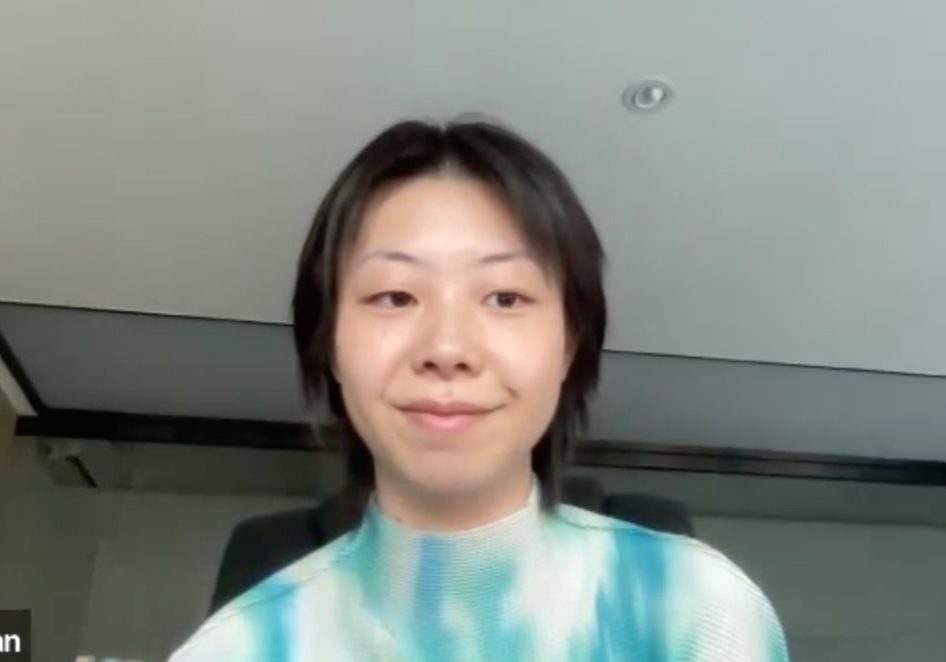
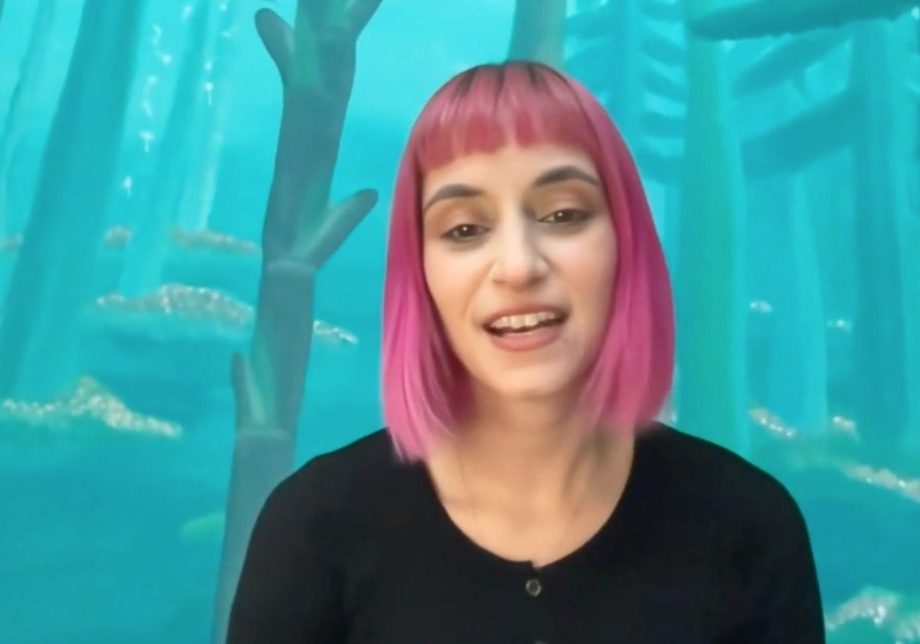
Chiu I-Chi is a Taiwanese artist whose work explores the relationship between the body, nature, and trauma through fictional organisms. Drawing from personal experiences of illness, caregiving, and recovery, she creates hybrid life forms that merge human and botanical elements. Working across painting, embroidery, soft sculpture, and installation, she constructs biological landscapes that reflect processes of healing, mutation, and decay
Do you want to start by telling me a little bit about yourself and what you’re working on while you’re here at GlogauAIR?
My name is I-Chi. I’m a visual artist from Taiwan. I work with oil painting, embroidery, soft sculpture, and installation.
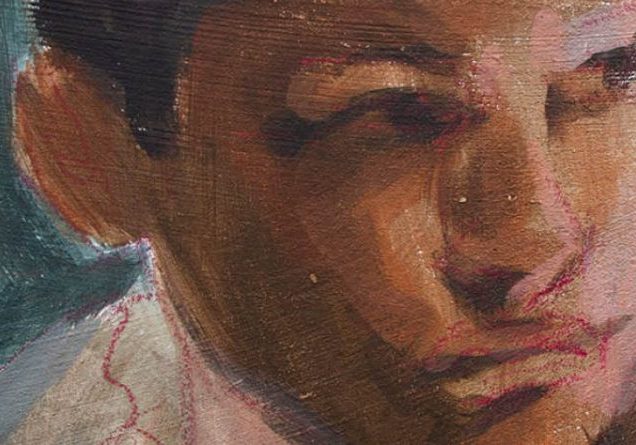
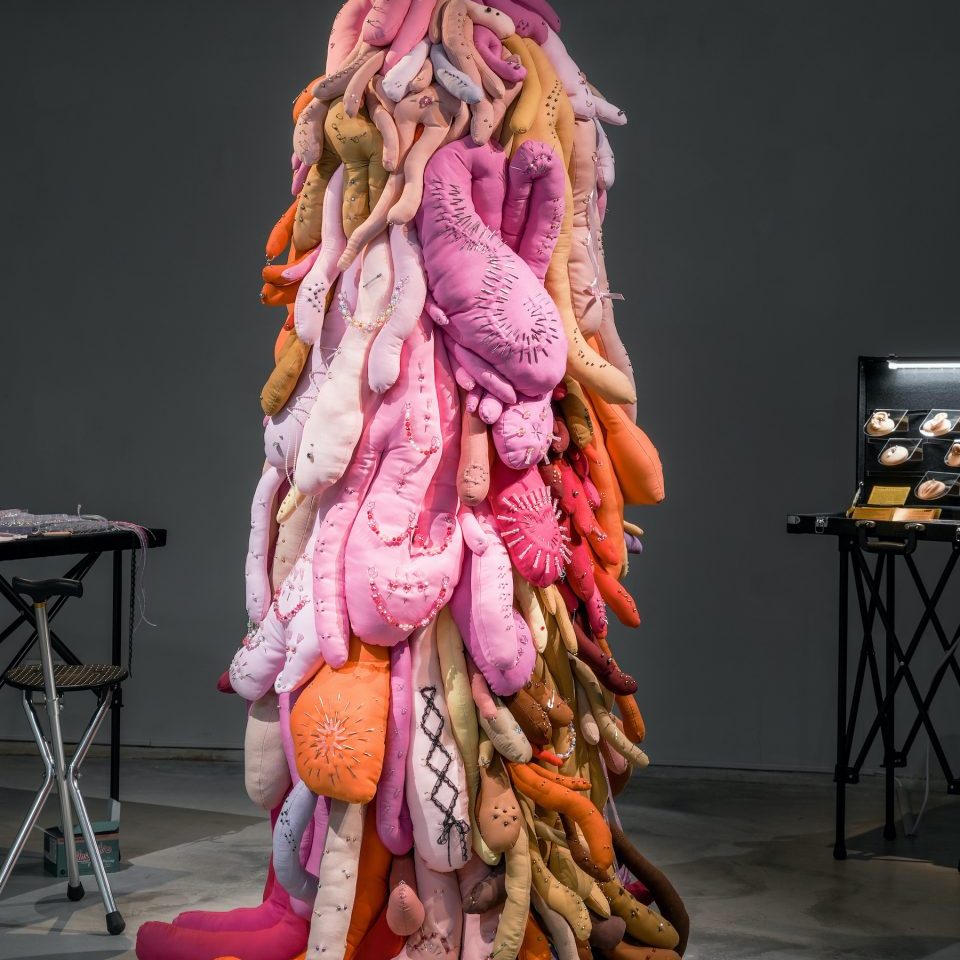
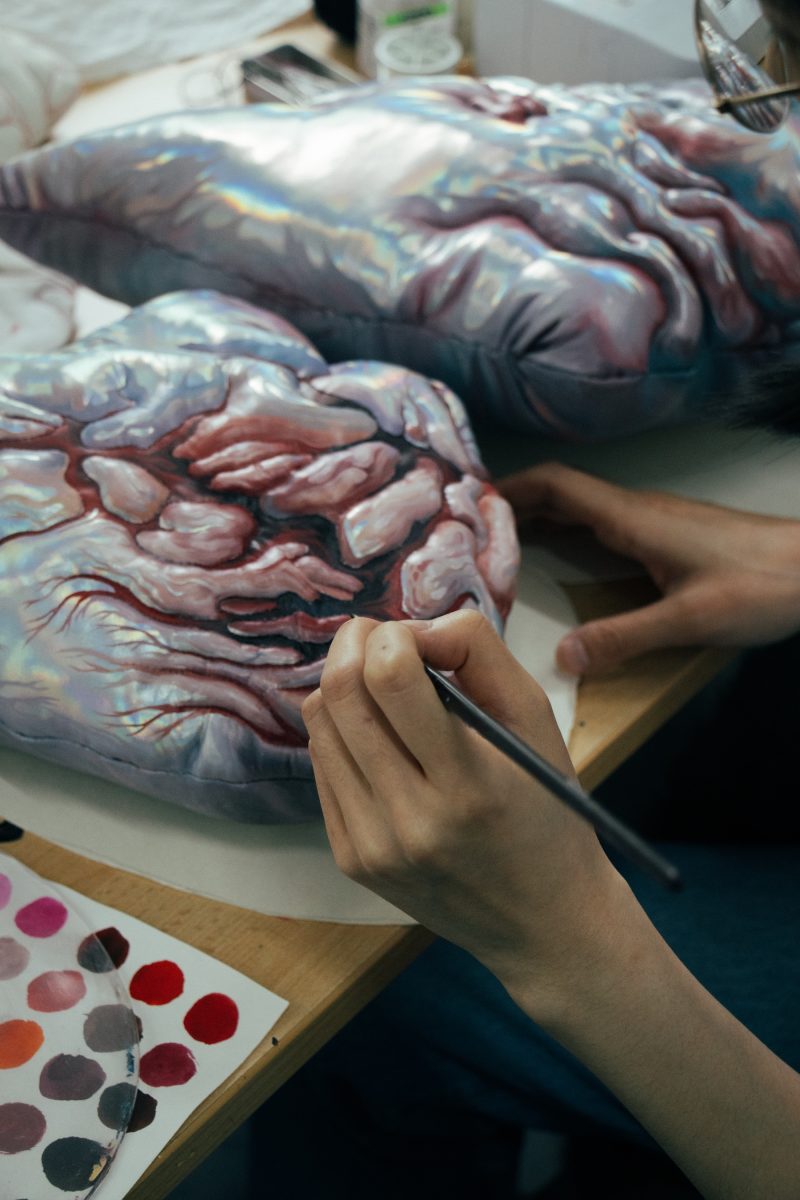
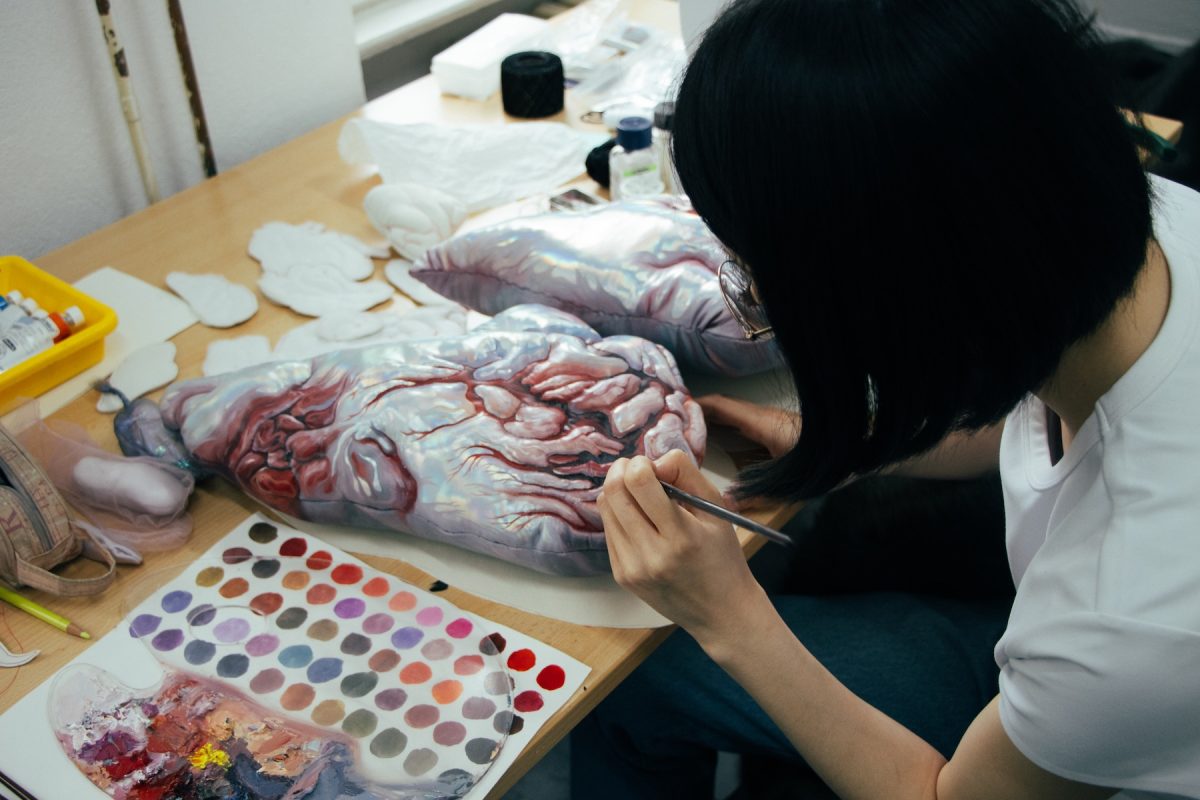
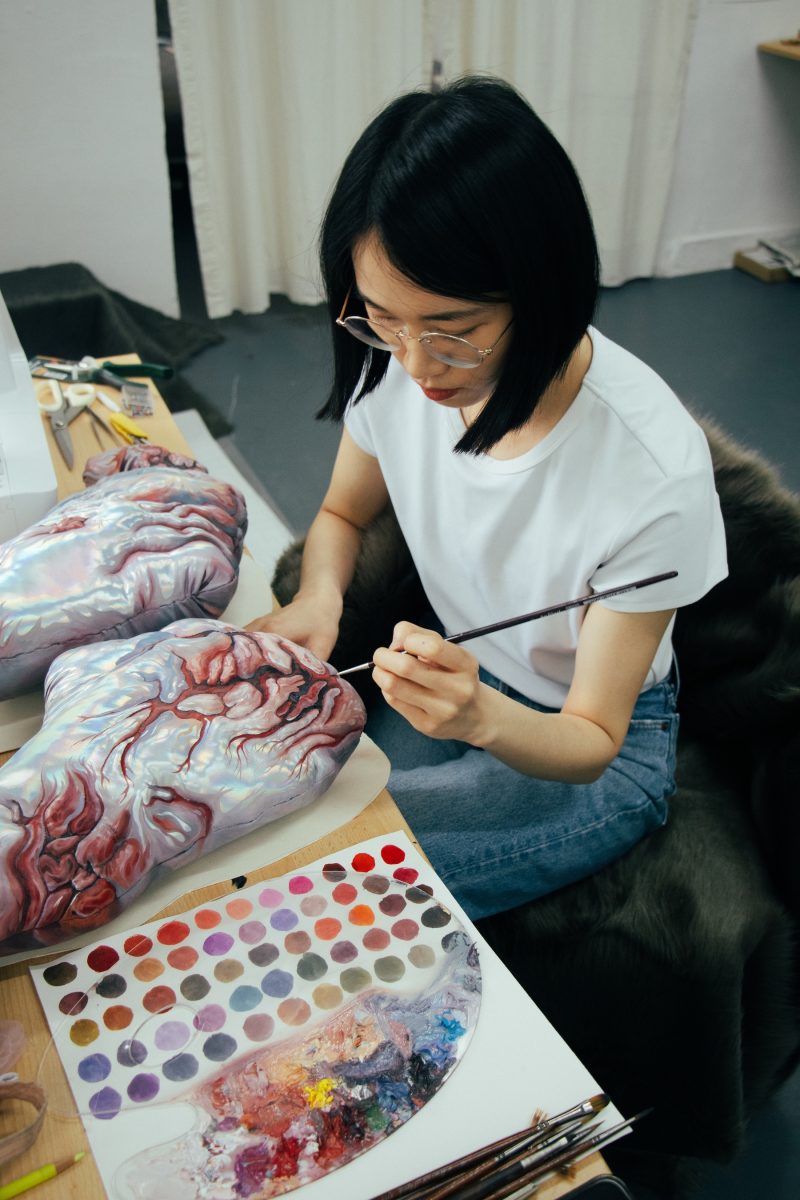
My practice focuses on the relationship between the body, nature, and trauma. At GlogauAIR, I’m developing a new project that combines two of my previous series: my soft sculpture project Hello, Would You Like a Piercing? and my oil painting series Beneath the Skin.
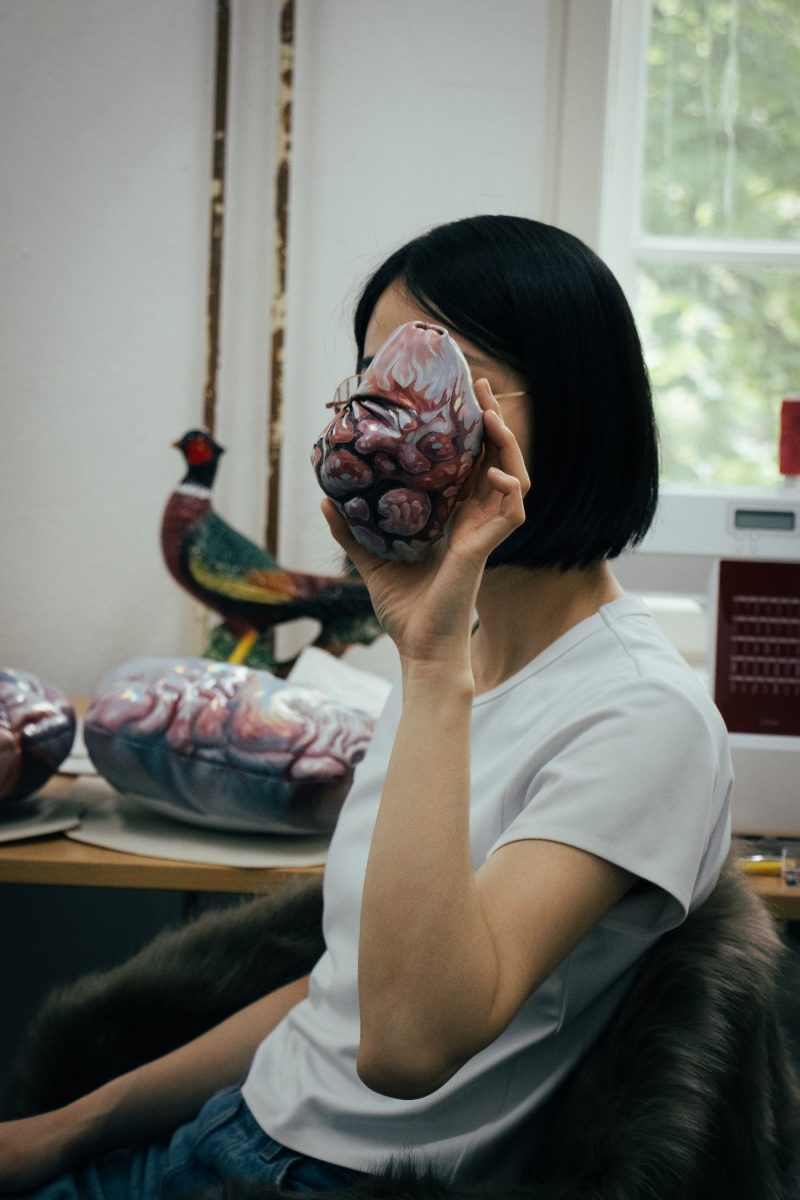
In this new project, I want to create sculptural bodies with cellular and organic painting textures on their surfaces. After the bodies are formed, I will pierce them. For me, the piercing becomes a symbolic and ritual action, marking a moment of transformation for these fictional organisms.
You’re working with quite a few different materials. How do they all come together?
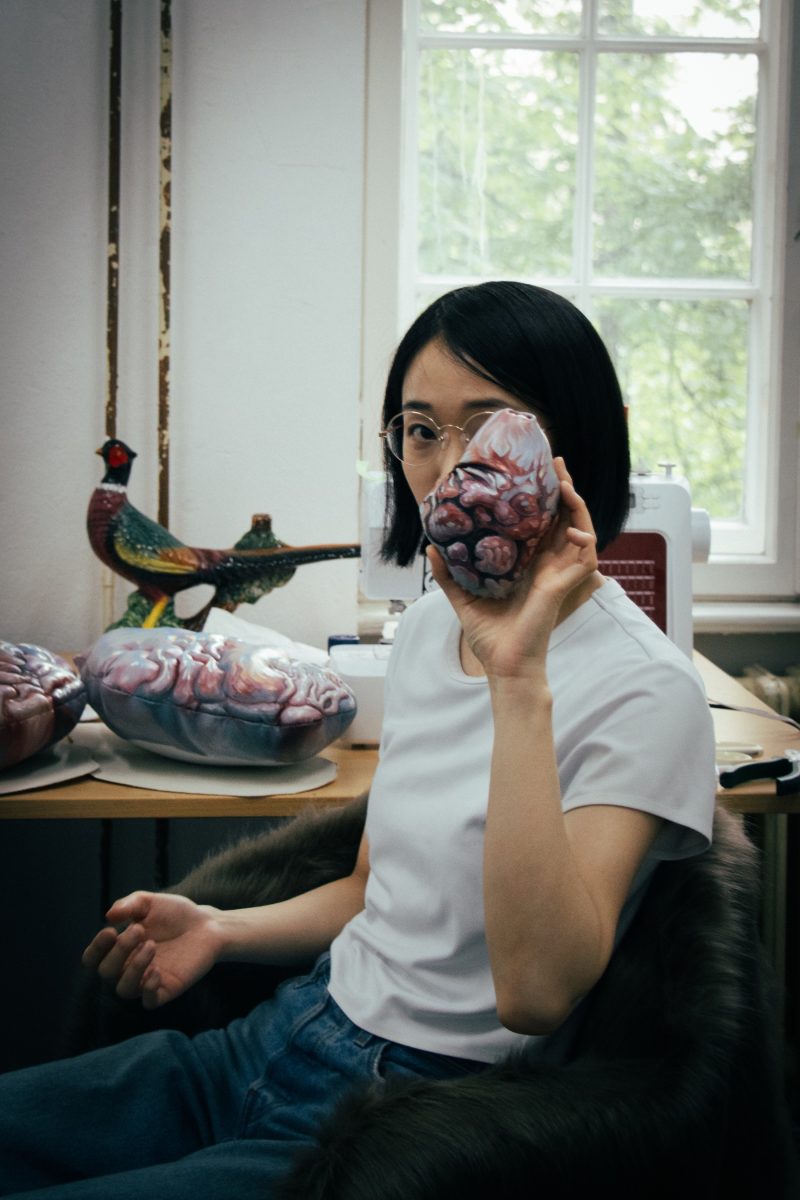
Painting was the first medium I learned, so most of my work begins with painting. In the past, I have created oil painting series, embroidery series, and soft sculpture works. This time, I want to bring all of these languages together.
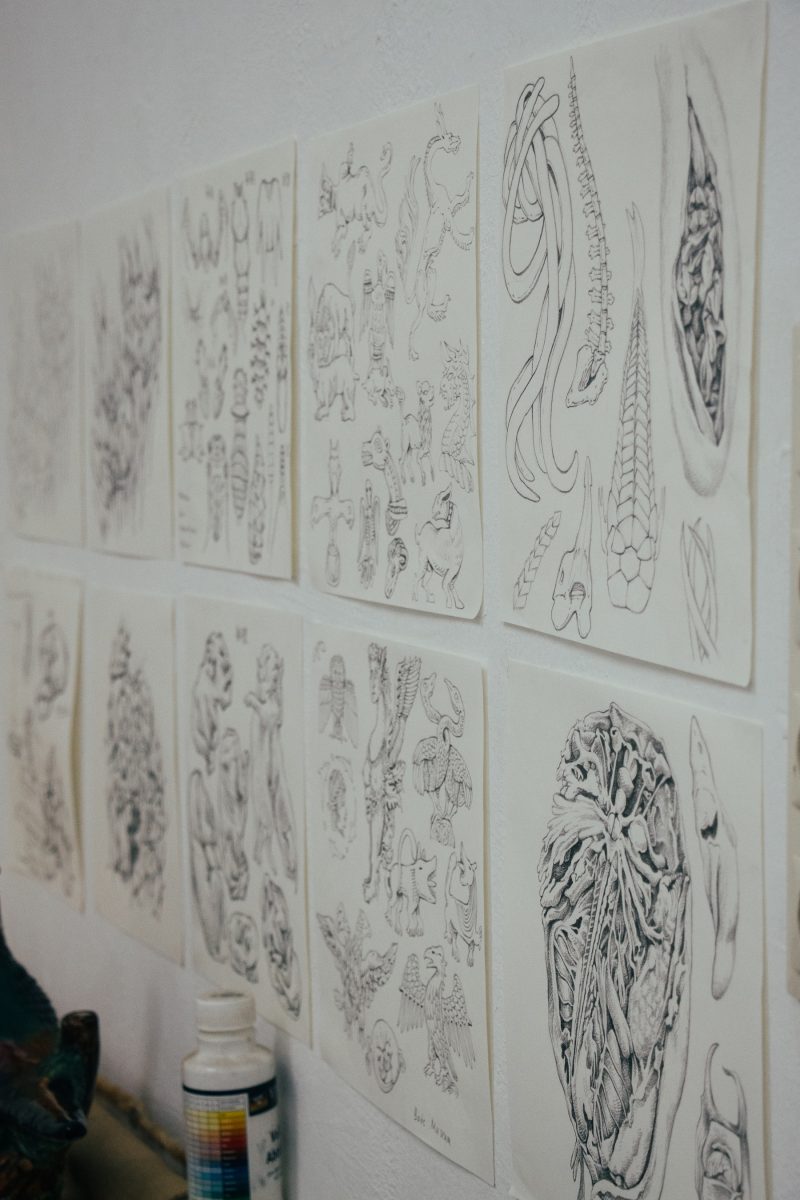
My process often begins with observation. I take photographs of forms that interest me, such as tree wounds, tree burls, tree hollows, or scars on bark. Then I make sketches and begin to develop the shape of the soft sculpture. After that, I sew, embroider, paint, and eventually pierce the work.
I find that each material asks me to think in a different way. Embroidery and fabric are very soft and human-like; they feel almost like working with skin. Painting allows me to create cellular, organic, and wounded textures. Piercing connects to my family background, because I grew up in my family’s piercing shop.
As a piercer, I feel that piercing is more than decoration. It is a practice of transformation, and a way for people to mark change on their bodies.In my family’s piercing shop, people come for many different reasons. For example, some migrant families, especially from the Philippines and Indonesia, bring their one-month-old baby girls to get their ears pierced. Teenagers may come because they want to change something about themselves. Through these different experiences, I started to see piercing as a personal, cultural, and sometimes ritual act.
Where does your inspiration come from?
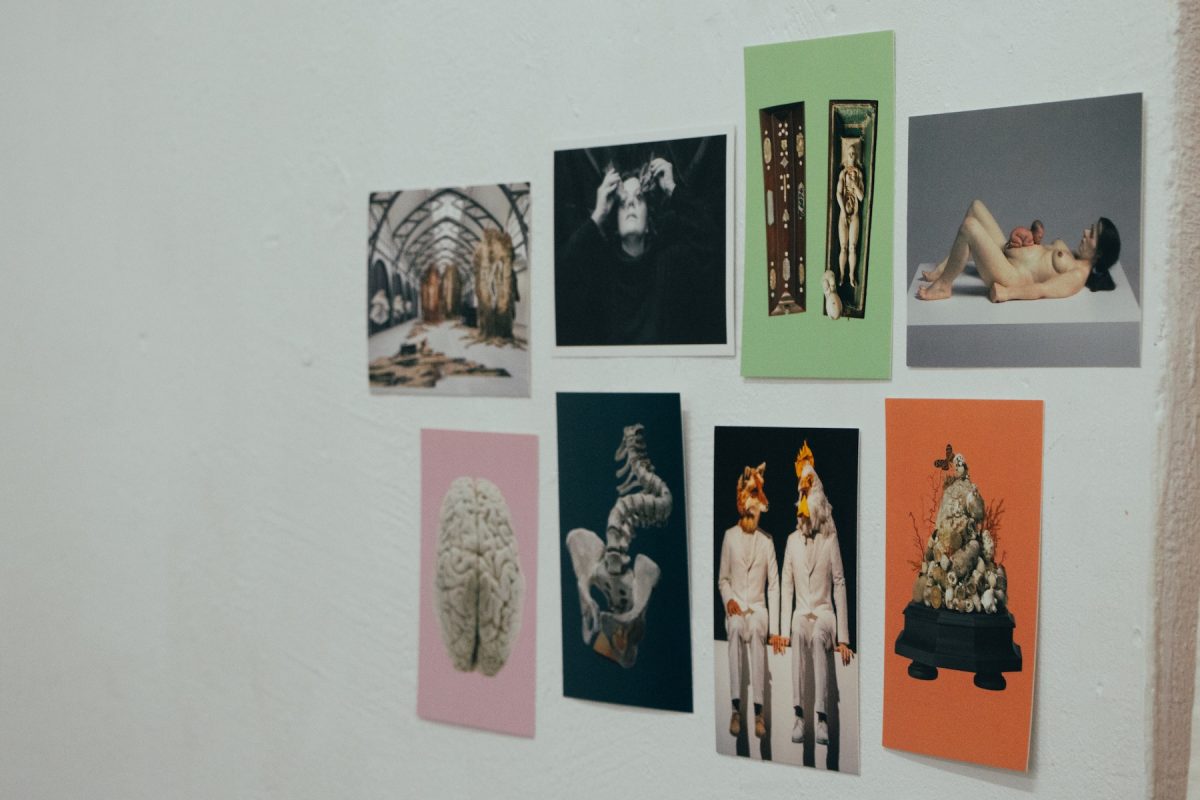
Most of my inspiration comes from personal experience. I have an illness that requires me to go to the hospital regularly for checkups, such as blood tests and ultrasounds. These experiences made me more aware of the body: its fragility, its inner systems, and the way it is always trying to maintain and repair itself.
I have also witnessed how illness changes the bodies of people in my family. My grandmother had rheumatoid arthritis. When I was very young, her hands and body looked quite normal, but over the years, her joints became deformed and her hands gradually lost their ability to hold things. Her body became smaller and more fragile, almost like a child’s body. Watching her illness changed the way I understand the body. It made me think about how disease can transform not only the shape of the body, but also its rhythm, movement, and dignity.
I also spend a lot of time walking in forests and observing trees. Some trees have wounds, scars, holes, or damaged bark, but they still continue to grow beautifully and strongly. I feel that humans are similar to trees. No one goes through life without being wounded in some way.
For me, wounds are not only damage. They can also be places where transformation begins. This is why I am interested in healing, mutation, wounding, and decay. They are not separate from life; they are part of how life changes and continues.
What do you want people to take away from your art?
I hope people can relate my work to their own experiences. I want them to feel that their wounds, scars, and difficult experiences can also carry a kind of beauty.
I want to challenge the way we usually think about wounds and scars. Instead of seeing them only as damage or something to hide, I hope people can feel more comfortable with their own scars. For me, a scar is not only a mark of pain; it is also evidence that the body has lived, survived, and transformed.
Interview Jo Birdsell (jobirdsell.com)
Photos Raviva Nsiama (@raviva.ziama)