Meet the On-line Artist // onlysattva
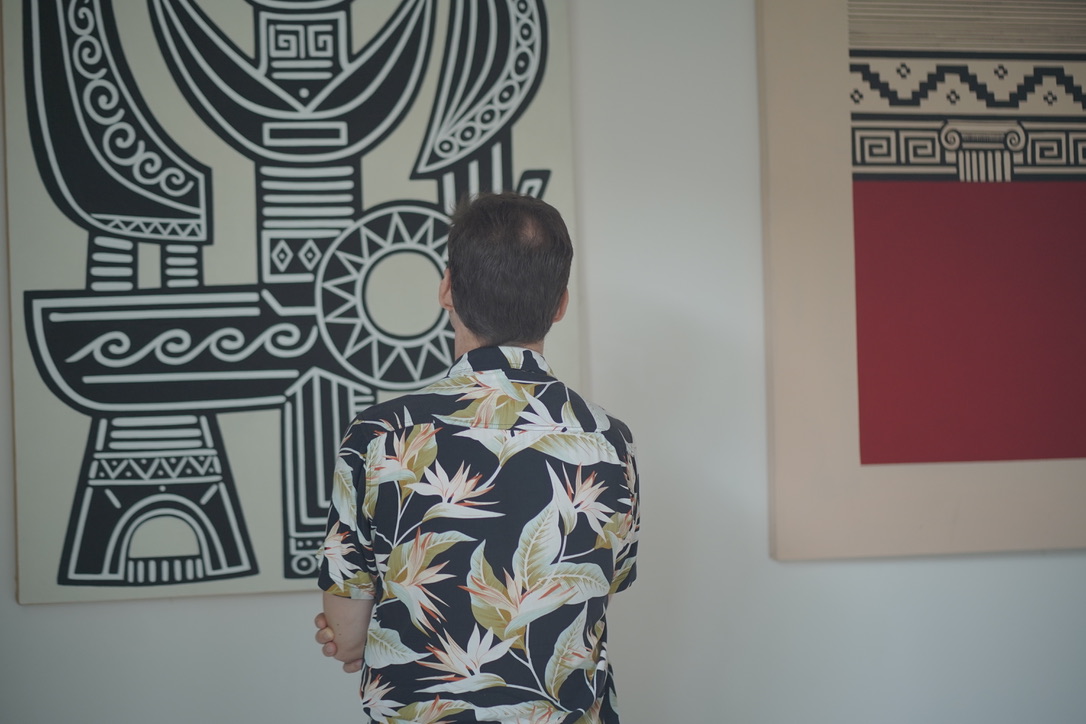
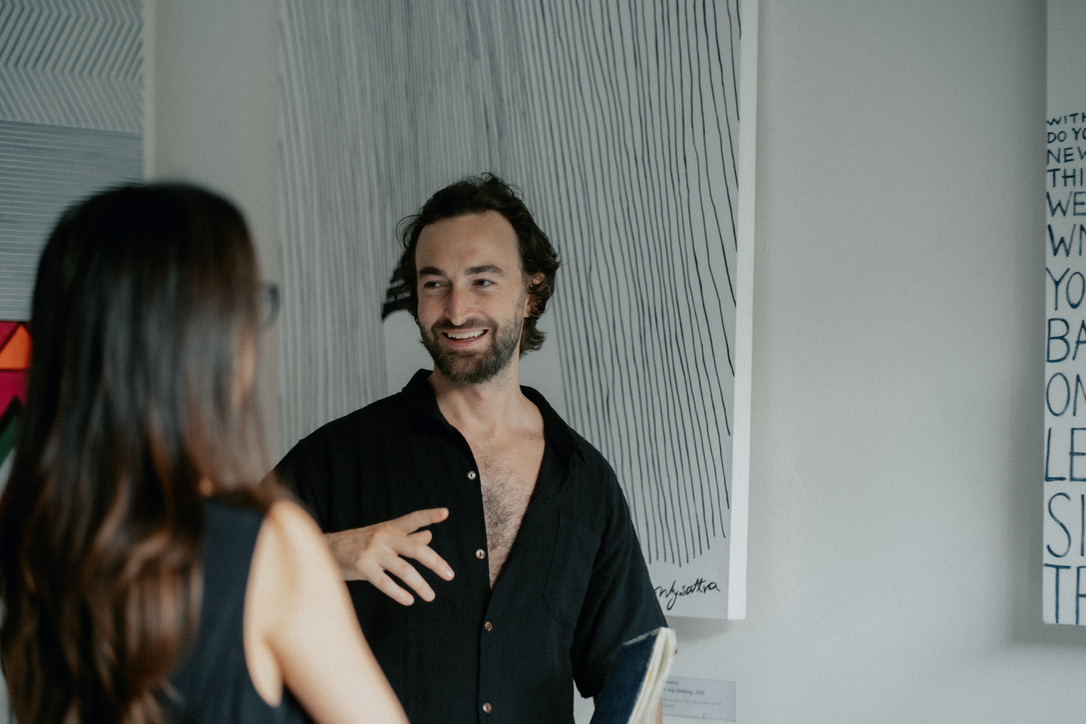
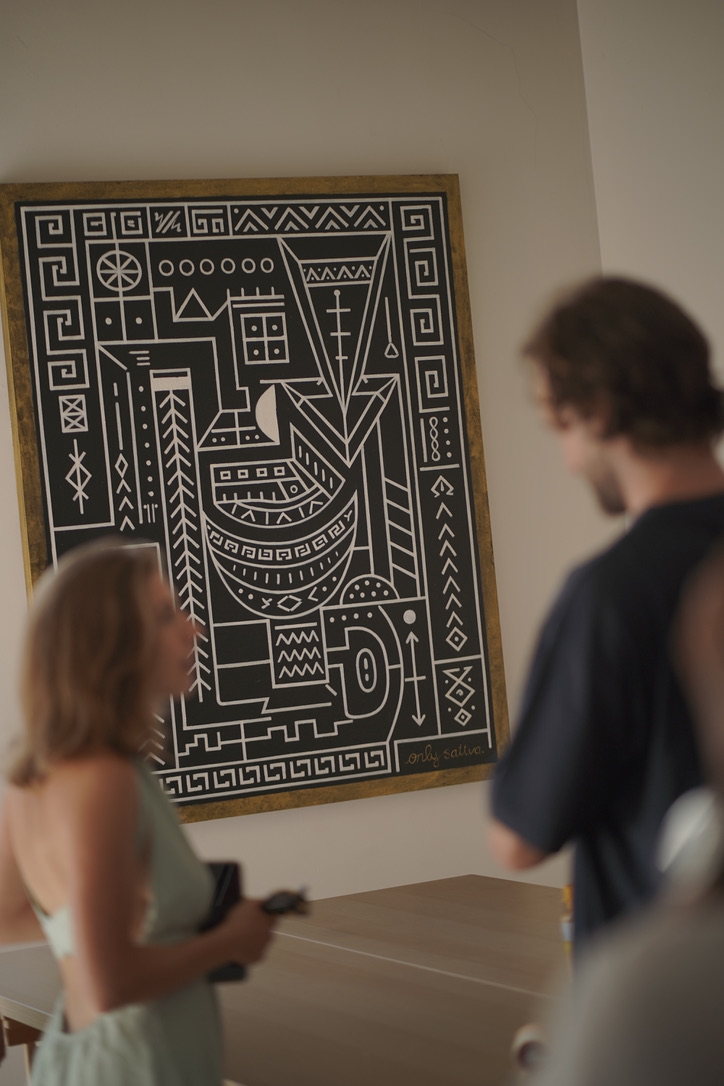
onlysattva’s practice begins with a daily discipline of meditation and drawing, approaching the studio as a space of listening to the body, memory, place, and the emergence of line, colour, and form. Their paintings centre on pattern, which they understand not as decoration but as a system of knowledge. Drawing from indigenous and ancient visual traditions, the artist deconstructs and reconfigures motifs through colour, composition, and space, searching for shared visual languages.
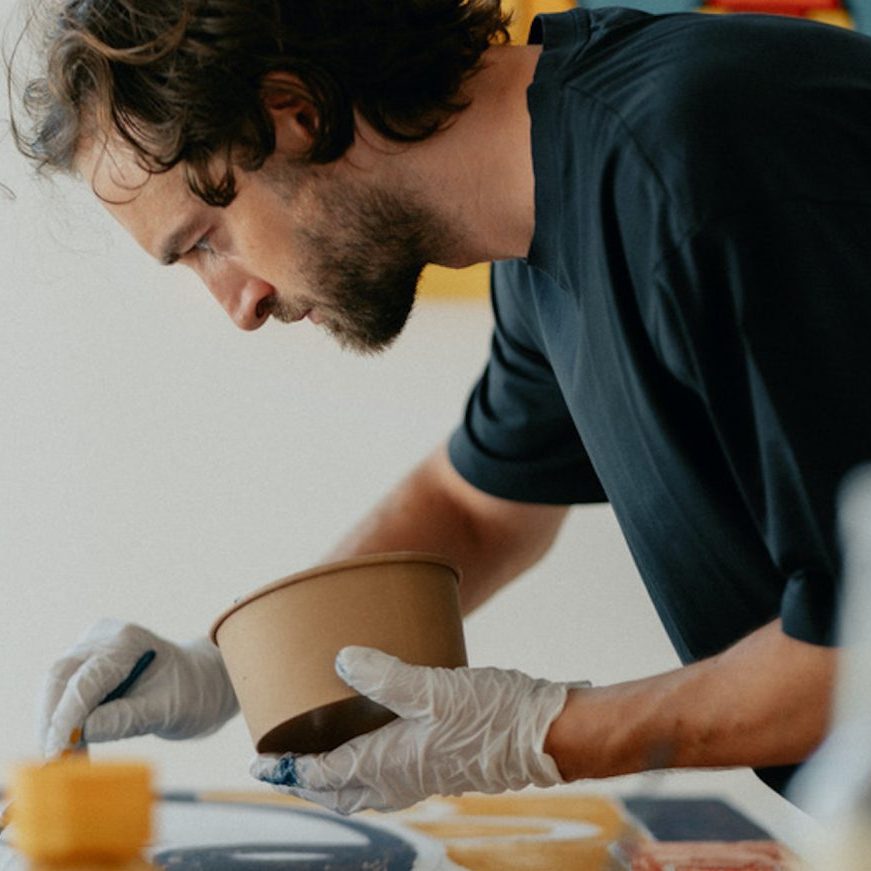
Can you tell us a little bit about yourself? Specifically, we’d love to know about your background.
Hi, I’m onlysattva. Born in Milan, Italian-British, currently living between Bali, New York and Rio. I studied sculpture at the Accademia di Belle Arti di Brera.
Outside the studio I meditate, and I spend a lot of time thinking about how spirituality shapes the way we live. Acting from a higher state of consciousness is the mission; the work is one medium through which that research gets expressed.
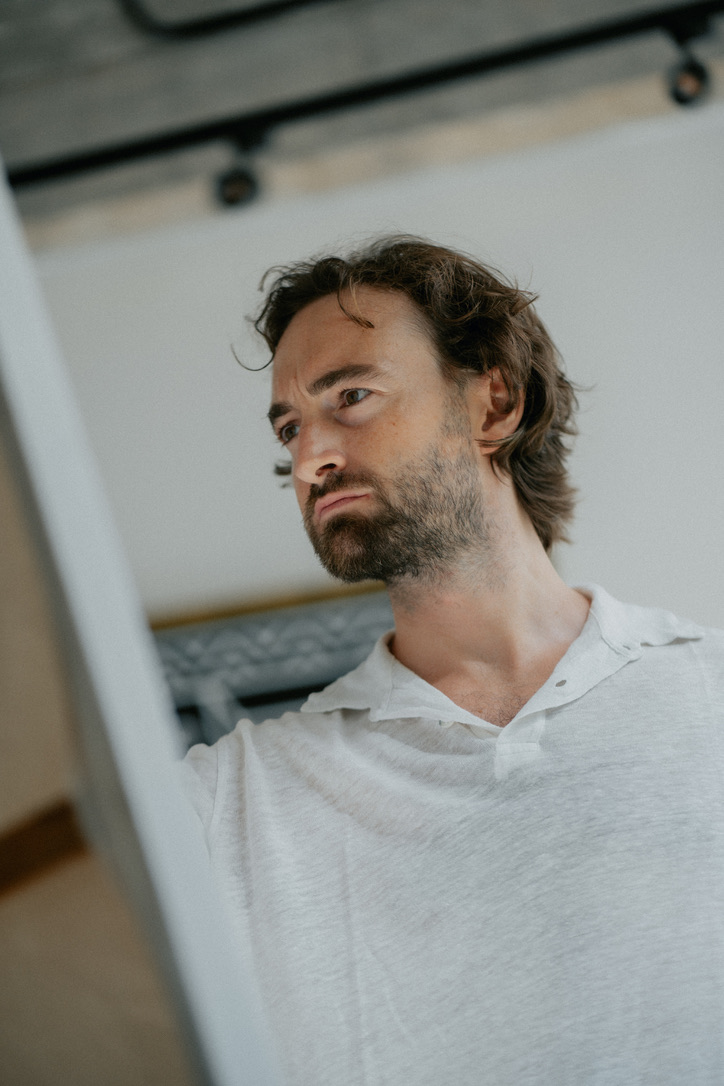
How would you describe your artistic practice?
My practice begins with a daily discipline of meditation and drawing. I approach the studio as a space of listening — to the body, to memory, to place, and to the moment when a line, colour, or motif asks to emerge. Nothing is forced; I wait for it.
Pattern is at the centre of my paintings. I draw on ornaments from indigenous and ancient visual traditions, and I treat these not as decoration but as systems of knowledge in their own right. I don’t copy them. I take them apart and rebuild them through colour, composition, and space — searching for the common language beneath them.
The places I live and work in inform everything: the primal tension of Rio, the holding stillness of Bali, the monumental weight of London and Milan. The work balances intellect and transcendence — grounded in research and material process, yet open to intuition and the unknown. The resulting images are meditative, layered, and symbolic, locating the infinite within the tangible.
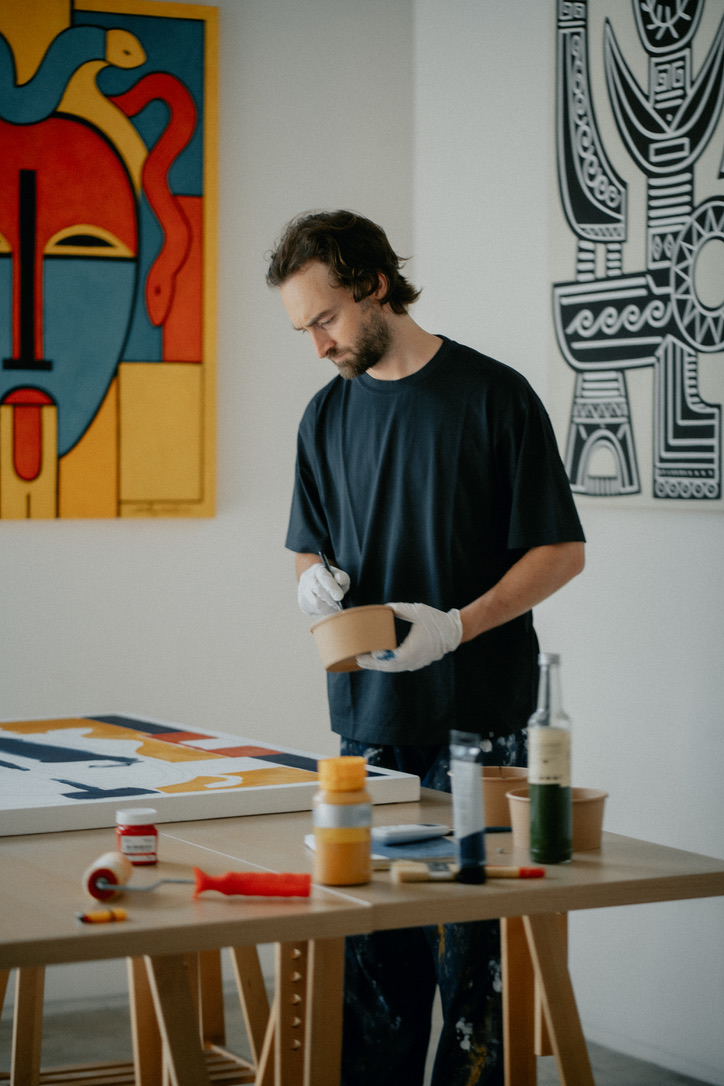
What is your methodology or process for creating a new project?
It varies, and it’s informed by being in the present moment. I’m simply aware of my surroundings and the sensations connected to them. I take pictures, rework them through drawing, combine different styles — and, importantly, let the ideas rest. I pick them up later and iterate again.
Often the work is about simplifying: getting to the core, to the simple cadence of nature. There is a right moment to make a mark, choose a colour, draw a line. The practice is learning to wait for it.
Tell us about the project you are working during your online residency at GlogauAIR.
This residency continues my inquiry into ornament as a form of knowledge rather than decoration. I work from a simple claim: that Mediterranean pattern traditions – Roman mosaic, Greek and Sicilian ornament – and indigenous visual traditions are equal systems, each with its own intelligence, where pattern behaves like a language, structuring a surface the way grammar structures a sentence. Painting becomes the place where that equality is tested. I arrive with several directions in mind – a quieter register of colour and shape where pattern surfaces here and there; a move that carries geometric ornament into animal and forest forms; and a reworking of damaged Roman and Greek surfaces, where cracked floors and worn walls are reinterpreted in paint and combined with indigenous and contemporary symbols – held together by a single question: what happens when patterns from unrelated traditions are made to share, and interrupt, the same surface.