Meet the Artist // Jin Fang
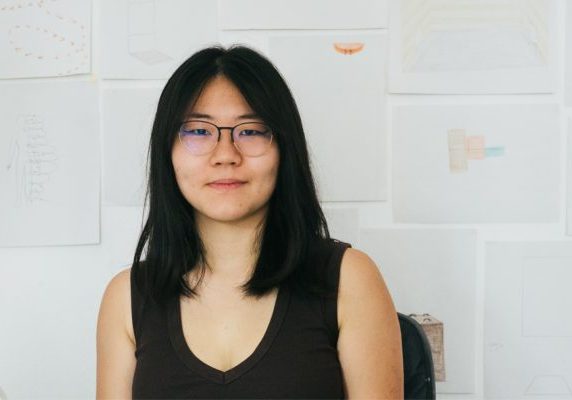
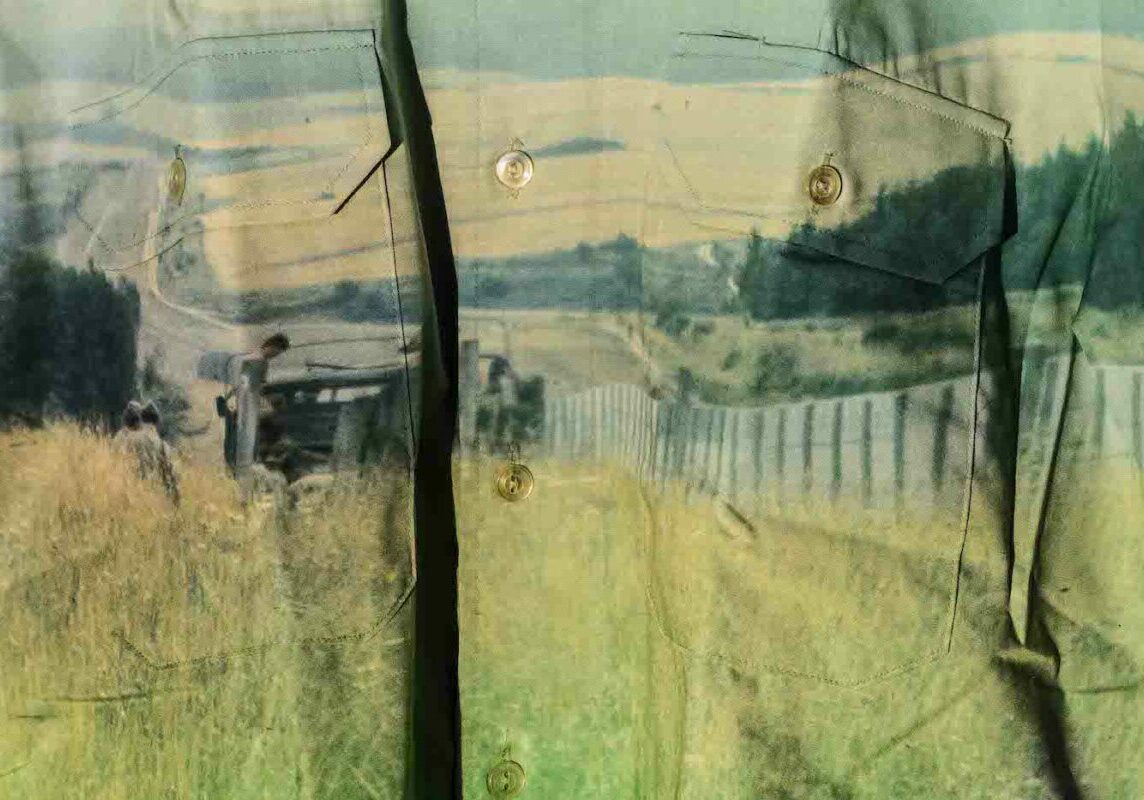
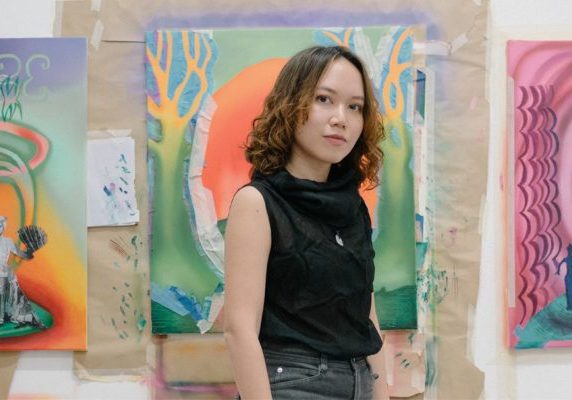
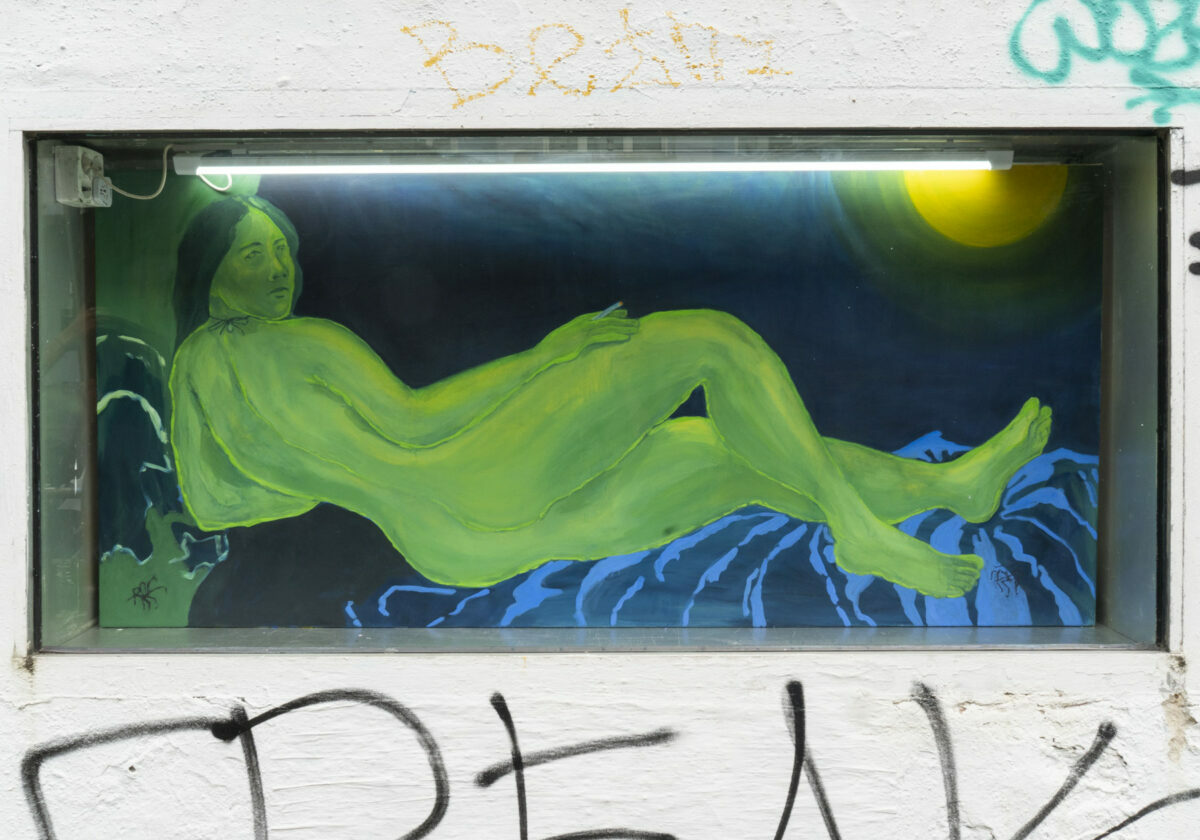
Jin Fang is a Chinese artist working between the Netherlands and China. Her practice grows from cross-cultural lived experience and attentive observation. Through painting and drawing, Fang explores connections between nature, creatures, spirituality, memory, and the subconscious, constructing coexisting spaces where ambiguous beings emerge through layering, erasure, and reconstruction. Images unfold gradually rather than from fixed plans, moving between collapse and repair, reflecting life as unstable, temporary, and continuing in ruins.
Could you tell me about yourself and what you are currently working on at GlogauAIR?
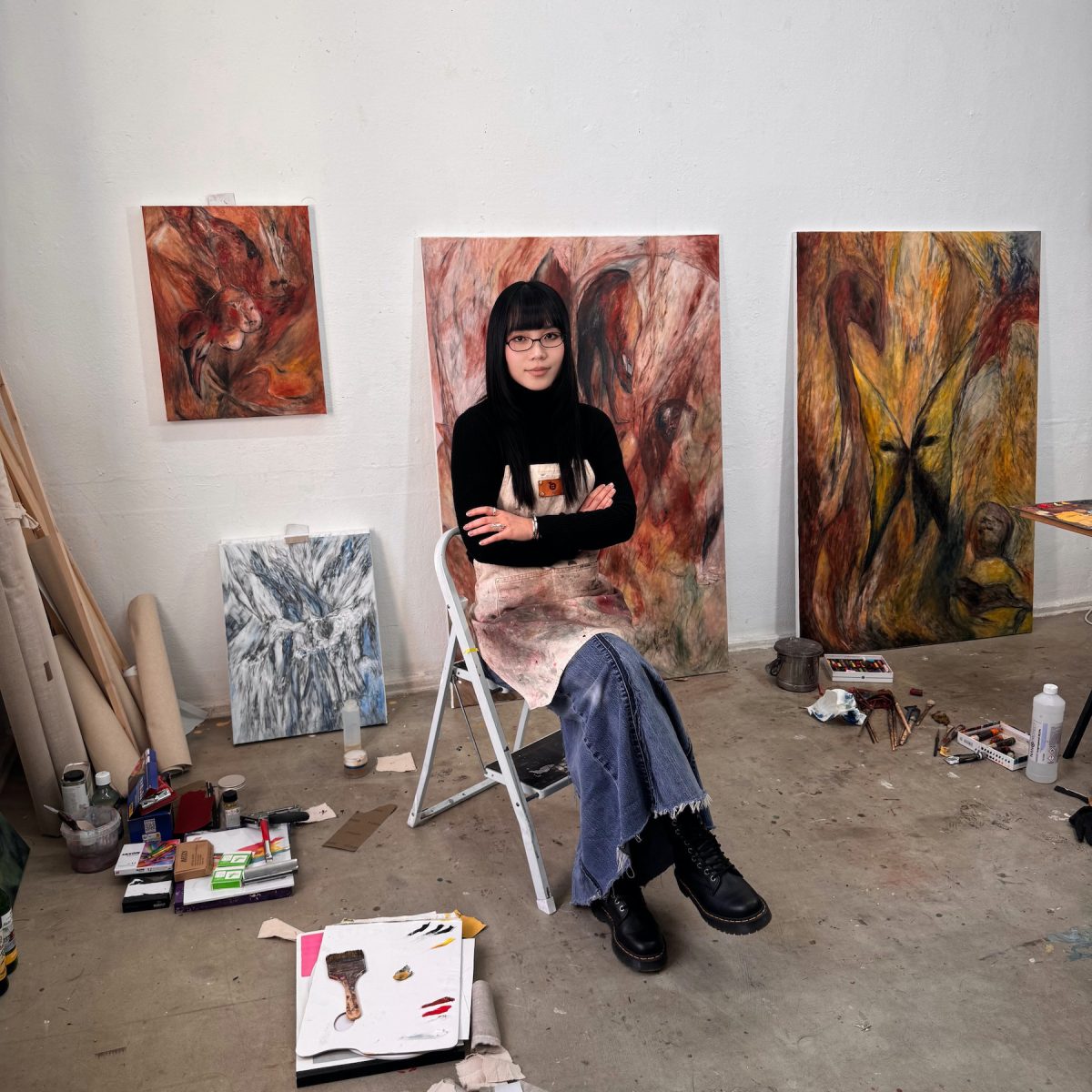
I’m a Chinese artist, currently living and working between China and Europe. I graduated with a Master’s of Arts in Painting from the Royal College of Art in London two years ago. Recently, my practice has grown out of movement, traveling or living in an unfamiliar place, and paying attention to subtle shapes in the environment. My perception is inspired by Chinese mythology, ancient cave paintings, and non-anthropocentric thinking. I try to create a world in which all beings are searching for a place of belonging.
My main goal at GlogauAIR is to create a new group of paintings that is for a stable and entangled life form relationship between human and non-human beings.
You’re interested in human and non-human spiritual networks. What does “connection” mean to you in this context?
I try to create a world that is not narrated from a human-centered perspective. For me, connection describes how human nature, animal and a creature, landscape, and imaginary beings exist with shared fields of influence. It’s not a fixed bond, but a shifting set of relations shaped by coexistence, dependency, and attention as well. My thinking now is influenced by Anna Tsing’s research on non-human centered worlds.
She writes about a specific mushroom called matsutake that is especially important to me for my practice because the mushroom cannot be industrially cultivated. Matsutake mushrooms only grow in a forest disturbed by humans. Because they only grow in forests disturbed by humans, they depend on a complex ecological relationship. Because they resist control, they reveal a world unlike modern industrial production—one shaped by chance and cooperation.
We often imagine progress as moving towards efficiency or stability, but the mushroom suggests otherwise. Life continues in ruins. Capitalist expansion produces damage and instability, yet within these broken spaces, new networks form between species and people. This perspective helped me think about the connection as something fragile, temporary, always forming and dissolving. This way of thinking comes from my own experience, actually.
At one point in my life, an animal quite literally saved me, which deeply changed how I understood interdependency between species. In many Chinese mythological stories, humans are able to connect with animals, spirits, ghosts, or supernatural beings. Bodies, consciousness, and fate can shift between different kinds of life forms. These narratives imagine a porous world where boundaries between species are unstable and relational. In my painting, I try to hold this sense of a connection as well. The space I create does not have a clear center or hierarchy: different things like human or nonhuman, real or imaginary, co-exist and influence one another.
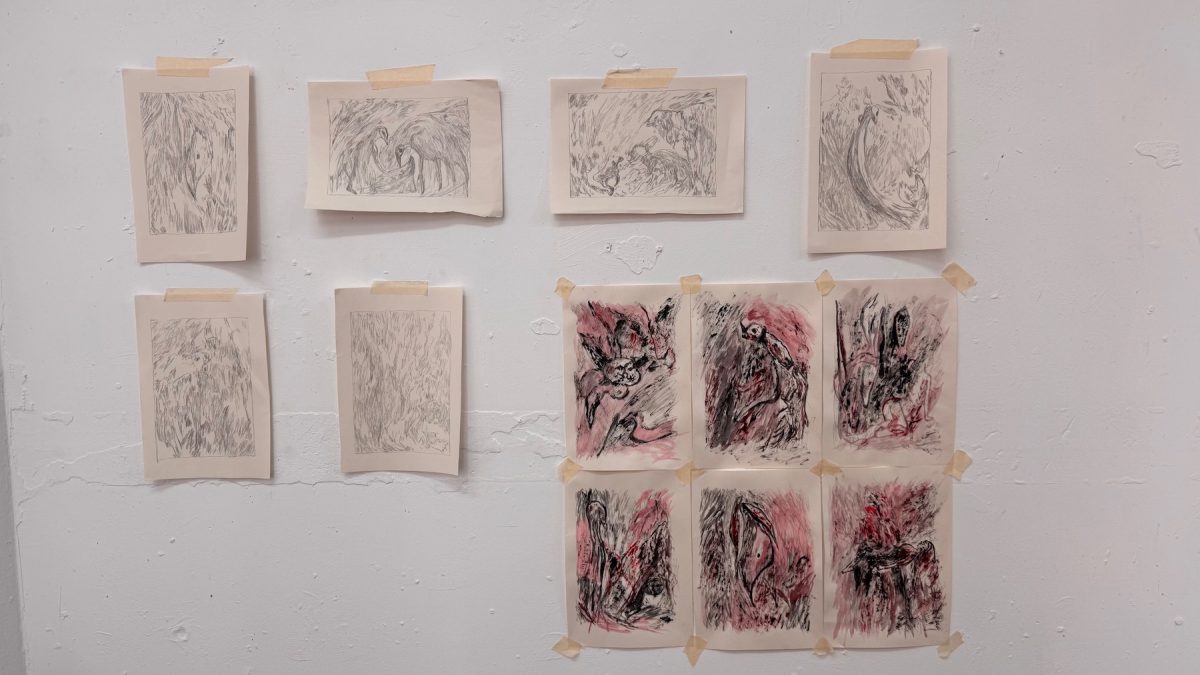
Your process involves layering, erasure, and scraping. How do you know when a form wants to stay and when it needs to disappear?
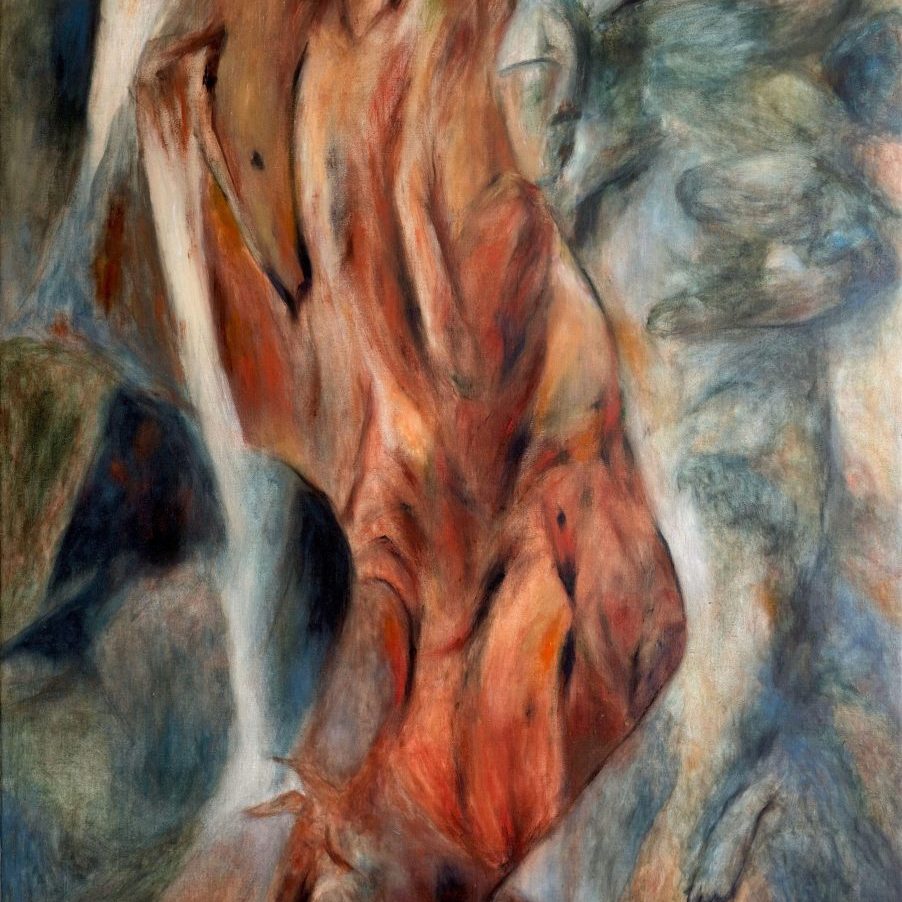
Layering, erasing, and scraping are really essential to my process of painting. And because my painting does not begin from a fixed image, I build it through layering, erasing, and reworking, which allows the impressions from daily life, or subconsciousness, to surface gradually, rather than starting with a fixed plan for the first layer of my painting. With this process, after layers and layers, some fragments of humans and creatures begin to appear. I often then interrupt what is already there, through scrapping or removing part of the surface, so that something unexpected can emerge.
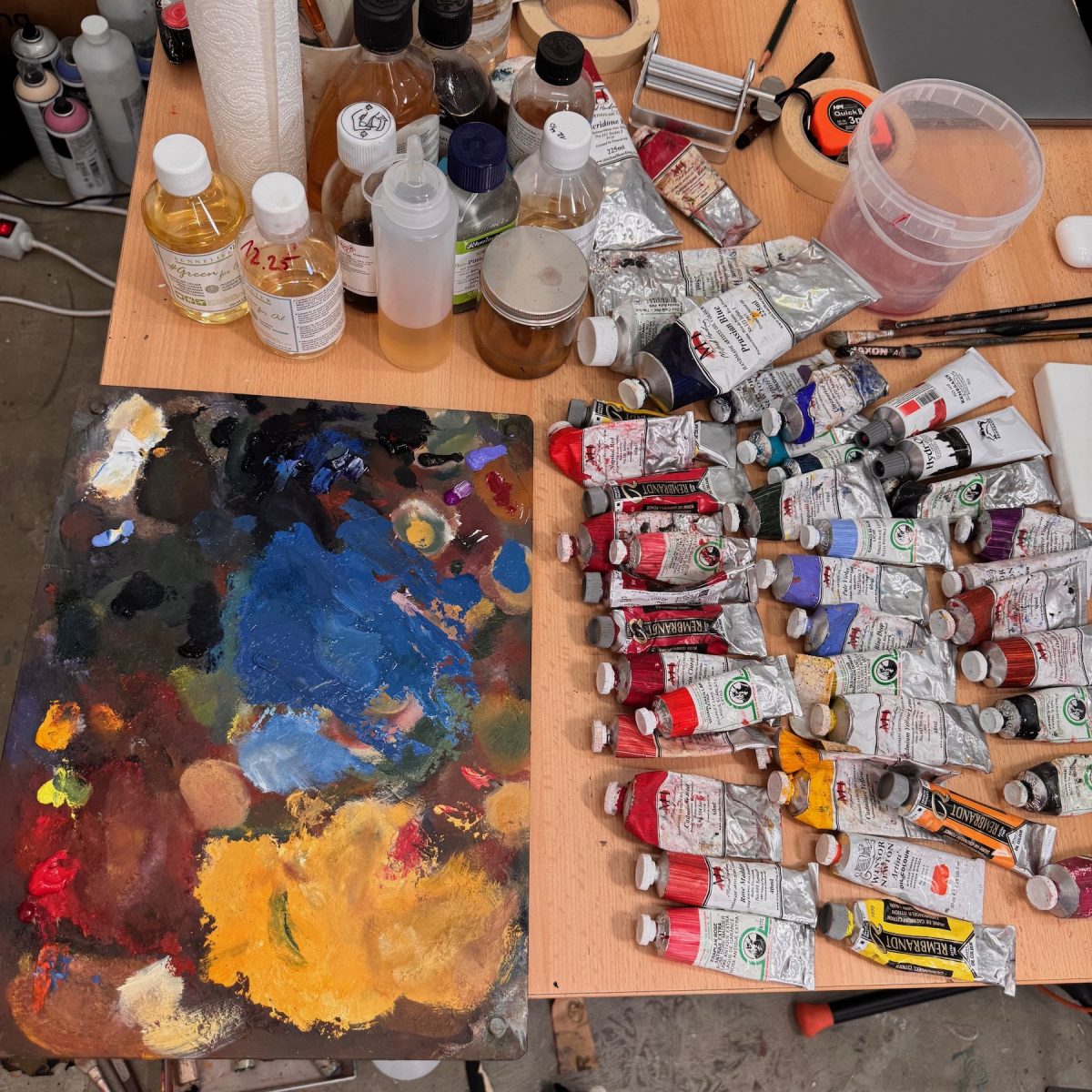
I think destruction becomes a way for an open space in my painting; sometimes a form disappears completely. I think the trace it leaves behind can change the rhythm of the whole painting. Usually, during the process of my painting, I use turpentine or alcohol to destroy part of my painting, and something new or refreshing can emerge from the ruins, so this also comes back to the last question about why I said how life can grow from the ruins. For me, painting is like a continuous circle of collapse and reconstruction, where the absence can turn into presence. With that shift in the balance, it allows my work to breathe.
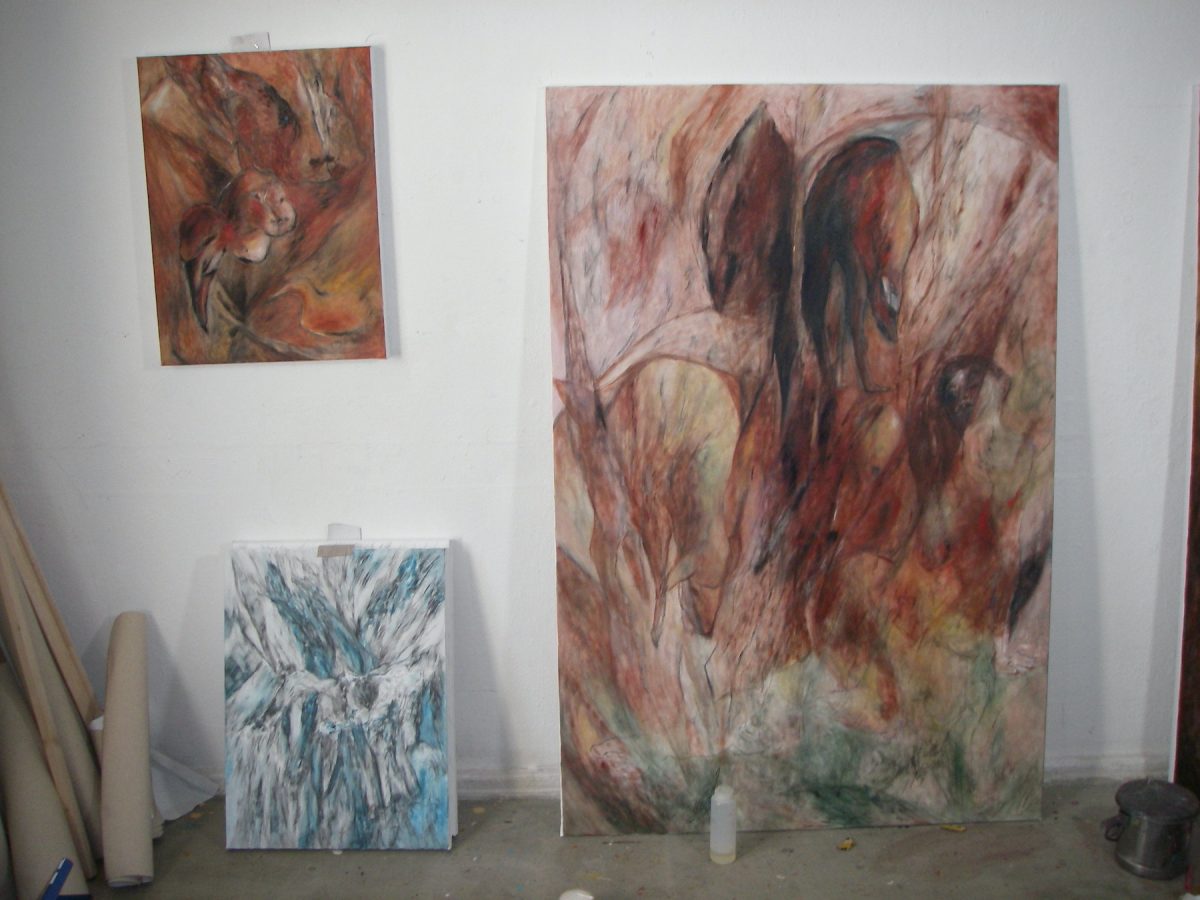
Is there a rhythm or pace you fall into while painting that feels essential to your process?
Yes, but I’m going to talk more about the rhythm of my painting practice. I think both a slow and a faster rhythm feel essential to my process. I move between building and removing, working and opposing. Sometimes I spend a long time just looking before I make a really small or tiny change to my painting. This pace allows the image to appear gradually, and it keeps the painting open to uncertainty, I think.
Actually, the first layer of the painting is quite spontaneous to me. I work quickly at the beginning, and my subconscious leads the painting rather than me having rational control. If everything is really planned well from the start of the painting, I think the painting would feel too fixed to me. I want each brush stroke and color to feel like a pose coming from within the body or from the subconscious when I paint the first layer of the painting.
After the first layer of the painting, the rhythm slows down. I return to the surface over and over, adding or scraping and adjusting, because somehow I usually repeat working on the same tiny part of my painting again and again until I’m satisfied with it. As the painting nears completion, I often return to the fast speed of the first layer. I feel like these shapes bring a sense of energy and allow the painting to close itself to the same inner pulse with which it began.
Interview Reese Saddler (@reeseesaddler)
Photos Ksenia Proskuryakova (@ksenyapro)