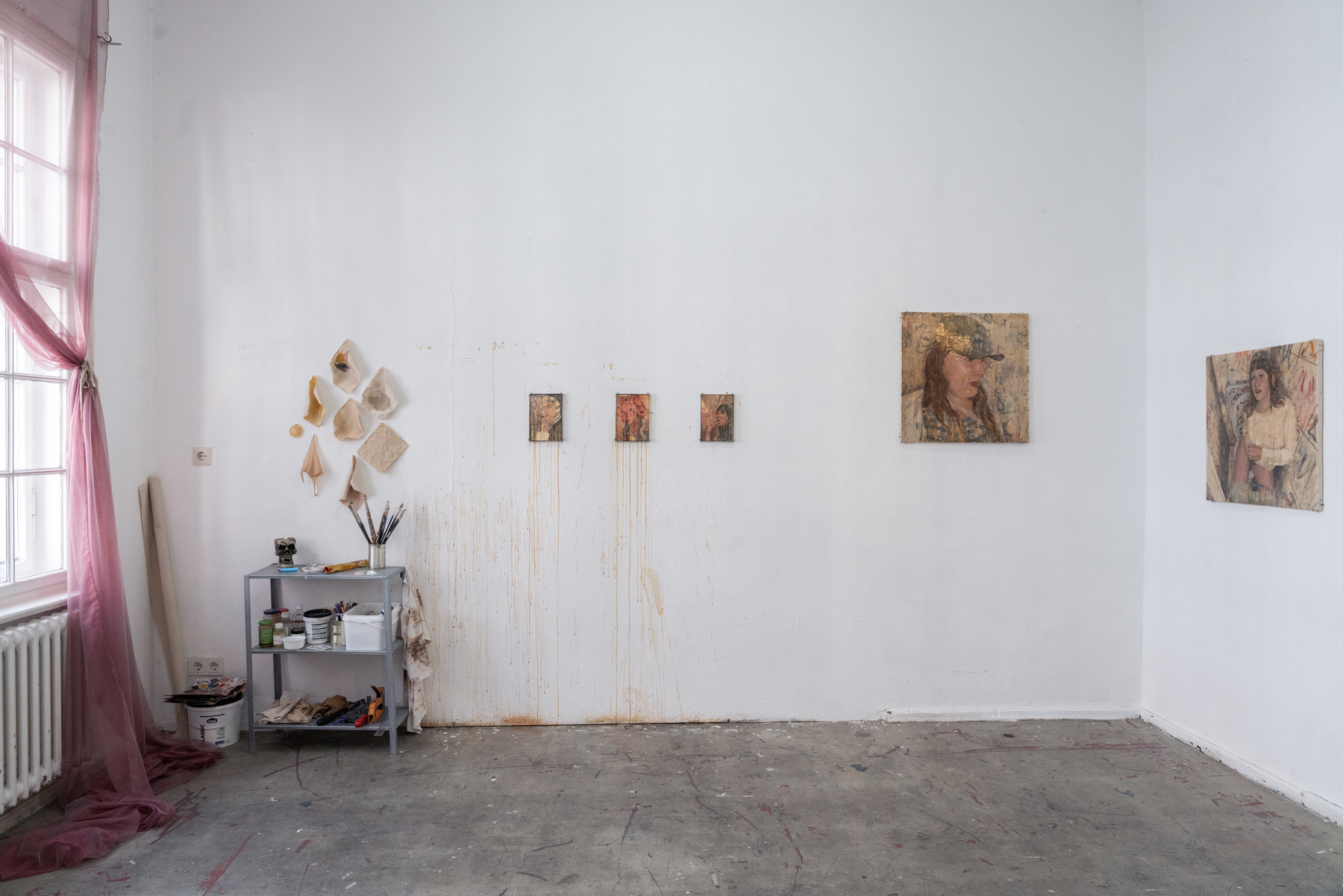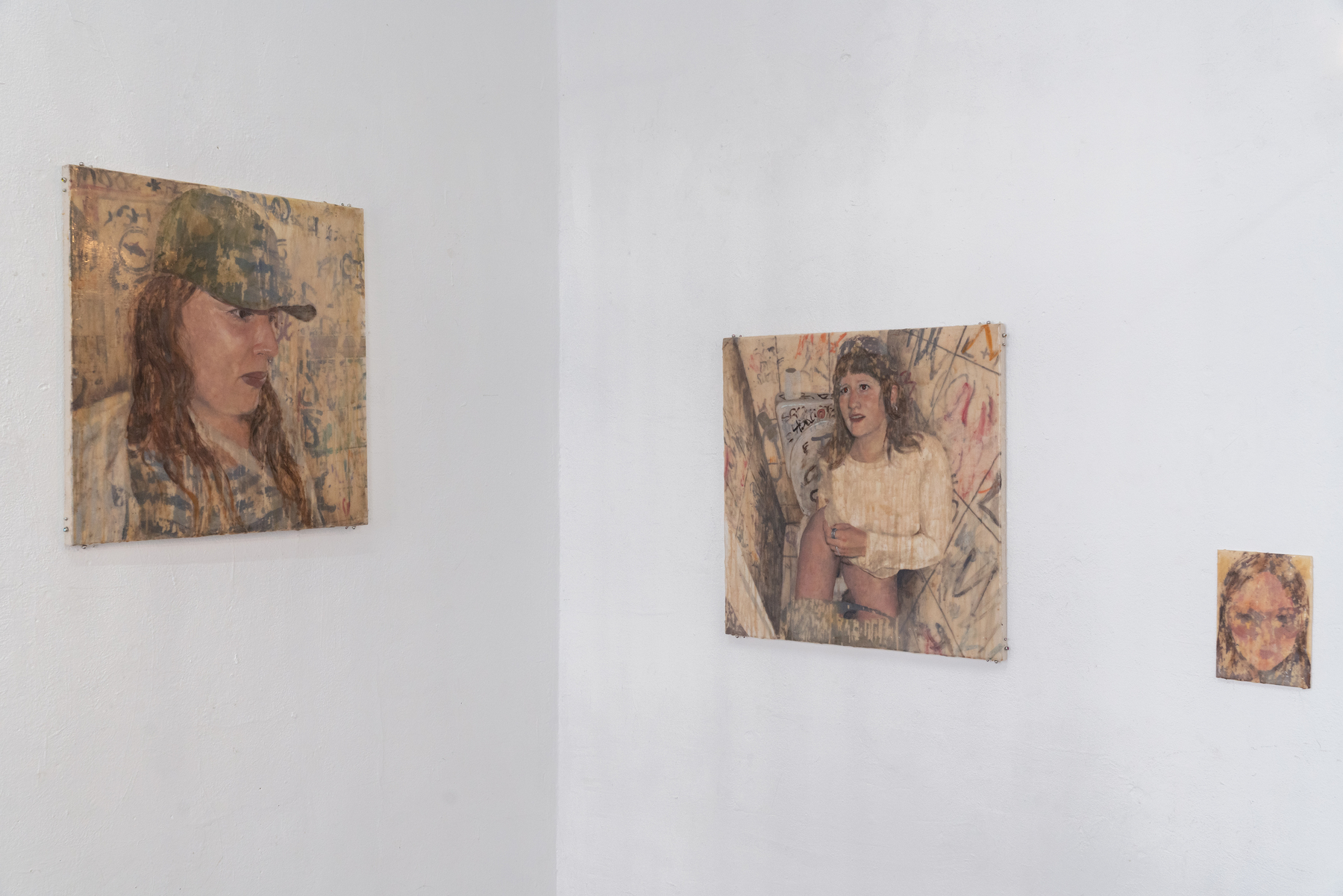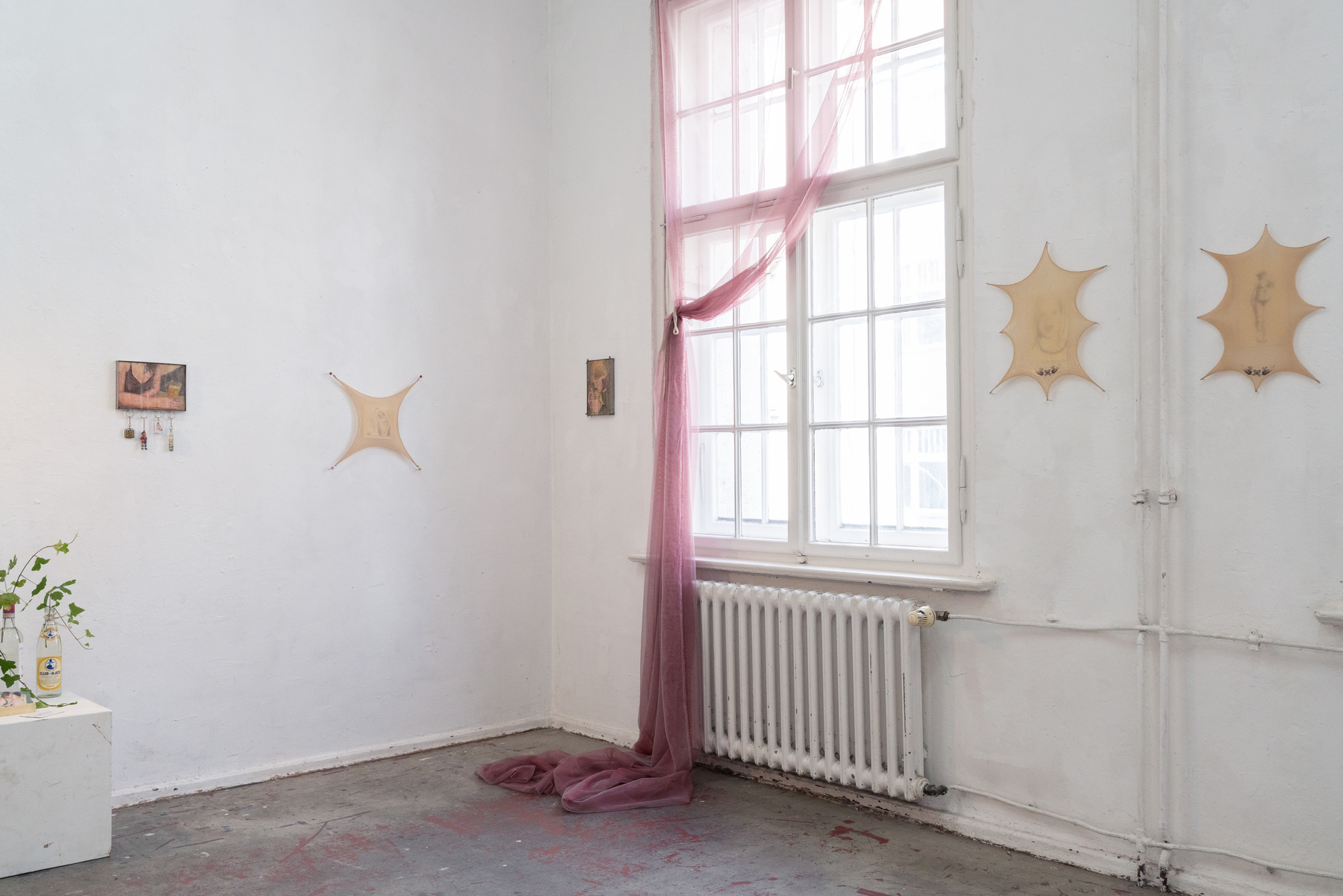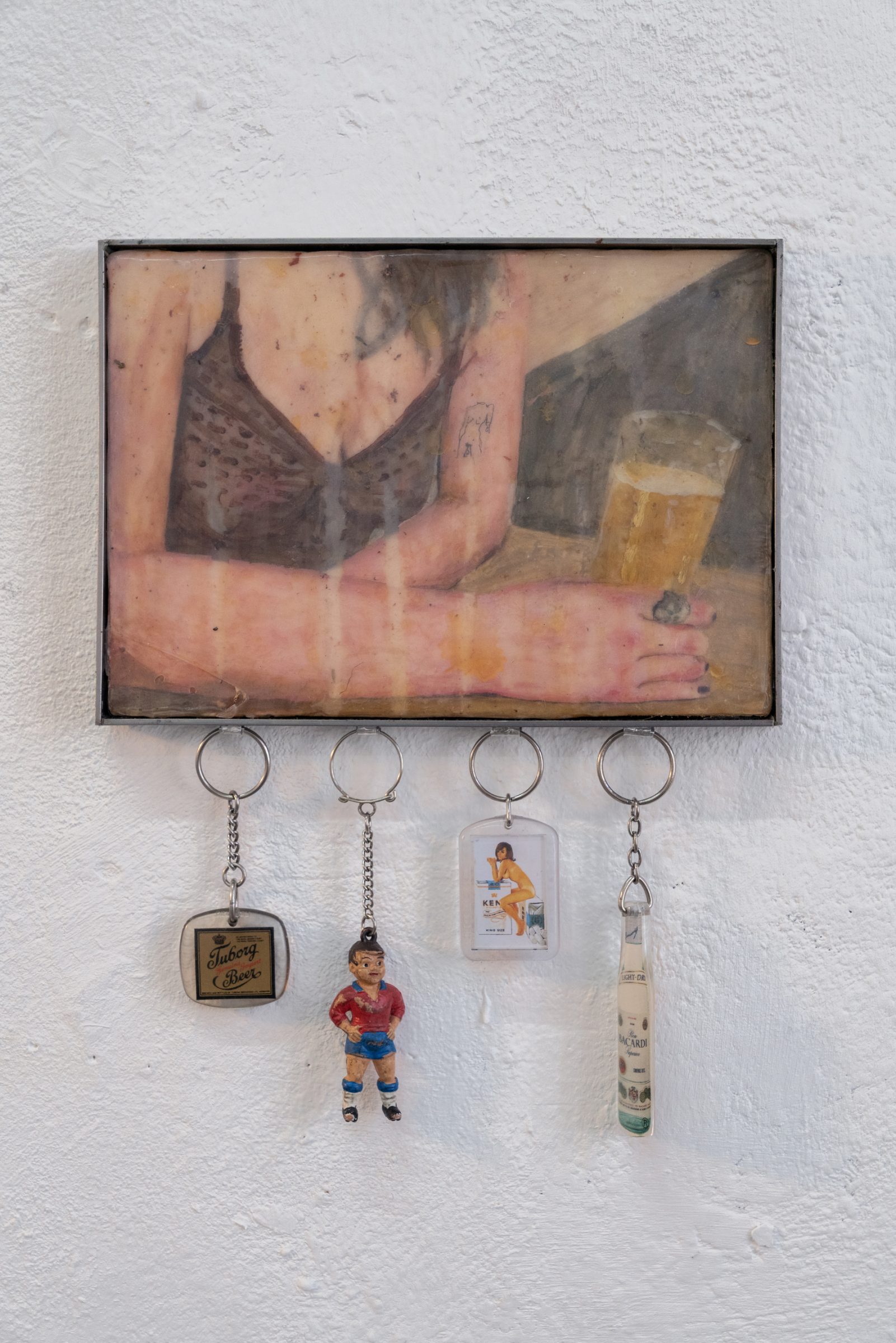
Amy Rondahl’s work stems from an interest in how the body is regulated through cultural and social boundaries. Focusing on spaces where these distinctions are temporarily blurred, she investigates the conditions that make such spaces possible.
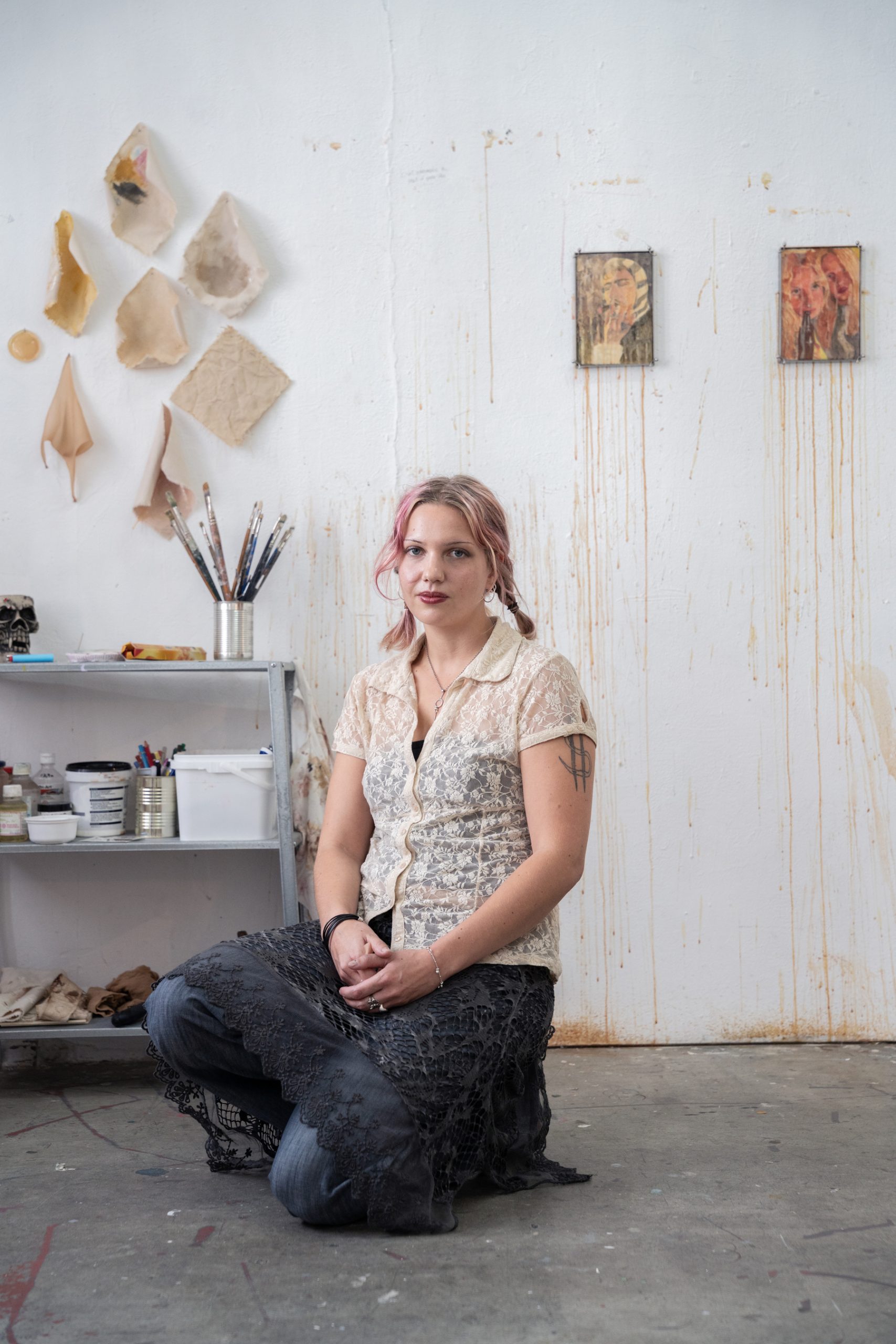
In recent years, Rondahl has explored the public toilet and how it creates a space between the public and the private. This project has developed into a fascination with dirt and filth. The dirt in these spaces can mark a form of freedom, where a refusal or inability to conform to societal expectations of cleanliness and order is possible. As a continuation of this research, Rondahl’s work in Berlin focuses more closely on how dirt emerges as a political aesthetic, both through the physical presence of dirt in spaces such as clubs, bars and public toilets, and through aesthetics that are perceived as dirty or non-conforming.
In Rondahl's work, she begins with photographs of her loved ones, which she translates into painting. This process involves attention to capturing figures and forms, as well as an emphasis on texture. Using a layering technique developed by the artist, wood glue, acrylic, oil, and various materials build up the painting in multiple layers, creating surfaces that can preserve the sensation of dirt.